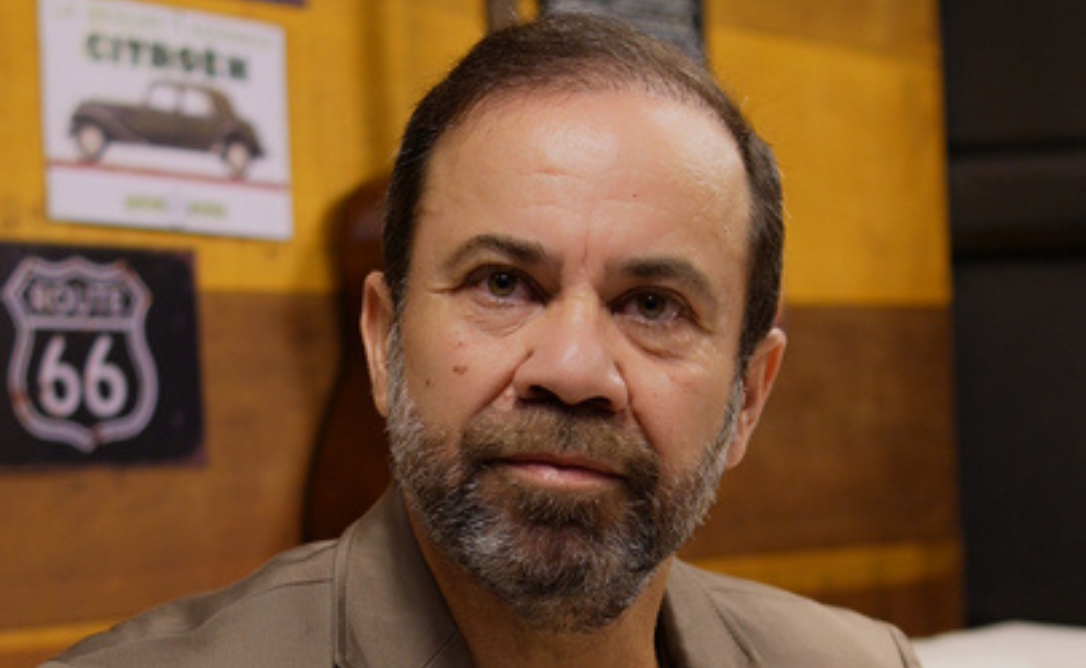
In “The Sacred in the Profane,” theologian and public administrator Dione Caruzo proposes a reflection on how politics and religion have walked hand in hand throughout human history. Using biblical episodes, historical conflicts, and social transformations, the author analyzes how spiritual leaders have also exerted political influence and how these forces continue to shape laws, identities, and power structures in contemporary society. In an interview, Caruzo discusses the creation of the work, the parallels between past and present, and the importance of critically understanding the connections between faith, society, and politics.
In The Sacred in the Profane, you start with a powerful provocation: to consider Jesus Christ also as a political leader. At what point did this interpretation cease to be merely a personal concern and become the central theme of the book?
As an evangelical Christian, I’ve always heard phrases like “politics is the devil’s work,” “religion doesn’t mix with politics,” and others that I use in the book to provoke critical thinking. Studying sacred texts, especially the Bible, I concluded that, regardless of our utopian desire for these two issues to remain separate, religion and politics have always been intertwined in the construction of power, shaping the history of humanity. Was Jesus a politician? The answer is yes and no. It depends on the perspective from which you view politics. If you see the politics we know, corrupted by greed, vanity, tyranny, and personal interests, then Jesus certainly wasn’t a politician. But if we look at true politics, which is related to the common good, to communal life where everyone is within the rules, laws, and norms of conduct that protect coexistence in society, regulating social conflicts and aiming to serve everyone equitably, then Jesus was the greatest and truest politician in human history.
Your work suggests that politics and religion have never truly been separate, even when that connection seems implicit. What else interested you in revealing about this relationship, which is so profound and, at the same time, so uncomfortable for many people?
The goal is to truly expose truths that, for centuries, have remained hidden from the general public about the intertwining of religion and politics. Two issues that, more than ever, influence and shape humanity. What makes people uncomfortable with this subject, religion versus politics, is discovering that they are being deceived and manipulated by the powerful within the system. The objective is to create discussion, because debate forces thought, and this leads to understanding. But I reaffirm what Charles Spurgeon said: “Only fools believe that politics and religion are not to be discussed. That is why thieves remain in power and false prophets continue to preach.”
By rereading biblical figures such as Abraham, Moses, and Jesus himself, also from the perspective of their roles in leadership and social organization, what new understandings do you believe emerge regarding these characters?
By broadening our perspective on the lives of heroes of faith, not only from Christianity but from all religions, we fully and realistically see the true legacy they left for humanity. In this way (showing that the great religious leaders of history were great political leaders and influencers in their times, even before becoming ecclesiastical leaders), we reaffirm the book’s message that religion and politics have always been intertwined in all empires that have dominated the world, at all crucial moments in global destiny. We need to see the heroes of faith in their fullness and not just within a religious and spiritual context.
The book covers everything from biblical narratives, such as Eden and the flood, to historical moments like the Roman Empire and the Crusades. How did you construct a line of reasoning that connected such distant times without losing clarity for the reader?
“The Sacred in the Profane” is neither a religious nor a political book; it is a history of the association between religion and politics in the construction of the world as we know it, for good and especially for evil. Therefore, I present this history chronologically, passing through the great empires that dominated the world in their eras, such as Babylon, Ancient Egypt, the Medo-Persian Empire, Ancient Greece, the Roman Empire, and arriving at present-day nations. It covers moments I call “crossroads of history,” such as the story of the Tower of Babel (the beginning of ancient Babylon), the Crusades of the Roman Church, the Protestant Reformation, the French Revolution, the Enlightenment, the World Wars, and other moments that defined the course of the world as we know it.
You also discuss how human vanities and internal disputes interfere with religions. To what extent is looking at these behind-the-scenes aspects a way to humanize faith, rather than weaken it?
One of the most revealing and controversial chapters of the work is titled “The Power Game in the Internal Politics of Religions.” It’s impossible to separate politics by areas of society, such as secular politics and religious politics. Politics is always politics. It’s the struggle for power, regardless of the environment of the dispute. And within religions, one of the most hotly contested political struggles in history takes place, always influencing the politics of the entire world. The struggle for power within religions is one of the harshest, cruelest, and (worst of all) disguised as sanctity. Only by revealing these behind-the-scenes truths will true faith be humanized. We cannot defend true faith and true religiosity (that which reconnects us to God) if we do not “unveil” the deceptions of religions. This work is a defense of true religiosity and true politics. As Jesus said: “Only the truth sets us free!”
As a theologian and public administrator, you occupy a very particular place between two fields that are often treated as opposites. How has this dual experience influenced the perspective you have developed throughout your work?

Having experienced the inner workings of religion as a theologian for over 30 years and politics as a public manager and administrator for over 15 years, I have been able to clearly see how the people are deceived and manipulated with ideological discourses that blind logical reasoning through passion in ideologies that polarize politics and lead to religious fanaticism in politics. For, false religious figures and false politicians have already understood that if they keep politics within the realm of reason and ideas, they will hardly deceive the people, and therefore, through religiosity, they shift political discussion to emotions, separating the people into “good and evil,” “them and us,” “right and wrong,” turning politics into a battlefield and thus winning “blind and obedient soldiers” and not conscious voters.
In a time marked by crises, polarization, and conflicts between countries, your book seems to suggest that understanding the past is essential to understanding the present. What is the most urgent warning you feel this historical reading brings to the present day?
“A people who do not know their past do not know where they are in the present and therefore do not know where they are going in the future.” Because of this lack of historical knowledge, humanity keeps repeating the same mistakes of the past as if they were new errors. The book “The Sacred in the Profane” is the first in a trilogy about the intertwining of religion and politics. In this first book, I show this association between the two themes in human history, demonstrating that, regardless of our will, these two fields have always been together, defining the course of the world and remaining more “united” than ever. I present, in a summarized way, the ideologies that created cruel political systems throughout history, such as fascism, communism, Nazism, and others that, through ignorance, are repeated in the present day, not with empty rhetoric, but with undeniable historical facts. These ideologies will be further detailed and explained in the second book of the trilogy, concluding in the third with what I call “religion and politics, the true masquerade ball.”
You speak of the importance of knowledge for the emancipation from this dichotomy between politics and religion. At the end of the reading, what do you hope to awaken in the reader: unease, a revision of certainties, critical thinking, or a new way of seeing human history itself?
The soul of this work is to critique and shed light on all the evil that the association of religion and politics has done and continues to do to humanity. It is a source of conflict, oppression, and social regression. An alliance that seeks to legitimize earthly power through a supposed divine mandate, creating structures that hinder dissent and promote intolerance. This intertwining, historically, transforms the common good – the objective of politics – into a weapon of domination and exploitation, running counter to ideals such as tolerance and peace. The book’s objective is to provoke critical thinking through the knowledge of history, leading to an understanding of the truth, for only the truth will lead to true freedom. Read “The Sacred in the Profane: Religion and Politics in the Construction of Power,” and your perspective will change.
Follow Dione Caruzo on Instagram