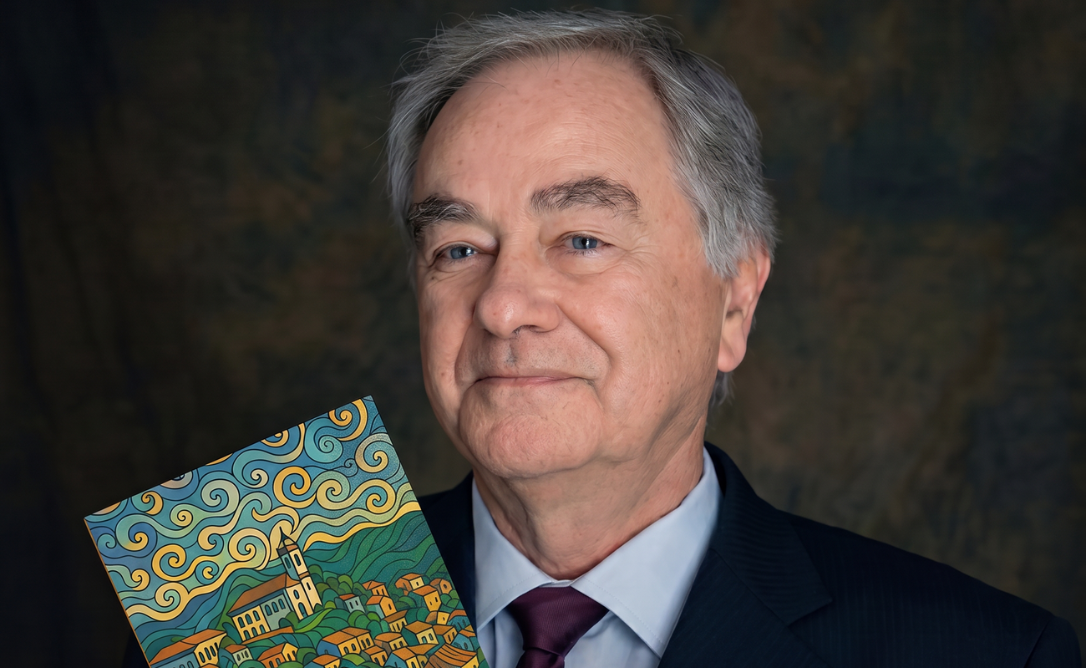
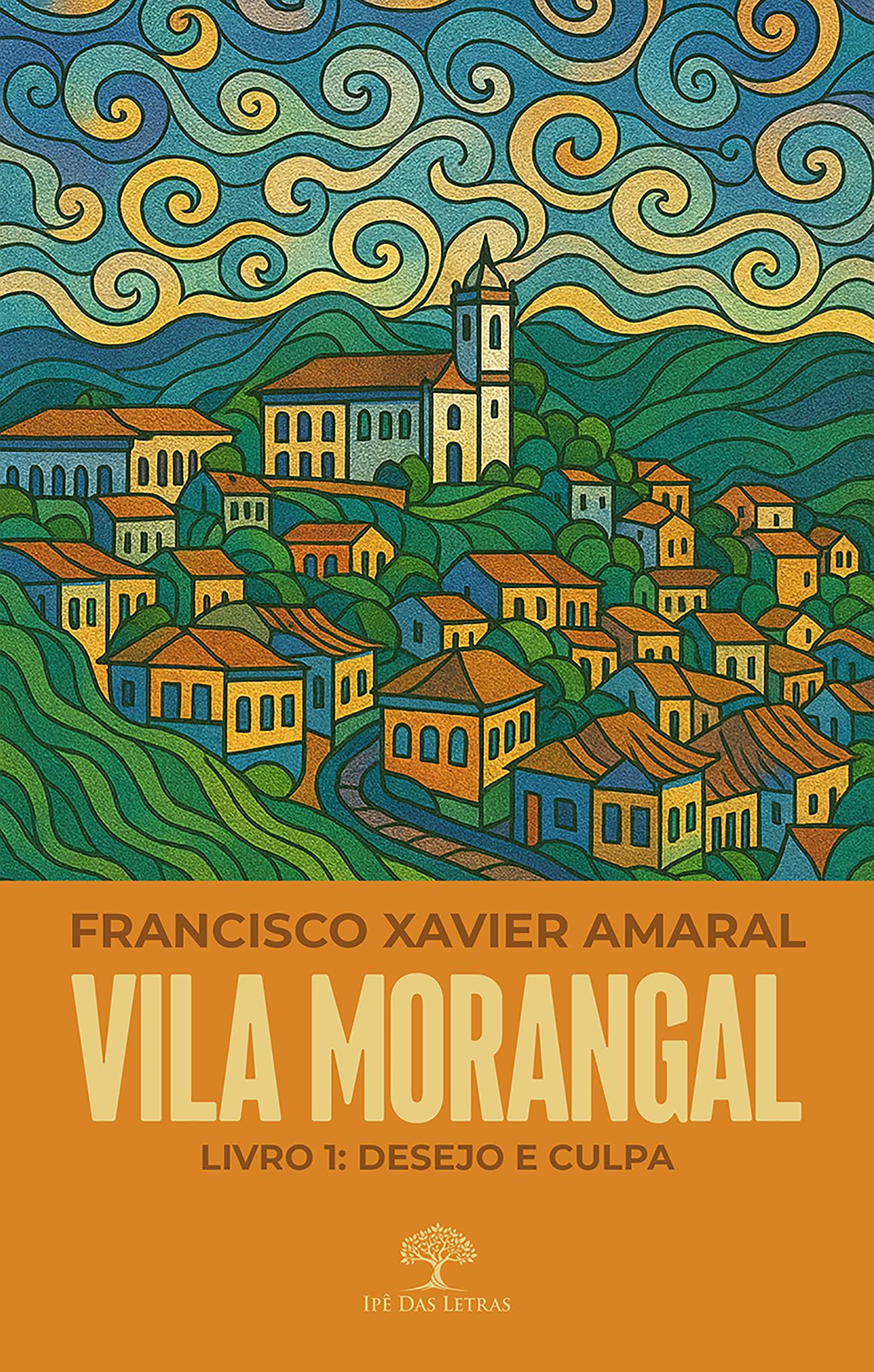
In Vila Morangal – Book 1: Desire and Guilt, writer Francisco Xavier Amaral delves into the complex human relationships of a rural community in Minas Gerais, marked by rigid traditions, social hierarchies, and carefully preserved secrets. Set in the Brazilian backlands of the 20th century, the novel follows characters whose choices, passions, and traumas intertwine in a narrative that questions the boundaries between morality, desire, and guilt. In an interview, the author discusses the literary influences of names like Graciliano Ramos and João Guimarães Rosa, the construction of a universe deeply rooted in Minas Gerais culture, and the challenges of exploring the contradictions that shape the human condition.
“Vila Morangal” portrays a seemingly insignificant village, but one full of tension, secrets, and power struggles. At what point did you realize that this fictional place could carry so many layers of real-life Brazil?
Vila Morangal could be any small town nestled in the Brazilian backlands. This small town has nothing that distinguishes it from others, except for the stories of its inhabitants, gathered from crucial moments in their short lives, in a backlands hidden from urban life, although laden with emotions and feelings of universal depth, common to all human beings. In this sense, there is no geographical limit that prevents passions, love, hate, violence, obsession, anguish, in short, everything that is inherent to humankind. In fact, I believe that the setting of the narrative could take place in any other space of coexistence. In all of them there will always be an intense and precious charge of feelings, mixing desires, ambitions, fears, hatreds and everything else that torments, consoles, saddens or gladdens the human being.
The work explores themes such as desire, guilt, violence, passion, and redemption. What most interested you in investigating this boundary between what the characters want and what the morality of the time allows?
Social conventions and bourgeois morality have always interested me, sometimes out of simple curiosity, other times as an object of research in confronting human complexity. Guilt is an overwhelming feeling that seems to be born with man, in the dark burden that ancestry brings him. There are desires that cannot be satisfied, passions that must be dormant, joys that cannot be expressed, violence that must be contained. The human soul is a cauldron of conflicts. The beauty of man should be the everyday carrying of life..If he does so by overcoming the obstacles of convention and morality, he is a victor, he is recognized, he is a hero, he is a saint. However, he does not do so, he does not overcome them, he does not achieve glory. He suffers because he is human, “all too human.”
Not only Freud, but also Kierkegaard, Schopenhauer, Nietzsche, to name those who impressed me most, focused on guilt as a feeling inherent to human beings. Desire and guilt are born with man, and these feelings haunt him throughout his existence. He cannot redeem himself. Even if desire is satisfied, guilt arises and increases bitterness, because conventions and morality give him no respite. Desire and guilt are identical twins.
Cidinho begins adulthood marked by the loss of his mother and carries deep internal conflicts. How was it to build a character who is quiet, robust, but emotionally scarred by so many absences?
Cidinho was raised by a mother who seemed averse to social conventions and bourgeois morals. She had no religion nor attachment to any deity or belief. This thick veneer of indifference did not protect her from social demands. She transgressed the rules, but diligently hid her transgressions, seeking to appear compliant with morality and “good customs.” Her public outbursts of revolt or fury were rare. And she took them far away, to the state capital, where, perhaps, her yearning for social and sexual freedom would not arouse gossip, let alone scandals.
Cidinho, however, does not bear any identifying marks of his mother’s character, despite living a forbidden romance that will cruelly torment him at decisive moments in his life. When the rigidity of religious morality seems to submerge before the truth of the facts, he himself is overcome by convention and drowns in the sea of archaic customs of a conservative and perverse society. His struggle is against himself. Only in his world of ethical uncertainties does he completely shut himself off. He doesn’t know who his father is, nor does he search for him in the world. He doesn’t miss his mother, and he throws himself into life accompanied only by his locked-up solitude.
Major Jovelino, Violeta, and Gardênia represent very different forces within the narrative: authority, freedom, trauma, and conviction. How do these characters help reveal the social and emotional contradictions of Vila Morangal?
Major Jovelino is a being possessed by anger, by unlimited and uncontrollable rage; he has goals to fulfill and tramples everything and everyone who crosses his path. He kills, orders killings, beats, or maims. He has no scruples. However, he is capable of love; in his own rude and noisy way, but he is capable.
Violeta is a free woman who sees marriage as the gateway to freedom, the way she found to escape the backlands. Life doesn’t smile on her as she dreamed. She, however, is determined. She outwits fate and leaps into the adventure of being free. Her son brought her no obstacles; she saw him as an addition, a temporary appendage, who would leave her in due time.
Gardênia, like her sister, cared little for social conventions or bourgeois morals. She was, however, of a less adventurous temperament. She loved the backlands and intended to shape her life there. She had moments of passion and nymphomania, seeking unlikely partners. However, she loved, in a possessive and unsettling way, but she loved. In this, her character resembled that of Jovelino Penalva, because she, likewise, knew no limits.
These three characters decisively shape the daily life of Vila Morangal and of Cidinho, whose life intertwines with the lives of all of them, sometimes tragic, sometimes turbulent, sometimes filled with eroticism.
The book shows how personal decisions can leave psychological and social consequences for decades. Why was it important for you to treat the past not as something closed, but as a presence that continues to shape lives?

Human beings, as I’ve already said, carry a burden of ancestry that influences their daily lives. Not only from their ancestors, but also from the events of their own existence, their own being in the world. The choices made previously guide their lives, often like an impregnable script for change. In the narrative, the “flashback” is imperative, otherwise the present cannot be understood. This is not about determinism, but about the influence of past choices that, often, though not always, give rise to seemingly inexplicable behaviors. The past is not just inheritance, but a set of emotions and experiences that remain present in people’s daily lives. The recurrence of incursions into the past shows that it remains alive in people’s lives, and that they cannot discard it carelessly.
Religiousness, traditionalism, and social conventions largely govern the characters’ journeys. How do you see the weight of these structures in shaping guilt and silence within the work?
In the interior of Brazil, and more radically in small towns, religion imposes social conduct that restricts people’s exposure in daily life. Churches, whether Catholic or Evangelical in general, prohibit behaviors that are not established in their respective doctrines. Issues such as abortion, sex outside of marriage, alcohol use, the scope of the concept of incest, among others, limit people’s freedom, regardless of whether they are faithful to a particular belief or not. The faithful adopt the restrictions because they believe they are the will of God. Those who do not profess the belief withdraw into silence and distance themselves because, otherwise, society would harass them, even to the point of banishing them from social life. Transgression of the precepts leads to guilt, the painful feeling of sin, bitterness, and even loneliness. It doesn’t matter if the precepts are steeped in hypocrisy or Pharisaism. There is no escaping the feeling of guilt, because it is inherent in humankind, which constantly desires it. He wants to conquer, he wants power, he always wants what he feels he lacks to be happy. When, however, he achieves what he desires, the guilt of having transgressed leads him to the bitterness of sin, to guilt for ambition, to the suffering of self-loathing.
Regional language, with its Minas Gerais expressions and phonetic contractions, plays a fundamental role in the construction of the novel. How was it to find a literary voice that respected the territory without turning that universe into a caricature?
I believe that respecting the language of the inhabitants of the Minas Gerais backlands lends more credibility to the narrative and engages the reader more intensely in that particular universe. It wasn’t difficult for me to bring this almost Minas Gerais dialect to the public, because I spent a lot of time with farmhands and cowboys when I had a cattle ranch. One of my pleasures in this interaction was listening, for hours on end, to the “tales” that so enrich the folklore of Minas Gerais. I always felt that urban language would never fit in the mouths of these characters. However, I avoided extending the vocabulary and syntactic constructions, phonetic contractions, and other singularities to all the characters, because I thought this would make the narrative monotonous and would not convey to the reader the rustic ingenuity of circumventing and even embellishing words. I understand that this was a relentless pursuit of authenticity.
Without a single central protagonist, “Vila Morangal” is constructed from intersecting stories, almost like a collective portrait. What does this multiplicity reveal about the roots, conflicts, and limits of morality in the Brazilian countryside?
Vila Morangal is a novel that doesn’t have a central figure around whom the narrative is built. In fact, there are several characters of different backgrounds highlighted in the story. Among them, however, there is a shared identity of geographical location, although their attitudes and the weapons they use to face life’s vicissitudes differ. There are, indeed, those on whom the narrative focuses more intensely, turning their story into a true saga. On the other hand, there are others whose existence is narrated peripherally, given their fleeting importance in the overall context of the plot. Cidinho, despite his importance, is not, strictly speaking, the main character. He will be joined by others whose saga is equally dramatic in every aspect. They, some more than others, cross paths, confront each other, struggle with themselves, highlighting a moment laden with tragedy in the rural life hidden among the mountains of Minas Gerais.
Follow Francisco Xavier Amaral on Instagram