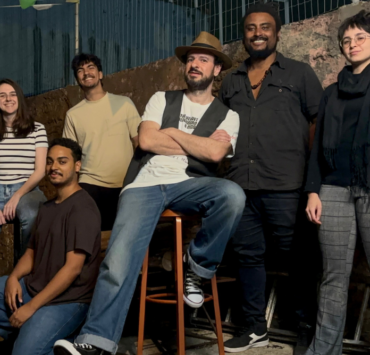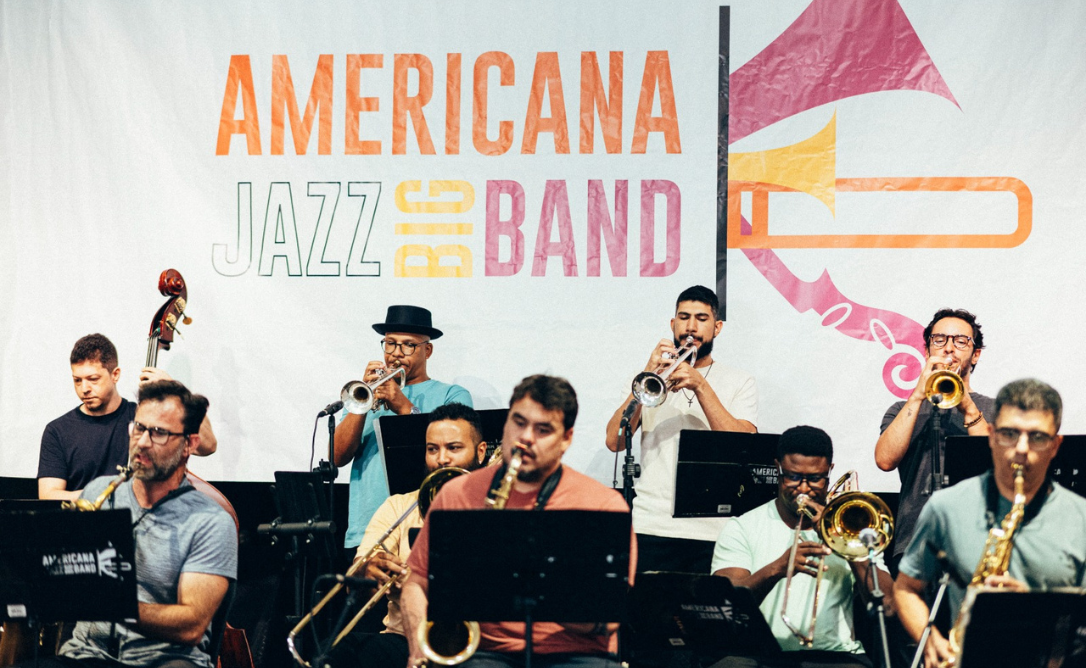
Between preserving historical arrangements and the freedom to construct new interpretations, the Americana Jazz Big Band presents its first album as an encounter between tradition and contemporaneity. Recorded live in Americana, in the interior of São Paulo, the work brings together international jazz classics and original reinterpretations, emphasizing the interaction between the musicians and the characteristic sound of large orchestras. In an interview, the group talks about the challenges of recording their first phonographic work, the importance of keeping the language of big bands alive, and the search for an artistic identity capable of bringing different generations closer to the richness of instrumental music.
This debut album presents the Americana Jazz Big Band as a collective dedicated to the tradition of the great jazz bands. At what point did you realize that this repertoire needed its own recording?
From the very beginning of the Americana Jazz Big Band, there was a feeling that the work developed by the group needed to be recorded. A big band is a formation that depends heavily on collective experience: the arrangements, the balance between the sections, the interaction between the musicians, and the very energy of the ensemble only gain their full dimension when experienced firsthand. Throughout the band’s development, we realized that we already had a repertoire, a sound, and an identity sufficiently consolidated to transform this work into a phonographic recording. The album, therefore, emerges as a natural consequence of this process and as the first artistic document of the group.
The album spans different moments in jazz history, including both classic works and original arrangements. How was it to build a repertoire that respected the legacy of big bands while also revealing the group’s identity?
The repertoire was built precisely from this dialogue between tradition and identity. There is a great responsibility when working with a repertoire that has such a rich history within jazz and popular music. Therefore, we sought to know and study different references, including established arrangements, before proposing new interpretations. At the same time, we didn’t want to simply reproduce the past. The original arrangements present on the album, such as “Blue Moon,” “Cry Me a River,” and “Dindi,” help reveal the personality of the Americana Jazz Big Band and the way Brazilian musicians, immersed in the context of the interior of São Paulo state, interpret this language.

The live recording in Americana highlighted the venue’s acoustics, the natural sound of the big band, and the interaction between the musicians. What did this environment contribute to the album’s energy and organic feel?
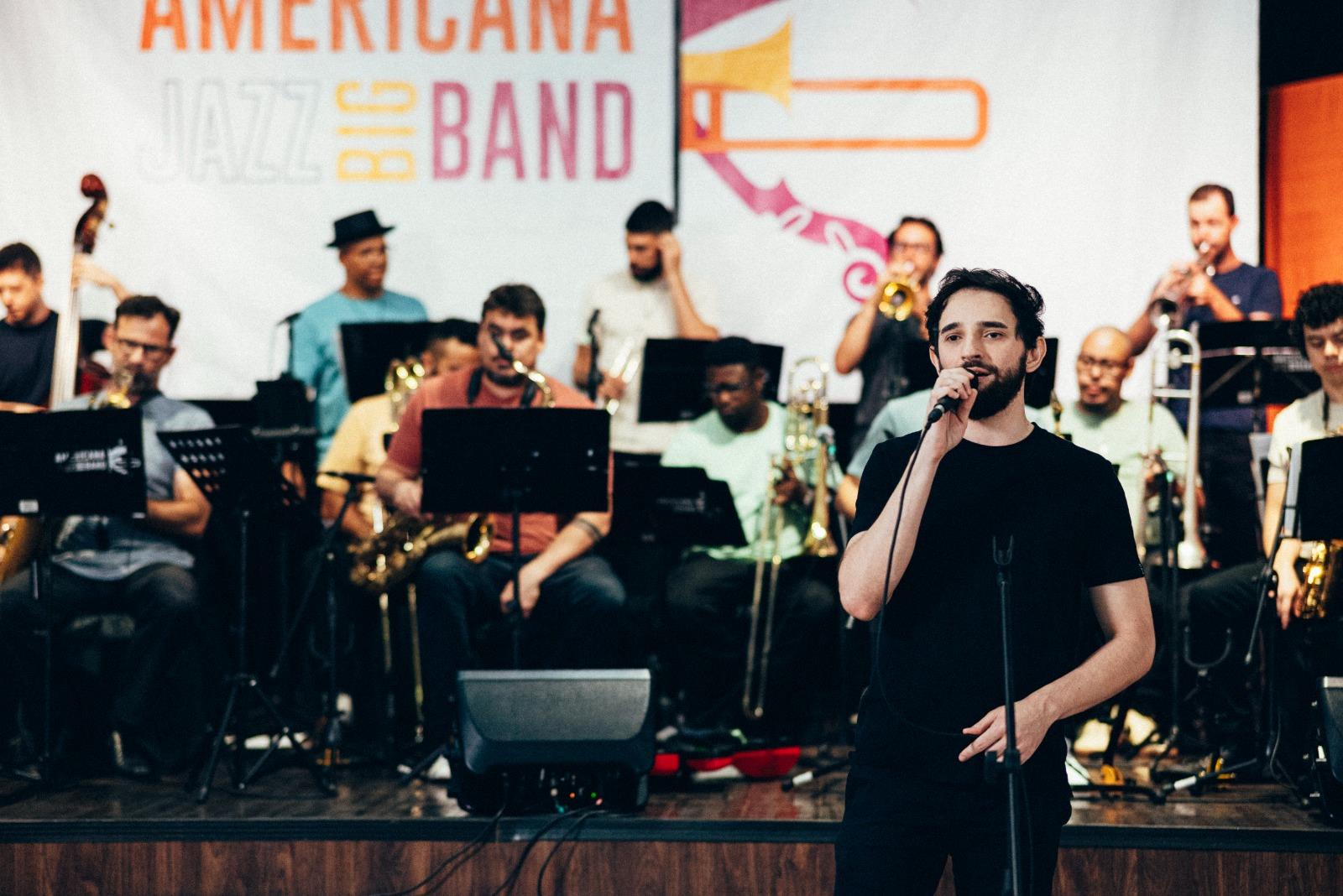
The recording took place in a church in Americana, in a space whose acoustics greatly favored the sound of a large ensemble like ours. We recorded audio and video simultaneously, seeking to preserve the experience of playing as a group, without transforming the process into an excessively fragmented studio construction. This brought a very organic characteristic to the album. You can perceive the ensemble breathing, the sections interacting, and the energy that exists when all the musicians are playing together. For us, this was also important because the album records not only the songs, but a very significant moment in the band’s history.
In a formation like a big band, balance between the sections is essential. How do you work on this collective listening so that each section has strength without losing the unity of the whole?
This is one of the great characteristics and also one of the great challenges of a big band. It’s not simply about bringing together many musicians playing at the same time, but about building a unity from different sections and functions. We work a lot on listening, dynamics, articulation, and understanding the role that each section plays at a given moment in the arrangement. It’s important that the musicians know when they should be in the foreground and when they should function as support. The unity is born precisely from this collective awareness: each section needs to have personality, but always within a larger sonic conception.
Songs like “Blue Moon,” “Cry Me a River,” and “Dindi” are given new interpretations on the album. What precautions are taken when revisiting such well-known songs without distorting their essence?
The first step is to deeply understand the work before attempting to transform it. A well-known song carries a melodic, harmonic, and emotional identity that needs to be preserved. From there, the arrangement can create new paths without losing that essence. In “Dindi,” for example, we sought to explore new melodic movements and different harmonic environments, as well as creating a solo section for the wind instruments, but always keeping Tom Jobim’s composition recognizable. The same principle applies to “Blue Moon” and “Cry Me a River”: the idea is not to distort these works, but to discover possibilities within them and make them dialogue with the band’s language.
The project engages with both North American and Brazilian jazz. How do these two traditions meet within the sound of the Americana Jazz Big Band?
The Americana Jazz Big Band was born precisely from this encounter. The formation and much of the repertoire are deeply linked to the North American tradition of big bands, but we are Brazilian musicians, with our own references, experiences, and ways of understanding music. When we play this repertoire, it inevitably passes through our context. “Dindi” demonstrates this very clearly, because it starts from a Brazilian composition inserted into a formation traditionally associated with North American jazz. In the end, we don’t seek to separate these two traditions, but to allow them to coexist and produce their own language.
More than a documentary record, the album presents the band as an active collective, committed to the preservation, dissemination, and renewal of the big band repertoire. What does it mean to keep this language alive in the contemporary context?
For us, preserving a musical language doesn’t simply mean reproducing what was done in the past. It means knowing that history, understanding its foundations, and allowing it to continue being created in the present. The tradition of big bands has produced an enormous musical heritage, both from an artistic point of view and in terms of the language of arrangement and composition itself. We want to contribute to ensuring that this repertoire continues to circulate, becomes known to new audiences, and at the same time, can generate new creations. The album is precisely a starting point in this sense: a way of recognizing a tradition and, from it, continuing to build upon it.
The Americana Jazz Big Band brings together professional musicians from the interior of São Paulo state and also works to develop audiences and promote cultural exchange. What role do you believe a big band can play today outside of major urban centers?
We believe that a big band can play a very important role in decentralizing cultural production. There’s a common idea that projects of this scale necessarily need to be concentrated in major urban centers, but the experience of the Americana Jazz Big Band shows that it’s possible to build a professional team, develop a repertoire, produce recordings, and carry out outreach and training programs from smaller towns and rural areas. This strengthens the local cultural scene and creates opportunities for both musicians and audiences. More than just taking a musical language outside of major urban centers, we want to show that it’s also possible to produce high-level culture from these territories, creating identity and a sense of belonging.
Follow Americana Jazz Big Band Instagram