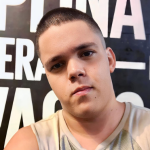
Singer-songwriter Nathan Fronza will release the single “Pessimismo da Razão” (Pessimism of Reason) on February 27th, the central track from his EP Paz, Pão e Terra (Peace, Bread and Earth), released by Marã Música. Inspired by Antonio Gramsci’s famous phrase, the song translates melancholy as a turning point between paralysis and the regaining of hope, reflecting a delicate moment in the artist’s life. In an interview, Nathan reveals that the song was born when he was thinking of giving up on everything, transforming the composition into an intimate dialogue about pain, resilience, and new beginnings. With references ranging from rock and R&B to influences like Jimi Hendrix and John Frusciante, the single combines emotional and musical intensity to convey a clear message: even when everything seems lost, it is still possible to find the strength to continue.
“Pessimism of Reason” was born from a very delicate moment in your life and carries an intense emotional charge. At what point did you realize that that pain could be transformed into music and, more than that, into something capable of helping other people?
Actually, it just happened. I picked up the guitar and the music simply emerged; it all came to me fully formed in my head in real time. Then I made a very simple recording without any pretension. The next day I woke up with the song in my head, and then I stopped to listen to the recording, and I realized that it really carried all this emotional weight. From time to time I would show this song to some people around me, and they said that the music moved them; some people even cried while listening. Now the time has come for this song to be officially born, and I hope it can touch the hearts of people who are suffering, especially those who are about to give up, just as I was when this song came about. After all, this song saved my life.
Within the EP “Peace, Bread and Earth,” each track represents a different way of dealing with the frustrations of daily life. Why did you feel that melancholy needed to occupy this transitional space between paralysis and the regaining of inner strength?
Adopting a fighting stance requires giving up a lot, and at some point we end up feeling completely alone, often even questioning whether the fight is really worth it, and if we think rationally, we might even conclude that it isn’t. There will come a time when it will no longer be possible to sweep this suffering “under the rug,” meaning the only option is to move forward despite the pain, and it may be during these moments that you find your true strength to keep going. Because often the very act of moving forward requires us to adopt a fighting stance.

The music directly engages with “Optimism of the Will,” inspired by Gramsci’s idea. How was it to construct this emotional and conceptual “diptych” within the EP, almost like two stages of the same internal process?
One of the biggest challenges in recording an EP was precisely finding a way to make the songs dialogue with each other, like a puzzle, and initially the songs didn’t have names, they just existed. I always felt that the two songs needed to be together, since “Pessimism of Reason” gave me the idea of being alone on a rainy night while “Optimism of Reason” brought the feeling that the sky was opening up again and with it the hope needed to keep moving forward. This introduction, which later became “Optimism of Will,” was something that arose naturally while I was watching my dog, Flor, while she slept, and over the next few days I realized that I always played this same chord sequence when I wasn’t feeling well, and that somehow it helped me get my head back in place, like a warm feeling in my heart, you know? So, this quote from Gramsci was something that would occasionally slip out of my mouth during conversations with the team, until at some point Leo, who directed the music video for “A Última Sombra,” among other things, pointed out that we should use this quote in the EP somehow, and in the middle of a meeting we had the idea of breaking the quote in two and dividing it between the last two tracks of the EP.
You describe the songwriting process as a kind of conversation with yourself, almost therapeutic. After it was finished, what was the main transformation that this song brought about in you as a person?
I think just the fact that I woke up the next day was already a huge transformation, because I had truly reached a dead end. I believe that after this moment I began to understand that it’s always worth moving forward, and that no matter how bad our pain is, tomorrow will be a new day and when we wake up we will think that it was worth continuing here.

Your father’s participation in the recording adds a very strong emotional layer to the project. What does this family encounter within the music represent for you, especially in such an intimate track?
I don’t even have words to describe what this means to me. First, because he’s a phenomenal musician, and when I say that, I mean it. He has a great career in music and teaches at one of the biggest music schools in Latin America, alongside some of the greatest musicians in this country. And playing with someone from the old guard is something that’s hard to explain, because these guys had a very different experience from my generation. They didn’t have YouTube; the thing was to learn music the hard way. They often lived with their bandmates and played all day, and at night they went out to play even more, every day, for decades. My father is a guy who came from nothing and dedicated everything to music, and even today he studies all day, in addition to teaching and playing. Being able to play with a musician of that caliber is very rewarding because there’s a very sharp level of perception, where you can perceive every detail, in addition to good taste, which is perhaps the most important thing. In this song, he recorded the bass line and some guitar layers as well. He also recorded the bass line for “Otimismo da Vontade” (Optimism of Will). Another issue was the fact that I was the music producer and audio engineer for the EP, meaning I had to make all the decisions about how things should sound, and even though we do that, we always get a certain nervousness when conducting a recording with a musician of that caliber. And of course, besides all that, there’s the fact that he’s my father, the guy who’s been with me since the day I was born, so every time I listen to this recording I get very emotional.
The final solo, improvised in a single take, seems to symbolize a break, a turning point. Do you remember what you were feeling at that specific moment when you decided to simply “let it happen”?

At that moment I wasn’t thinking about anything other than “I think there needs to be a solo here.” I decided to record some guitar backing, and I really had no idea what to do. I pressed “Record” first and then thought about what I was going to do, which is something that happens frequently in my daily life. I started recording a sequence of chords and suddenly felt I needed to change the key, and I did. Then I pressed “Record” again and recorded the solo in a single take, and that’s exactly the solo that’s on the recording, but everything else was re-recorded, including the backing tracks. In the final version, my father plays the backing track for the solo, along with the bass. I’m sure that if I tried to record the solo several times I wouldn’t be able to maintain the same energy, and that’s something I “inherited” from the old guard, because today people want to do everything perfectly, and I like this “old school,” more organic approach, which considers sounding genuine to be above everything else. Somehow I think I was inspired by John Frusciante from the Red Hot Chili Peppers when creating this solo, because he’s a totally organic guy.

By speaking openly about emotional health and how pain can be even more intense for neurodivergent people, you assume a position of great vulnerability. What motivated you to transform this personal experience into a public message of support?
I think I simply don’t have another option, you know? Sometimes we try to be the strong guy who faces any challenge and assumes a heroic posture, but at some point the bill comes due and we need to face the reality that we do have our weaknesses. It’s very important that people are talking more and more about mental health, because until recently people simply avoided talking about it, they just said it was all nonsense and moved on, sometimes they even said that all it took was working hard and keeping your mind occupied to avoid depression, but today we know that’s not true. We lost great artists because they didn’t know how to deal with these issues, many of them never even discovered they had some kind of disorder, and I also lost some people around me for these same reasons, and it’s very sad to think that many of these people could still be here if they had found some kind of treatment that would support them. There are some aggravating factors when we talk about people who are neurodivergent, meaning their brains function differently from the norm. This can make it very difficult for them to adapt to a society that simply wasn’t designed for them. I was recently diagnosed with autism and giftedness/high abilities, and this is the first time I’ve spoken publicly about it, partly because I’m still in the process of understanding what it means. But somehow, I feel more confident about the future now that I have the tools to find ways to feel less out of place in society. This sense of displacement is very difficult for a person to deal with; it’s like being a swan living among a bunch of ducks, or vice versa, and needing to act like them, even though you’re not the same. Besides all the prejudice that still exists regarding these issues, for example, I know that some people will look at me differently from the moment they find out I have this diagnosis, and here I had to choose between losing these people in exchange for being able to connect with some people who feel displaced and who need help, and I think I’m doing the right thing. So every time I talk about this publicly, I hope that, in some way, it encourages someone to seek help if they are suffering, because nobody needs to face these issues alone, and even if they wanted to, they probably wouldn’t have the tools to do so.
You mentioned that you’re still trying to find the courage to release and play this song because it’s something very sensitive. How do you hope to feel when it finally reaches people and starts creating connections outside of yourself?
I really can’t even think about it; I just try not to create any expectations and see what happens, as if I were entering completely unknown territory with an open heart to whatever comes. At the same time, I’m eager to talk to people and better understand what they feel, because in a way I also need that to move forward. I see that there’s often a wall between the artist and the public, which to a certain extent can be healthy to preserve the mental health and privacy of the artist, who is a human being like any other and needs this space. However, I hope that this song can break down this wall and that I can have a deeper relationship with people, because I know I have a lot to learn from them.
Follow Nathan Fronza on Instagram