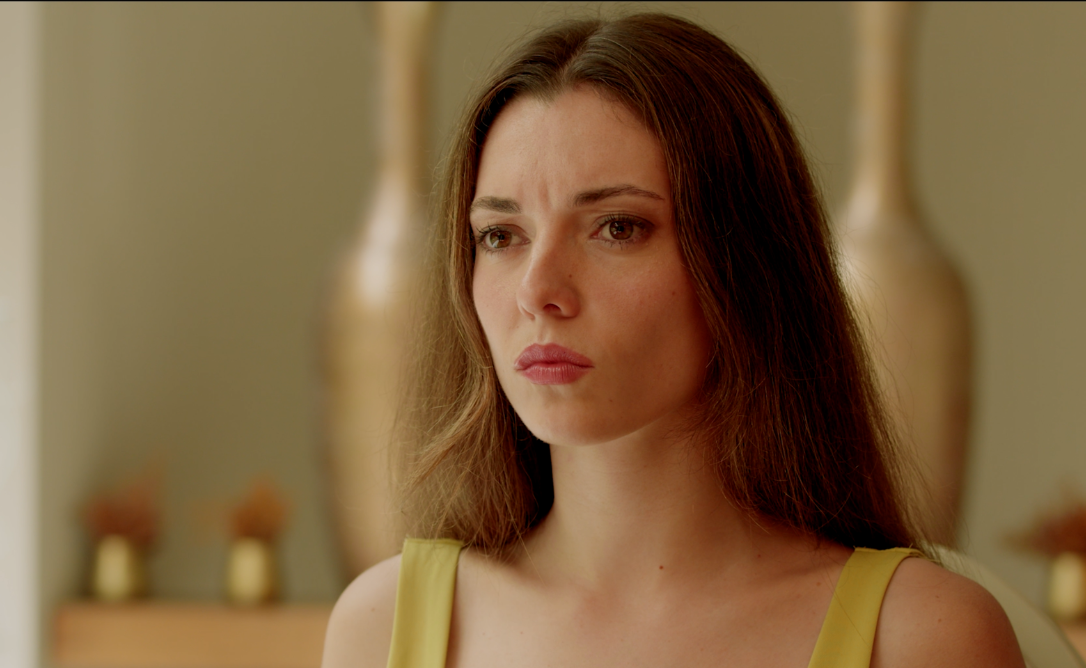
Featured at JDIFF, Idol Makers unfolds as a story shaped by secrets, ambition, and structures of power, with Sofia at its center as a protagonist torn by moral conflict and transformation. In this interview, Portuguese actress Rafaela Sá reflects on the character’s emotional complexity, the symbolic weight of her journey, and the questions the film raises about celebrity, identity, and the cost of ambition.
Sofia is faced with a disturbing family discovery and, at the same time, with the possibility of rising within this order. What drew you most to her as a character?
What drew me most to Sofia was that contradiction. She’s dealing with something really disturbing, and at the same time, she’s faced with an opportunity she can’t ignore. She’s constantly torn between stepping back and moving forward, which makes her human.
Sofia’s journey seems shaped by moral conflict, ambition, and legacy. How did you work through those layers in building your performance?
I didn’t see those layers as separate things, but more as something that makes her human, because we all go through those kinds of conflicts. Her moral side holds her back, her ambition pushes her forward, and her legacy weighs on her. I tried to work from that sense of chaos.
Is there something about Sofia that, to you, makes her feel more human than simply a character placed inside a fantastical premise?
Yes, completely. She hesitates, she fails, she doubts. What she feels is very relatable. That feeling of not knowing if you’re making the right choice… I think everyone has been there at some point.
The film creates an interesting inversion by placing a woman in the position of entering a structure marked by tradition and power. How do you see the symbolic weight of that journey?
I see it almost as a direct confrontation. She’s entering a space that wasn’t made for her, and that alone creates tension. She challenges the system just by being there. To me, that really speaks to change, about occupying spaces that have been closed off for a long time.
In a story so deeply shaped by secrets, fame, and the cult of image, how did you find the balance between the character’s emotional side and the darker dimension of the plot?
For me, the most important thing was to never lose her emotional core. Even when the story gets darker or heavier, I tried to stay connected to what she’s feeling. Because in the end, that’s what holds the audience. If she feels real, the audience will follow her.
After playing Sofia, what kind of conversation do you hope the character sparks in audiences about celebrity, ambition, and identity?
I’d like it to leave a question hanging… how far is it worth going for ambition? And what do you lose along the way? Sometimes, in the middle of all that, you lose who you are. I think it’s interesting to spark that reflection: who are we when everything else is stripped away, the fame, the status, the expectations?
Follow on Instagram: Rafaela Sá | JDIFF