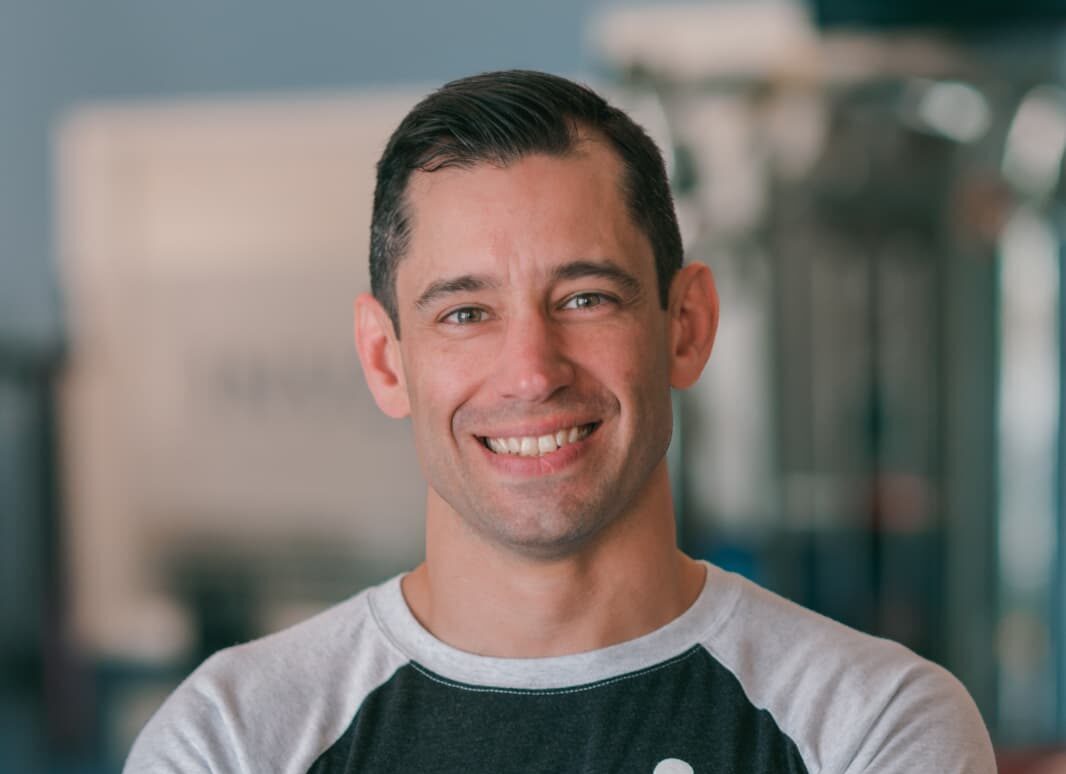
There is one question that accompanies almost every physical therapy appointment: “Where does it hurt?”
For Dr. Carlos Berio, that may be the least important question.
At a time when much of modern healthcare still focuses on the area where discomfort appears, Berio has built his professional career investigating what often remains unseen: the biomechanical origin of an injury, the movement patterns that precede pain, and the mechanisms that allow the human body to recover its full capacity.
Founder and Executive Director of SPARK Fieldhouse: Physiotherapy & Performance in Alexandria, Virginia, Carlos Berio has spent more than 27 years developing an approach that combines evidence-based physical therapy, sports medicine, biomechanics, strength training, injury prevention, and athletic performance development. His work challenges the traditional separation between rehabilitation and performance training, demonstrating that restoring the body and maximizing its potential are part of the same process.
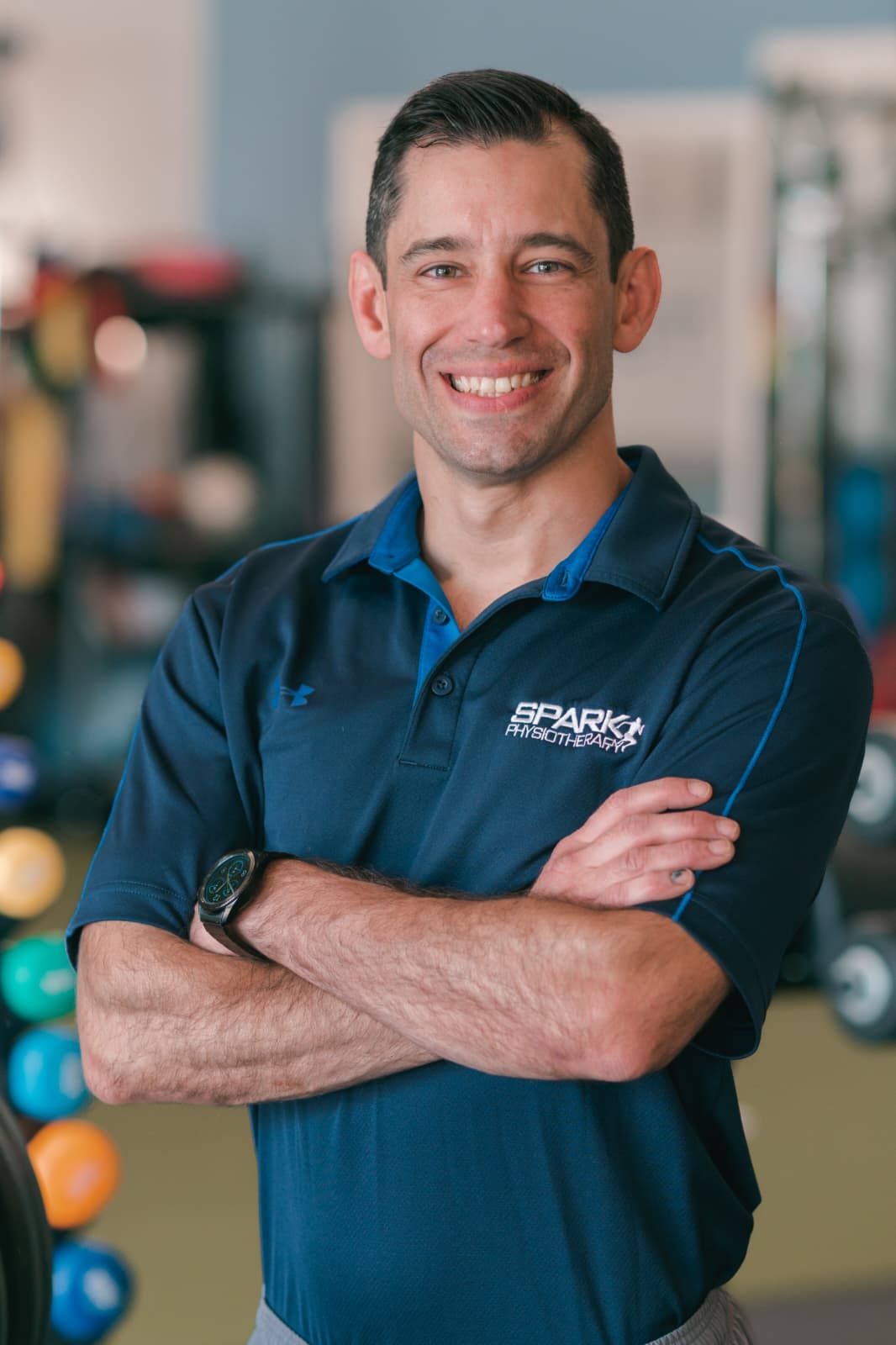
Carlos Berio’s journey began long before he opened his clinic. Before becoming a physical therapist, he was already studying the human body through the lens of movement science. His academic background includes a Bachelor’s degree in Kinesiology from the University of Maryland, a Master’s degree in Clinical Exercise Physiology from George Washington University, and a Doctor of Physical Therapy degree from Marymount University. These credentials were built upon years of practical experience as a strength and conditioning coach and personal trainer, a field in which he has worked since 1998.
This unique combination of scientific knowledge and real-world athletic experience is essential to understanding his methodology. While many professionals learn to focus first on a specific injury, Berio was trained to examine movement before damage occurs. His first question is not simply where the pain is located, but why the body reached that point.
For him, the human body functions as an interconnected system. No joint operates in isolation. Even a simple movement requires coordination among muscles, tendons, joints, the nervous system, balance, stability, and multiple regions of the body working together.
This philosophy is grounded in the internationally recognized concept of Regional Interdependence, an approach that considers the painful area not always to be the true source of the problem. The location of discomfort may simply be the weakest link in a larger chain affected by dysfunction elsewhere.
A shoulder injury may be connected to limited hip mobility. Lower back pain may originate from restrictions in the thoracic spine. Knee discomfort during running may be related to instability or poor mechanics beginning at the ankle or surrounding musculature.
To identify these connections, Carlos uses the Selective Functional Movement Assessment (SFMA), a comprehensive movement evaluation system that analyzes global movement patterns. Unlike approaches limited to the injured area, SFMA allows clinicians to identify mobility restrictions, stability deficits, muscular compensations, and biomechanical dysfunctions that may be contributing to the underlying condition.
The goal is not simply to reduce pain.
The goal is to restore quality of movement.
This philosophy becomes even more evident in his work with athletes. Carlos Berio has developed a strong reputation in sports that demand explosive movement, rotational power, and efficient force production, including baseball, softball, soccer, lacrosse, volleyball, basketball, golf, swimming, and Brazilian Jiu-Jitsu.
Although these sports appear very different, they share a fundamental principle: the body’s ability to generate power through a coordinated sequence of movement.
This understanding is reflected in one of Berio’s most important clinical concepts, known as the Thrower’s Coil, which focuses primarily on throwing athletes. According to his biomechanical analysis, throwing power does not begin in the shoulder. It begins with the athlete’s interaction with the ground and travels through a kinetic chain involving the ankles, knees, hips, pelvis, lumbar spine, thoracic spine, scapula, and finally the arm.
This perspective changes the way sports injuries are approached. For Berio, approximately half of the power behind a throw is generated below the shoulder. Therefore, treating only the shoulder means ignoring much of the movement system responsible for producing force.
This approach is particularly relevant in the diagnosis of Glenohumeral Internal Rotation Deficit (GIRD), a condition frequently observed in athletes who repeatedly perform overhead movements, including baseball pitchers, softball players, and swimmers.
GIRD involves a loss of internal rotation in the shoulder joint and can affect performance while increasing injury risk. Early identification allows athletes to address mobility limitations, strength imbalances, and movement dysfunction before more serious problems develop.
Another important component of Carlos Berio’s clinical practice is the use of Dry Needling, a technique based on anatomy, muscular physiology, and neuroscience principles, designed to address myofascial trigger points and improve muscular function.
Certified through the Travell and Simons method, one of the most respected approaches in this field, Berio uses Dry Needling as part of a broader treatment strategy that includes manual therapy, corrective exercises, and functional training. For him, the technique is not an isolated solution, but one tool within a comprehensive plan designed to restore movement.
His professional philosophy rejects the traditional separation between physical therapy and athletic performance. At SPARK Fieldhouse, patients are not simply discharged once pain disappears. The objective is to rebuild physical capacity, improve biomechanical efficiency, and reduce the likelihood of future injuries.
This integrated approach allows the clinic to serve a wide range of individuals: professional athletes, young competitors developing their skills, recreational athletes, adults seeking better health, and people who want to preserve physical independence as they age.
This long-term perspective is reflected in one of his most distinctive concepts: the Centenarian Decathlon.
The idea is both simple and profound: instead of focusing only on the body a person has today, we should consider the body they will need at 80, 90, or even 100 years old. From that perspective, training becomes a strategy to preserve essential abilities such as strength, balance, mobility, endurance, coordination, and motor control.
It represents an intersection between preventive medicine and performance science. The same principles used to improve an elite athlete’s performance can also help preserve independence and quality of life for decades.
Beyond his clinical work, Carlos Berio maintains a direct connection with sports. He serves as a junior varsity baseball coach at McLean High School and has practiced Brazilian Jiu-Jitsu since 2009, earning a purple belt in the discipline. This personal experience strengthens his understanding of the physical, technical, and mental demands faced by athletes.
He understands sports not only through scientific research, but through the experience of someone who trains, competes, and witnesses athletic development firsthand.
The structure of SPARK Fieldhouse itself reflects his philosophy. The clinic operates outside traditional insurance networks, allowing for individualized care, comprehensive evaluations, and close professional relationships between clinicians and patients. This model is based on the belief that meaningful results require time, attention, and a deeper understanding of each individual.
In this context, Berio introduced the term “PT Mill” in 2011 to describe a high-volume physical therapy model in which clinicians may be required to see multiple patients simultaneously, limiting the amount of direct interaction and individualized treatment. His argument is that a system designed around volume cannot fully prioritize quality.
His approach follows the opposite path: fewer patients per clinician, deeper evaluation, greater attention, and more comprehensive care.
The work developed by Carlos Berio represents a shift in how physical therapy can be understood. His approach moves the focus from injury to movement, from reaction to prevention, and from isolated treatment to a complete understanding of the human body.
More than restoring joints, he restores capabilities.
More than treating symptoms, he investigates causes.
More than preparing athletes for the next competition, he works to help people remain capable of movement throughout their entire lives.
In a world where healthcare often divides the body into separate parts, Carlos Berio follows the opposite direction: bringing together science, biomechanics, athletic training, and individualized care to demonstrate that true health begins when we understand the human body for what it truly is, an integrated, complex, and constantly moving system.

With over 30 years of experience in television, Claudia has worked as a reporter, producer, and editor. One of her books was publicly endorsed by the President of Brazil, earning her lifetime seats in literary academies in Brazil, the United States, and Europe. Having lived in Cuba, Mexico, the United States, and across Europe, Claudia speaks fluent English, Spanish, Italian, and Portuguese. With a career involving government, media and education, Claudia believes that communication is a bridge, and her mission is to make it human, strategic and transformative. She possesses BAs in Journalism and Advertising, an MS degree in Political Science and International Relations, and an MBA in Marketing. She was a UN fellow at the Hebrew University of Jerusalem and an alumna of Brazil’s Superior War College. She is currently doing a Ph.D. in Strategic Communications.