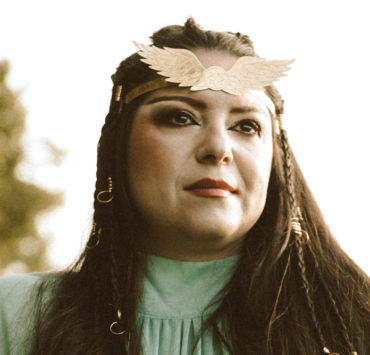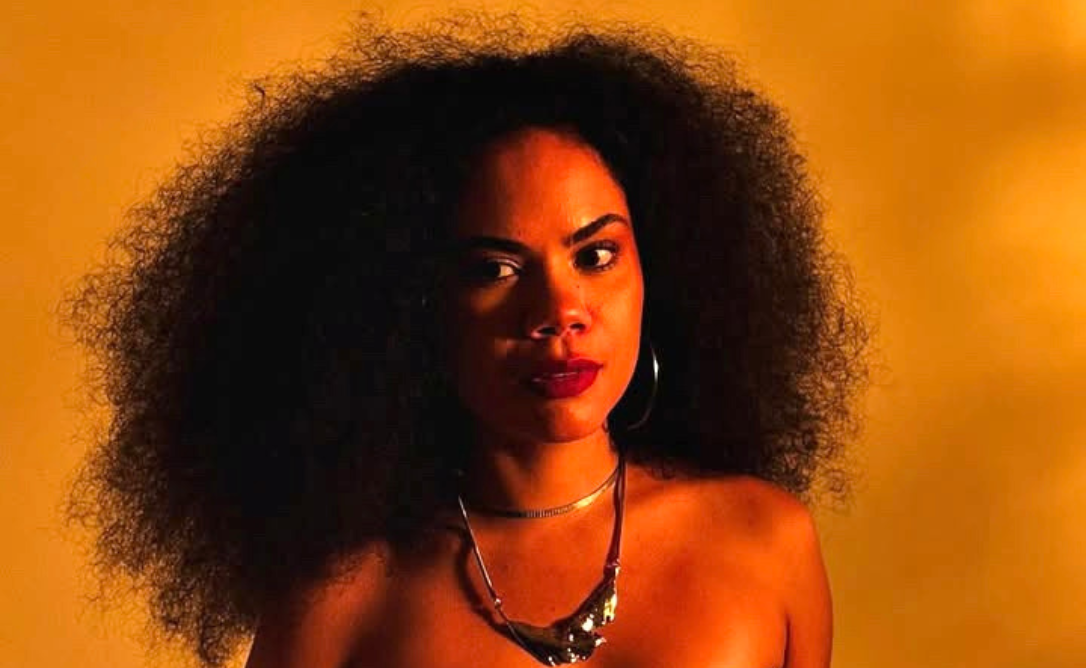
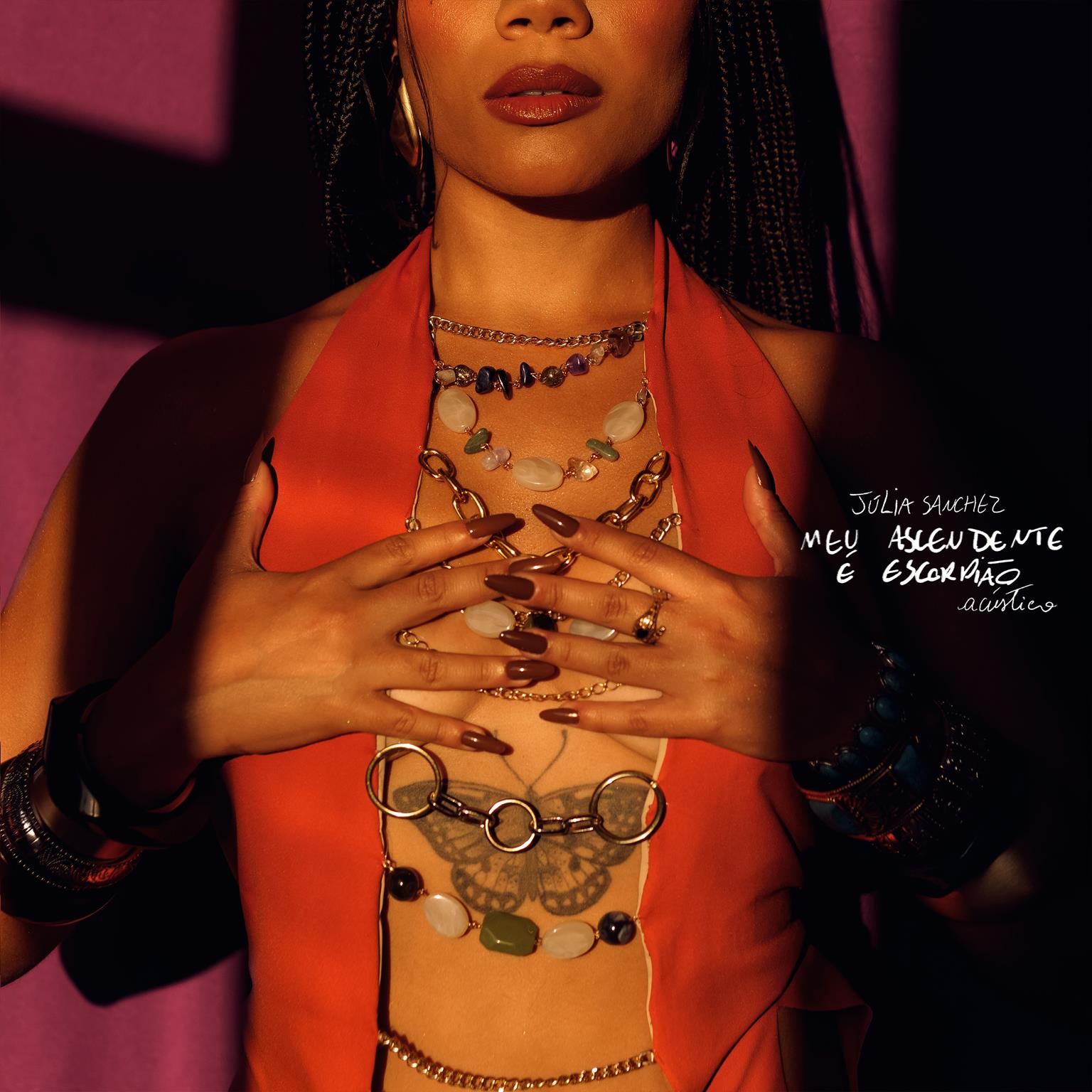
Singer, songwriter, and actress Júlia Sanchez presented, on August 18th, the acoustic version of “Meu Ascendente é Escorpião” (My Ascendant is Scorpio), a track that marks her arrival at Marã Música and recaptures the most intimate essence of a composition inspired by a relationship experienced by the artist. In a raw arrangement of voice and guitar alongside Guri Assis Brasil, the song gains new layers of vulnerability and closeness, reinforcing the idea that less can also mean more connection. In an interview, Júlia talks about the story behind the song, the encounter that gave rise to the recording, and the new artistic phase that also takes shape in the show No Pé do Ouvido (At the Foot of the Ear), presented this Thursday, August 20th, in São Paulo.
“My Ascendant Is Scorpio” was born very fluidly, completely, from a personal experience with another woman. At what point did you realize that this experience needed to be immortalized in song?
Everything happened in a very organic and natural way. I wanted to make a blues song with the lyrics I had written about this story while I was still living it. So I sent a very raw idea of me singing a cappella with a bluesy pulse to the track’s producer, André Papi, who loved the idea and transformed the song in the first moment into this vibe of passion and sensuality that captures much of what that moment meant. I like to immortalize moments in songs; it brings authenticity when the works stem from lived experience.
The new acoustic version returns to the song’s most intimate roots, with just voice and guitar, following a more bluesy approach on the EP “METAMORFOSE”. What did this more raw form reveal about the song?
This is the favorite version of many of my friends, close acquaintances, and followers who already knew “My Ascendant is Scorpio” in this format after I posted a video of it with just vocals and guitar on social media. I always listen to how the songs resonate with people, what makes them resonate; for me, it only makes sense through this exchange with the listener. I believe that this more raw way of singing reveals all the humanity that exists within it, and that says a lot in today’s world, especially with the standardization of AI, for example, where everything ends up looking somewhat the same. Perhaps the imperfection somewhere reveals this human, warm, close, and sentimental place that the song addresses.
You say that “less is more” can be the key to finding what’s essential and creating a connection with the listener. What kind of intimacy did you want to build with the audience in this recording?
I listen to a lot of music on my headphones on the way somewhere, and I believe other people have this habit too. This was essential for understanding and building this intimacy through voice and guitar, as if it were close to the listener in a “first person,” so to speak. Furthermore, this minimalism makes who I am as an artist more evident without the use of many elements, reminiscent of my early career in musical theatre, where we sang live on stage six times a week, developing a vocal technique that allows for this intense and real rhythm. I think this also brings the audience closer to who I am as an artist in terms of my background and purpose.
The track seems to place the listener almost in the position of confidant of a cherished memory. How does one transform something so personal into an experience that other people can also share?
With time, things have matured, from the moment I wrote the lyrics to the first recording on the EP METAMORFOSE and now in its acoustic version, the music is truly transforming into this consciously created shared experience, so that other women who love women can remember their loves and passions. I am very intentional in everything I do, I see this as a fact and not exactly as a flaw or a quality, but while I was in the studio sessions I was already aware that it was a song that many people could enjoy.
The recording at Miserychord studio was born from a series of meetings between you, Gabriel Manso, and Guri Assis Brasil. How did this synchronicity influence the atmosphere of the recording?
Encounters shape the artist. I live in relation to the world, to others, and this inevitably transforms me. Transformation itself is inevitable. This synchronicity has to do with this broad perspective I have and my relationship with different languages. Gabriel Manso is an audiovisual director and a friend of mine for many years. While I was on tour in Aracaju, he went looking for a location precisely to make this intimate recording of “Meu Ascendente é Escorpião” (My Ascendant is Scorpio) that I wanted so much. Due to my schedule, I only had one day to record and then I would have to return to the road. Gabriel contacted Hanna Moura, also from the audiovisual world and a friend of Guri Assis Brasil, and she made the connection. Guri, owner of Miserychord, listened to the track, liked it very much, and agreed to play on the acoustic version. From this encounter, the version emerged, as well as a partnership between us in the studio and in my shows, presentations at awards ceremonies. Whoever listens and feels the intimate atmosphere of the track also inserts themselves into this environment among friends that we are, that we formed because of it.
Guri Assis Brasil connected with the proposal to unite MPB (Brazilian Popular Music), groove, blues, and pop, taking on the guitar duties for the recording. What did this partnership bring to the identity of the acoustic version?
Guri is a very creative guy with a lot of experience when it comes to Brazilian guitar, rock, and Latin American rhythms. His work with Otto, Pupillo, Gal Costa, and the band Pública clearly demonstrates this. His versatility resonates strongly with me, and because of that, I believe this is a voice and guitar piece performed by two artists with a lot of personality, giving the track an interesting feel and setting it apart from the norm.
The single also serves as a calling card for the show “No Pé do Ouvido,” which promises to transform the stage into a kind of living room. What experience do you want to create for the audience at this event?
I’m a fan of intimate shows by artists I admire, like Lauryn Hill’s MTV Unplugged, Rosalía’s early performances of the album “Los Angeles,” and all the magic that Djavan creates with his voice and guitar.
I emerge from all these experiences transformed and with the feeling that I lived something very special, real. I want my audience to also have that feeling in the present, in the now. Counteracting the endless scrolling that often gets me, this is an opportunity to truly be in the moment, discovering music and sharing that experience with whoever is there. The repertoire was also conceived in this way, with songs from my EP METAMORFOSE, many unreleased compositions, and also songs by women who inspire me.
During the show, you will compose an original song live based on words and themes suggested by the audience. What attracts you to this idea of exposing the creative process in real time in front of an audience?
Because of my theater background, I have intense training in improvisation and quick thinking for the scene. This way of thinking translates into this idea of composing with the words that speak to me through a framework I created on social media, making music in this way. So, in this show, I want to materialize this great exchange with the audience that I had online and on social media.
Follow Julia Sanchez Instagram