A conversation you choose not to have because it might create conflict. An idea you keep to yourself because it feels safer to stay silent. A career move that looks impressive from the outside but leaves you feeling strangely disconnected from the person you once hoped to become. A relationship where accommodation slowly becomes your default setting until one day you realize you have become an expert at protecting everyone else’s comfort except your own.
These moments rarely feel significant. In fact, they often feel responsible, practical, or even kind. Over time, however, they accumulate.
Eventually, many people discover that the greatest distance they have created is not between themselves and others. It is between themselves and the person they once were.

For years we have celebrated authenticity as a leadership strength. We encourage leaders to “bring their whole selves to work,” organizations proudly proclaim authentic cultures, and social media offers an endless stream of reminders to “just be yourself.”
The advice is well-intentioned. The conversation, however, is incomplete. We spend a great deal of time talking about the benefits of authenticity. We spend almost no time talking about the consequences of inauthenticity. If you really think about it…let the notion stir…that omission is glaring, sometimes devastating.
Throughout more than three decades of coaching executives, leadership teams, and organizations around the world, I have discovered that very few people intentionally choose to live inauthentically. Instead, they adapt and become more agreeable than honest. More polished than present; focused on meeting expectations rather than understanding themselves.
They become remarkably successful at performing. After all, performance is often rewarded. It earns promotions, praise, approval, and acceptance. It helps us navigate organizations, families, and communities. It allows us to fit into cultures that reward certainty, confidence, and consistency.
The problem is that performance can become so convincing that we eventually lose sight of the person behind it.
Some of the most accomplished leaders I have coached have privately confessed something they have never shared with their teams.
“I don’t feel like myself anymore.”
Notice what they are not saying. They are not talking about burnout, workload, or compensation. They are describing something much harder to measure and grieving the growing gap between the life they are living and the person they know themselves to be.
That gap has become one of the defining challenges of modern life.
Today’s World Rewards Visibility More Than Reflection
We carefully curate professional profiles, personal brands, and digital identities. Every platform encourages us to present ourselves in ways that attract attention, approval, or influence.
We have become extraordinarily skilled at managing perception. I’m not convinced we have become equally skilled at understanding identity. Perhaps that is why so many people report feeling disconnected despite being more connected than ever before.
Social media did not invent performance. Human beings have always adapted to the expectations of the groups around them.
What technology has done is make the audience larger, the feedback faster, and the pressure more constant.
Previous generations learned to wear masks to fit into a room. Today, many people learn to wear masks for an audience.
The technology has changed enough to wow us and bury some of our human traits and natural intake and expression of feelings. The human longing to belong has not.
That longing is not a flaw. It is one of the most fundamental aspects of being human.
We all want acceptance. We all want connection. We all want to know that we matter.
The danger begins when belonging requires self-abandonment. When fitting in replaces becoming and acceptance becomes more important than alignment.
Most people do not surrender themselves through one dramatic decision. They do it through hundreds of tiny compromises that appear harmless in isolation.
“I’ll speak up next time.”
“This isn’t the right moment.”
“I don’t want to disappoint anyone.”
“It’s easier this way!”
One accommodation becomes another. Then another.
Before long, we are no longer making occasional compromises. We are managing an identity.
The cost reveals itself over years in diminished creativity because original thinking requires courage, and in weakened relationships because genuine intimacy cannot exist without honesty.
In this hazy sphere, employees stop contributing their best ideas because they have learned that fitting in is safer than standing out.
Leaders mistake compliance for commitment because everyone around them has become highly skilled at telling them what they want to hear.
Sometimes, the cost is paid in ways we are only beginning to understand.
A growing body of psychological and medical research suggests that chronic emotional suppression carries consequences far beyond the workplace, contributing to increased stress, cognitive burden, anxiety, and declining well-being.
The body often keeps track of what the voice never says.
That is why I no longer think authenticity is simply a leadership competency. I believe it is a human necessity.
Authenticity is Frequently Misunderstood
It is not permission to say whatever comes to mind nor an excuse for insensitivity.

It is not self-expression without responsibility.
Authenticity is alignment, the ongoing work of reducing the distance between who we are privately and how we show up publicly.
It asks us to examine where we have edited ourselves to gain approval, avoid conflict, preserve relationships, or protect success.
It requires courage because every one of us has something to lose.
I have also discovered something hopeful.
When one person chooses to remove the mask, others often feel permission to do the same.
A leader who admits uncertainty creates space for curiosity or colleague who speaks honestly creates space for trust.
We all have that friend who finally speaks the truth, creating space for deeper connection.
Authenticity is remarkably contagious. So is performance.
Every day, whether we realize it or not, we teach other people which one is safer.
Isn’t that the conversation we should be having?
Not simply how to become more authentic, but what playing it safe is costing us.
The greatest risk most of us face is not that others will reject who we truly are.
It is that we will spend so many years becoming who we believe we should be that we eventually forget who we were meant to become.
No promotion, title, or achievement can compensate for that loss.
Marty Murphy has spent more than thirty years helping leaders navigate one of the most overlooked challenges in business: the courage to lead as their authentic selves.
An executive coach, leadership consultant, and sought-after speaker, he has worked with executives and organizations around the world to build cultures where trust, accountability, and human connection drive exceptional performance.
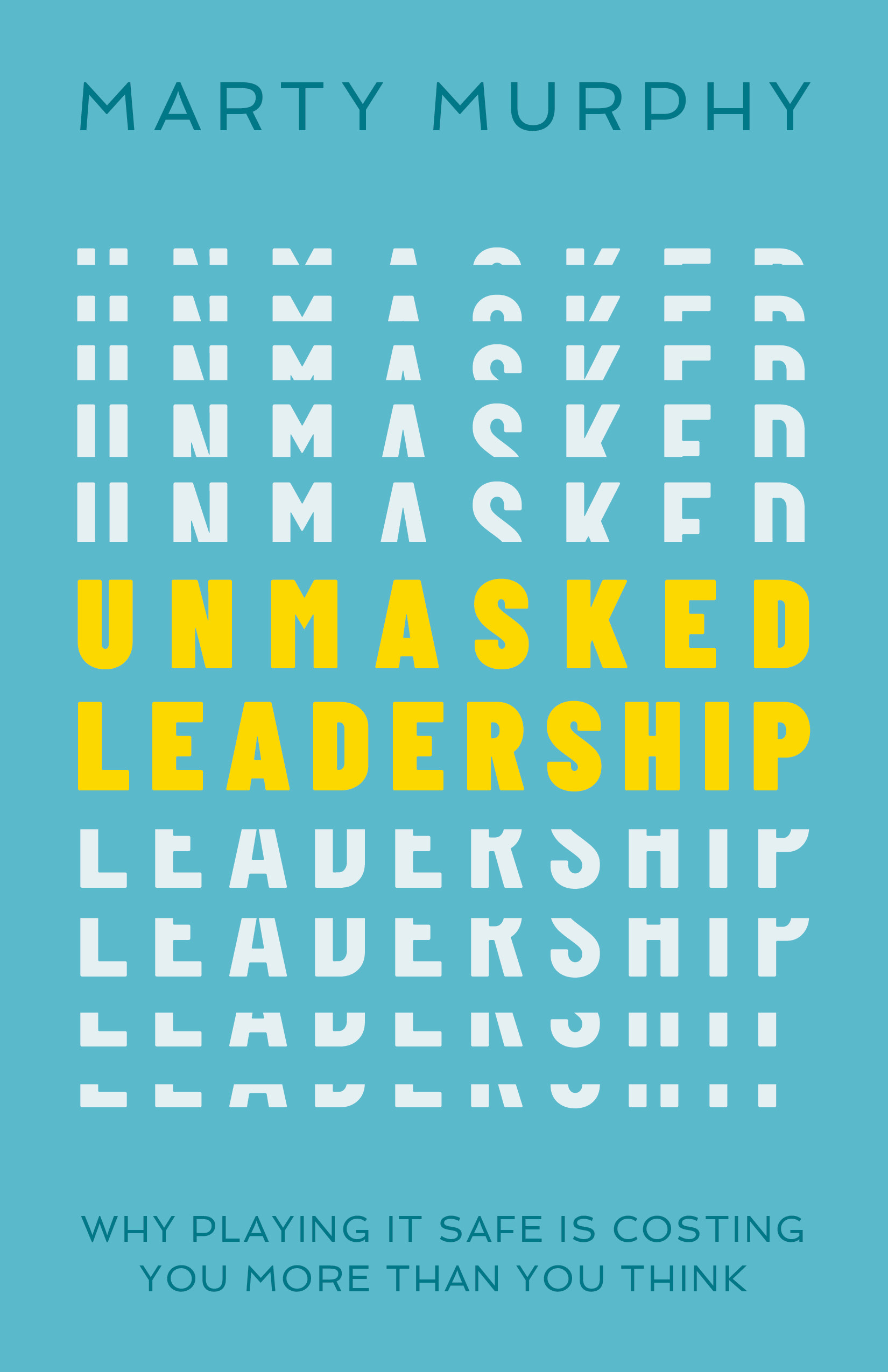
His forthcoming book, Unmasked Leadership: Why Playing It Safe Is Costing You More Than You Think (Fall 2026), explores the personal and organizational cost of self-suppression and offers a new framework for creating environments where people can fully show up, contribute, and thrive.
By Marty Murphy

With over 30 years of experience in television, Claudia has worked as a reporter, producer, and editor. One of her books was publicly endorsed by the President of Brazil, earning her lifetime seats in literary academies in Brazil, the United States, and Europe. Having lived in Cuba, Mexico, the United States, and across Europe, Claudia speaks fluent English, Spanish, Italian, and Portuguese. With a career involving government, media and education, Claudia believes that communication is a bridge, and her mission is to make it human, strategic and transformative. She possesses BAs in Journalism and Advertising, an MS degree in Political Science and International Relations, and an MBA in Marketing. She was a UN fellow at the Hebrew University of Jerusalem and an alumna of Brazil’s Superior War College. She is currently doing a Ph.D. in Strategic Communications.