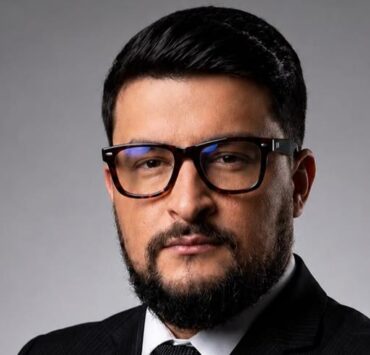
In today’s culture, leadership is often portrayed as a contest. We celebrate the executive who gets his way, the politician who defeats an opponent, or the negotiator who leaves the table victorious. Winning has become the measure of success. Roger Carlton spent more than fifty years proving otherwise.
As city manager responsible for communities including Miami Beach, Surfside, Hallandale Beach, and downtown Miami, Carlton stood at the intersection of competing interests every day.
One of Carlton’s signature projects transformed the eastern gateway to Miami Beach, for example. The challenge extended far beyond engineering. Internationally renowned Brazilian landscape architect Roberto Burle Marx envisioned sweeping tropical landscapes. World-famous artist Robert Rauschenberg was commissioned to create a monumental mural for Miami International Airport. Transportation officials focused on budgets and deadlines. Local leaders wanted an entrance worthy of one of America’s most recognizable resort cities.
Carlton became the bridge between creative vision, public investment, engineering realities, and political expectations. The finished project demonstrated that infrastructure could become civic art only because someone was willing to help very different people work toward a common purpose.
While in his roles, developers envisioned world-class hotels, condominiums, and commercial investment. Preservationists fought to save the city’s iconic Art Deco architecture from demolition. Residents wanted safe neighborhoods and a high quality of life. Business owners sought economic vitality, while elected officials answered to voters with very different priorities.
Few issues illustrated this tension more clearly than Miami Beach’s struggle to preserve its architectural heritage while reinventing itself as an international destination.
Carlton found himself navigating between passionate preservation advocates, visionary architects, influential developers, artists, and political leaders, each convinced they held the key to the city’s future.
His role was never to declare a winner. It was to ensure that growth did not erase identity, that preservation did not become stagnation, and that progress reflected the long-term interests of the community rather than the loudest voice in the room.
If leadership had meant defeating one side, Miami Beach itself would have lost.
“People often assume leadership is about having the right answers,” Carlton says. “I learned that it is much more about listening to competing viewpoints, understanding the long-term consequences, and finding a path that people can live with.”
That philosophy may sound simple, but it is increasingly rare.
Carlton rejects the idea that compromise signals weakness.
“In public life, there are often no perfect solutions,” he explains. “There are only choices with different tradeoffs. The objective isn’t to win every battle. It’s to create durable solutions that continue serving the community long after the controversy has faded.”
That perspective shaped everything from billion-dollar development decisions to neighborhood preservation efforts and emergency management during Hurricane Andrew.
Rather than asking, “Who wins?” Carlton learned to ask a different question:
“What outcome leaves the community stronger?”
Relationships Solve Problems Policies Cannot
One of Carlton’s defining leadership habits was listening more than talking.
That did not mean delaying decisions indefinitely or attempting to satisfy everyone. Instead, it meant understanding why people disagreed before determining how to move forward.
Every stakeholder brought a different perspective. Residents worried about neighborhoods. Business owners considered economic vitality. Preservationists protected history. Developers envisioned the future.
The leader’s responsibility was not to eliminate disagreement. It was to understand it.
One of Carlton’s favorite stories involves the Miami Seaquarium and its famous killer whale, Lolita.
When the cooling system for her habitat suddenly failed, replacing it would have taken weeks. Instead, Carlton called a trusted friend, the superintendent of Miami-Dade County Public Schools, who agreed to lend the Seaquarium a portable industrial chiller normally used for schools.

Within hours, the equipment was delivered and installed, saving the whale’s habitat.
No lengthy negotiations or contracts. Just years of trust between two public servants.
Later, Carlton found a way to thank the school district by creating a project that showcased artwork from 75,000 elementary school students during the Orange Bowl.
“Good leadership creates relationships that make extraordinary solutions possible,” he says.
Perhaps Carlton’s greatest lesson is that leadership is less about authority than responsibility.
Communities do not remember who won every political argument. They remember whether parks were preserved, neighborhoods remained vibrant, emergencies were managed well, and future generations inherited something better than what existed before.
Sometimes it means accepting a compromise that allows progress to continue.
The best leaders understand that every disagreement does not require a victor. More often, it requires someone willing to protect relationships while guiding people toward a shared future.
In an era that rewards outrage and celebrates division, Roger Carlton offers a more enduring definition of leadership.
Exceptional leaders do not need to win every battle.
They need to leave behind something worth building upon.
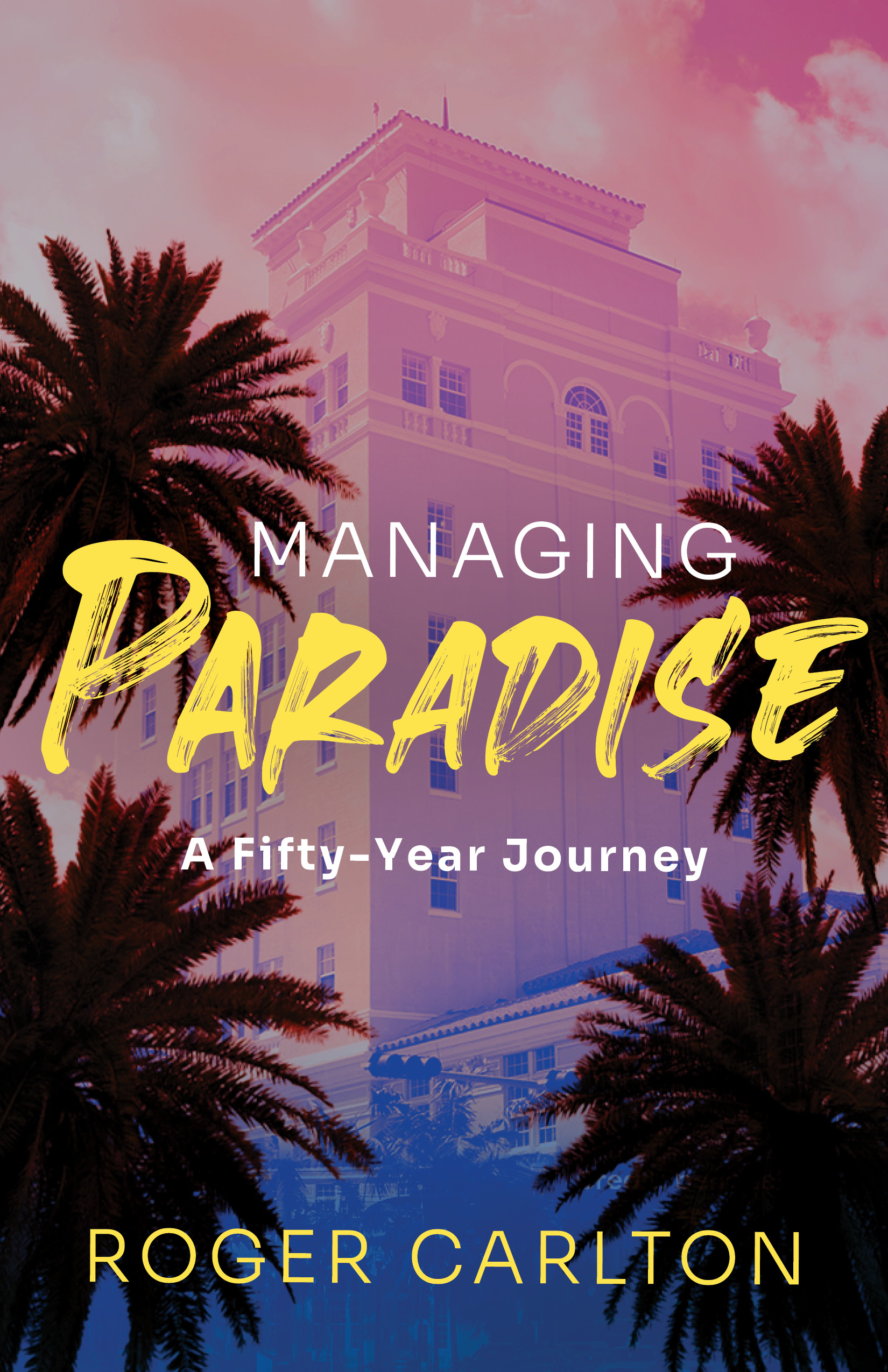
Carlton’s book, Managing Paradise: A Fifty-Year Journey, is available now on Amazon, Blackwell’s, Waterstones, and other fine retailers.