Nate Bynum joined Outer Banks expecting to play Demp for a single episode. What began as a guest appearance grew into six episodes by the end of Season Four — and even a filmed death scene did not mark the end of his character’s journey. Producers ultimately decided to bring the mysterious groundskeeper back for Season Five, deepening his relationship with the Pogues and turning what was meant to be a brief job into another unexpected chapter in a career that has rarely followed a straight line.
In an interview with Luca Moreira, Bynum discusses disappearing into a character almost completely unlike himself, working on a production of Outer Banks’ scale, and watching young lead actors perform professionally many of the things he teaches his own students. An actor, university professor, and screenwriter, he also reflects on how those three sides of his career continue to shape one another — and on the rejection that helped build the confidence he carries today: “I’ve come to believe that failure is part of success — perhaps even the most important part.”
You had a recurring role across the two most recent seasons of Outer Banks, but relatively little has been publicly shared about your part. To begin, who do you play, and how does your character fit into the world of the series?
The character’s name is Demp, a mysterious groundskeeper the Pogues encounter in Season Four. He has information that can provide some of the answers they need in their search for treasure. At the end of Season Four, it was assumed that Demp had been killed, but he returns in Season Five with an even greater understanding of the danger the Pogues are facing.
Outer Banks already had a very established identity, audience, and set of character relationships when you joined the cast. What was it like finding your place within such an established production while still bringing something personal to the role?
That’s the life of an actor who guest stars on television. You have to enter an established world and make it seem as though you’ve always been part of these characters’ lives or their story. I’ve done that throughout my career, so fitting into an established production wasn’t difficult for me.
The greater challenge with Outer Banks was personal because Demp is so different from the characters I normally play, and so different from me. He’s an uneducated laborer, a heavy drinker, unshaven and unkempt, with a drooping eye and a limp. None of that describes me. So I built him from personal observations of people I’ve known or encountered over the years. I was given the opportunity to disappear into someone who was almost the complete opposite of myself, and I enjoyed that.
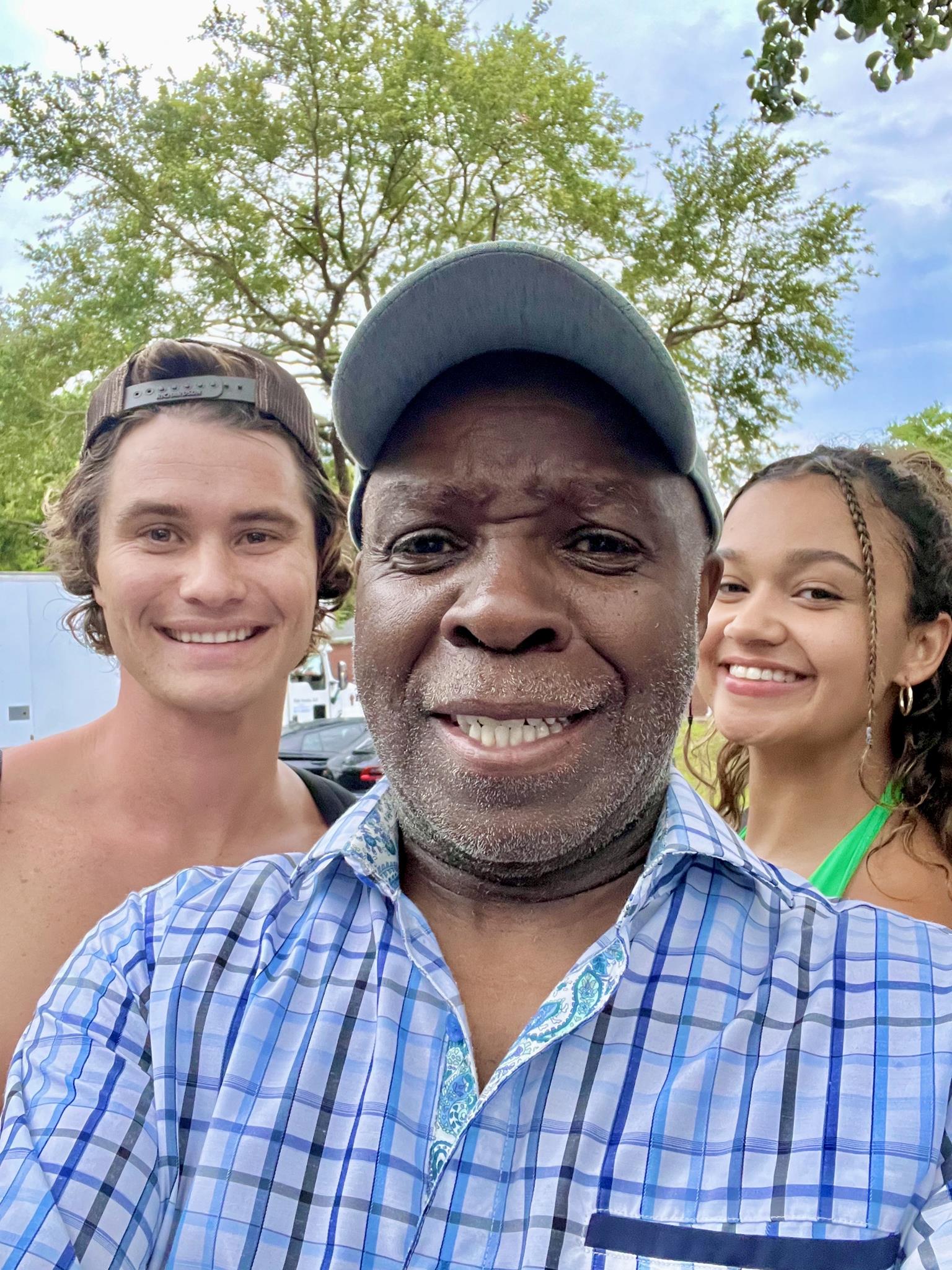
Appearing across two seasons offers a very different experience from stepping into a series for a single episode. How did your understanding of the character change from your first season on the show to the next?
In Season Four, I played Demp as someone who regarded the Pogues simply as guests on the island where he worked. He had no reason to think they would be around very long. But he had been asked to deliver a letter to one of them, and their arrival finally gave him the opportunity to fulfill that obligation.
By the final season, everything had changed. Demp knew these kids brought danger with them— and that they were bringing danger upon themselves by continuing to search for the treasure. These meddling kids had nearly gotten him killed once, and now they might get themselves killed if he didn’t try to stop them. So his relationship with them became much more personal.
After spending so many years teaching acting for the camera, what was it like being on a production of the scale of Outer Banks yourself? Was there ever a moment on set when you realized you were applying something you regularly teach your students?
I had worked on large television sets before (How to Get Away with Murder, Grey’s Anatomy, Frasier, The Rookie and others) so I felt at home on the Outer Banks set.
What did strike me, though, was realizing that I was working alongside lead actors who were roughly the same age as many of the students I teach. That was an interesting convergence of my two worlds. Here were young actors carrying a major international television series, doing professionally every day many of the things I’m preparing my students to do. It reinforced for me how important it is that what I teach in the classroom reflects what actually happens on a professional set.

As a professor, you have trained generations of actors for on-camera work, while continuing to act professionally keeps you connected to the realities of the industry. How much do those two sides of your life continue to inform each other?
A great deal. The real-life experience is what I carry back into the classroom. Professional acting isn’t a theory; it’s a very real and challenging way to make a living. There are things you learn by actually doing the work that you simply cannot learn from reading a book or discussing the profession in the abstract.
Because I continue to work professionally, I can speak to my students as a working actor. I can tell them what happens in an audition, what happens when you arrive on set, what is expected of you once the camera rolls, and how you conduct yourself when you’re surrounded by people who do this for a living. That keeps my teaching current and grounded in the realities of the profession rather than solely in textbooks or scholarly theory.

Your career now spans acting, teaching, and an increasingly significant body of work as a screenwriter. When you are performing in a series like Outer Banks, can you experience the story purely as an actor, or do the writer and professor in you automatically begin analyzing structure, storytelling choices, and scene construction as well?
Great question! Because that is exactly what happens. It’s unavoidable. Every script becomes a text for me to analyze: structure, genre, formatting, character, plot, voice, all of it. As an actor, I’m concentrating on what my character needs and what is happening in the scene. But the writer and professor in me are still paying attention to how the entire thing has been constructed.
A well-written script impresses me before anybody ever says a word on camera. I become interested in not only what the writers are telling us, but how they’ve chosen to tell it.
Your career includes historic milestones in academia, recognition as a screenwriter, and now a recurring role in one of Netflix’s most widely known series. When you place Outer Banks within that much larger journey, what does the experience represent to you personally?
Growth and confidence. Originally, I was booked for only one episode of Outer Banks. That one episode became six by the end of Season Four. We actually filmed Demp’s death, but the producers ultimately decided to bring him back for Season Five. There’s something wonderfully affirming about being hired for one episode and then having the people making the show continue to find reasons to bring your character back.
In some ways, that mirrors the rest of my life. In academia, I never planned to stay long enough to earn tenure at two different R1 universities. In screenwriting, my early scripts were routinely passed on. None of those experiences followed a straight line.
What I’ve gained over the years is the confidence to keep working through rejection, disappointment and failure. I’ve come to believe that failure is part of success — perhaps even the most important part — because it teaches you whether you truly want something badly enough to keep going.
Follow Nate Bynum on Instagram