After spending more than a decade away from acting to build and raise her family, Laurel Feierbach returned to the screen with something she could never have gained solely in a classroom: life experience. For the actress, growing older, becoming a mother, and building an identity outside the industry expanded the emotional well she now draws from as a performer — while also reshaping her definition of success.
In the interview, Feierbach discusses playing Elinor in The Militia, a loving mother whose devotion to her family exists alongside a dangerous worldview. She reflects on the difference between finding humanity in a character and excusing her choices, the risks of growing up without being encouraged to question beliefs, and the value of engaging with people who see the world differently. But when looking at her own journey, she captures her relationship with acting in one simple thought: “I don’t need this job. I love this job. It’s all a gift and a joy.”
You stepped away from acting for more than a decade to build and raise your family before returning to the screen in your mid-30s. When you came back, what had changed most profoundly in you as an actress — your craft or your understanding of the people you were now portraying?
My understanding of the people I was portraying. I’ve been interested to see how much I’ve grown as an actor just by living life. I look back at who I was at 21 when I was pursuing this career before, and I just go, “Man, that girl hadn’t lived much.” There was so much I just hadn’t experienced. And you’re trying to portray these characters who have experienced these things and you kind of just can’t. Granted, I had had a pretty easy and sheltered life at that point. Now, I’ve experienced some things. I think living life makes you a better actor and life experience informs your acting in a way that nothing else can. You just have a much richer pool of experiences to draw from when you’re creating a character, telling a story, the older you get.
Your own story includes international and foster care adoption, while many of your roles involve mothers and family matriarchs. How has motherhood deepened your understanding of those women without simply projecting your own experience onto them?
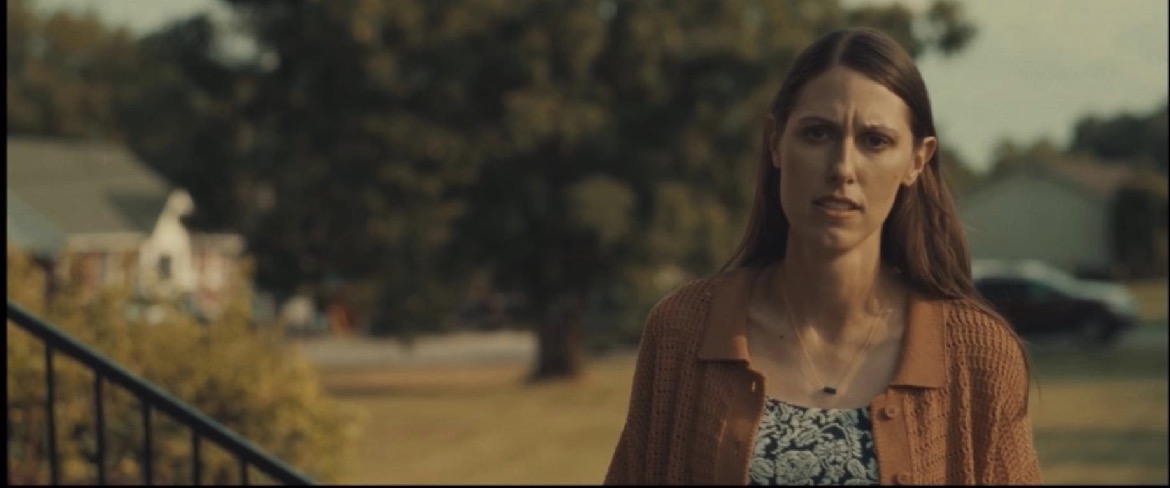
It’s a starting point. For example, I played a mom in The Militia, and my starting point of connection with that character was that she’s a wife and a mom, and I’m a wife and a mom, and so I understand that. I know the everyday mundane things that go with that, and also the more profound things that go with that. So that was my jumping off point for her. Then I dig into, where does this woman differ from me? Where do her experiences, her values, her beliefs differ from mine? And I build a character off of that.
A mom is a mom. However you come to motherhood, there are certain aspects of it that are universal: what it does to you, how it changes you. I always like to find what I have in common with a character first, and then I dive into the differences.

In The Militia, Elinor is a loving mother but also someone deeply devoted to dangerous beliefs. How did you build a character who could convey genuine affection while still making the audience deeply uncomfortable?
Great question! When I boiled Elinor down to her core, her driving force, it was her family and her love for her family. I understand that; I know that. We have that in common. That was the core of who she is to me. Then I dove into militias (because Elinor’s family is part of a local militia) and what drives people to them and what they believe and why they believe those things.
And then I think at Elinor’s most dangerous, what’s really motivating her is fear and desperation, which stem from, again, the love she has for her family. We’re all driven to a certain place when we’re afraid for the safety of our family. But when, at that moment, you already hold a certain set of beliefs, that’s going to become a dangerous moment. And I’m glad she makes the audience uncomfortable, thank you for that!

Stories about extremism can make it easy to view characters only as villains. How important was it for you to find Elinor’s humanity without allowing that humanity to become an excuse for her choices?
I think that’s one of the things that Dylan Welter’s script did so well. It found the humanity in this family. I never viewed Elinor as a villain. I never viewed her husband Lee or her son Daniel as villains, which I think is crucial when you’re portraying characters like these. To me they were first and foremost a loving family. But they also had a dangerous worldview.
I also didn’t view her as a victim. Her choices are hers. I really think the script presents this story in an almost factual way. It was very important for us that we were just telling these people’s story. I tried to do that without judgement. With empathy. And I think the beautiful thing about this film is that it pushes back against the way we tend to make people into monsters in our heads. We stop seeing their humanity. Especially those on the far side of anything. But at the end of the day, we are all still people. And that’s a complex and complicated thing. Elinor is not a monster. She has good and bad all going on at once, and that’s humanity. This film challenges you to really look at that.

The Militia also examines how violence and extremist ideologies affect the next generation. In your view, what makes a belief inherited within a family particularly difficult for someone to question or break away from?
Wow. I think when we are taught not to question things, that can become dangerous. I think children naturally ask questions and examine things with curiosity. We have to encourage that as parents and adults. We have to foster critical thinking skills. Things should be questioned. Questioning isn’t scary. It’s healthy. At the end of it, you either walk away more committed to what you believe or less or your belief is unchanged. And that’s a good and healthy thing. I’ve known people in my own life who cannot question their beliefs because they’ve been taught that that very act is wrong, faithless, that it shows some kind of lack of character.
I think also the more isolated people are within their belief system, the more difficult it becomes to question and break away from. In this film, Elinor’s son Daniel is extremely isolated within their militia community. Those are the only people he knows and interacts with. And when we only know and interact with people who agree with us on everything, that becomes difficult to question. I’m looking at you, algorithm. There is great value in being exposed to people who are different than you and who have different worldviews than you.
Your height and physical presence often lend themselves to authority figures and strong women. How do you keep that external presence from defining a character completely and find vulnerability in women who may initially appear imposing?
Yes, as a 6-foot-tall woman, I do find I’m cast in roles that have a certain authority or power to them. Elinor has that as a mother but also has a definite softness. In this particular film, Michael Broderick, who plays Elinor’s husband, Lee, is about the same height as me. Sam Williamson, who played Daniel, was shorter than us and that leant itself well to him, being our teenage son and us having a visual authority in relation to him. So, I didn’t find my height really came into play in this film.
I think I can dial up or down the intimidation factor. I have the height, but I also have a pretty slight frame and softness in my face. So, all of that can balance together or I can up the softness factor or the intimidation factor, depending on the character. I suppose the way to find that vulnerability in those characters is really looking at them internally. What do they care about? What are they afraid of? How do they need to grow? Where are the cracks?
You returned to acting after building an entire life outside the industry. Has that distance changed your definition of success and the way you approach the pressures of having an artistic career?
Oh, I think absolutely. I’m so grateful to have such a rich and full life outside of my career. Sometimes I have to remind myself of that because there are so many pulls for my attention and time. Sometimes you can start to feel like, “Man, I wish I had more time for my career or more space in my day for my career.” But then I remind myself what a gift it is to have a life so full.
I think having a full life outside of the industry is important for everyone. Now, that can mean family life and kids, that can mean volunteer work and community, that can mean another job, travel, other passions, whatever. But when you have a full life outside the industry, it does change your definition of success. I really try to approach this career with gratitude for every opportunity. I get to do this fun thing I love! I didn’t think I’d be able to get back to this until all my kids were totally grown, really. And so, to be at a point, thanks to the incredible support of my husband, that I can pursue this while raising my kids, is just beyond what I hoped for.
I don’t need this job. I love this job. It’s just gratitude. It’s all a gift and a joy.
Follow Laurel Feierbach on Instagram