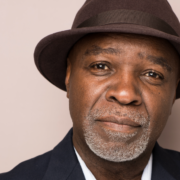
When Elliot Latner discovered acting as a teenager in Essex, building a career in the United States hardly seemed like an obvious future. Decades later, after moving through New York, Los Angeles, horror, drama, comedy, thousands of auditions, and countless rejections, the British actor arrives at TIFF with Evil Genius, directed by Courteney Cox and also starring Patricia Arquette and David Harbour. Yet what might surprise his teenage self most is not the festival or the names surrounding him, but the fact that after all the ups and downs, he remains just as excited about acting as when he first discovered it.
In the interview, Latner discusses the responsibility of portraying Robert Pinetti without reducing him to addiction or turning him into another piece of a true crime narrative. He also reflects on the creative freedom Cox gave him on set, how improv and comedy reshaped his dramatic work, and a lesson learned after witnessing thousands of self-tapes: a great audition and booking the job are not always the same thing. Through it all, acting remains, in his words, “still an adventure.”
In Evil Genius, you play Robert Pinetti, a real person with relatively little historical material available. How did you balance creatively filling those gaps without assigning him traits or motivations that the historical record cannot actually confirm?
I think the script really helped with that. Courteney Miles had given a very clear set of circumstances to work from, so I never felt I needed to invent a whole history for Pinetti that I couldn’t possibly know was true. As an actor you obviously have to fill in certain gaps internally, but for me it was more about understanding what his needs were in each scene, like what had just happened in his world, how did he end up in this situation, his stakes, emotional state and what he was trying to get through in that moment. I tried to stay within what the given circumstances were to help the performance rather than rewrite the person.
Part of your research involved interviews with people from Skid Row and material connected to addiction. What did you discover through that process that changed the way you understood Pinetti or the way people in similar circumstances are often portrayed on screen?
The biggest thing was probably how quickly the label of “addict” disappears when you actually listen to somebody for any length of time. I watched a small number of people across multiple interviews, and they were funny, intelligent, frustrating, vulnerable, contradictory, like everything that encompasses human nature. That really resonated with me. I didn’t want addiction to become Pinetti’s defining characteristic or something I was physically demonstrating all the time. It was part of what he was living through, but there was a person underneath it trying to get through his day and navigate his circumstances. That probably changed the performance more than any specific piece of research.

True crime can easily turn real people into characters within an entertainment narrative. What did it mean to you to preserve Pinetti’s humanity without minimizing his connection to such a disturbing case?
That was something I really thought about, because with true crime, people can very quickly become a name on a timeline or a piece of evidence connecting one event to another. But Pinetti didn’t know he was part of a “true crime story.” He was just living his life and dealing with his own shit (Stuff). So I never wanted to make him a cliche because of where his story ultimately intersects with the case. My responsibility was to play the person in front of me truthfully. The larger story and everything surrounding it can then speak for itself.
Evil Genius is directed by Courteney Cox and also stars Patricia Arquette and David Harbour. What was it like observing their approach to a story based on real events, and what surprised you most about the creative environment on set?
I just felt incredibly fortunate to have been cast by Courteney in this role. She told me that she loved the character of Pinetti and it just added so much excitement for me to really give it my all. The level of work Courteney did was incredible and she’d been working on it for so many years, and you could see it in every detail of her vision, when I was fortunate enough to observe some of the other scenes. My first scene was one of the hardest days, so I came in very prepared and a little nervous. But Courteney immediately came over and said, “You fooled us! We had no idea you were British!” She told me how excited she was for me to play the part and then gave me insightful facts and notes about each scene. I was also in good hands with my scene partner Michael Chernus on that day. Michael is a wonderful actor and the sweetest guy. Patricia is amazing, she knew exactly how to get the moment before we rolled to put us into the scene and watching Patricia and David collaborate with Courteney was such a highlight for me. Courteney also let me play within the scene and also gave me freedom to find things for myself, then if I went slightly off, she would just guide it back to where she wanted it. She was an incredible director and what really was amazing was her passion for every scene and moment of the story. Her curiosity and knowledge made it really exciting. I can’t say too much about the scenes, but through her notes I learned a lot more about where Pinetti fitted into the larger story arc of the movie.

Your career moves between horror, drama, and comedy, from The Conjuring 2 to Second City. Has working in comedy changed the way you approach dramatic roles, particularly in terms of timing, listening, and spontaneity?
Absolutely. I actually learned a lot about the shift before this at The American Academy Of Dramatic Arts with two of my acting mentors, Robert Verlaque and Peter Jensen. Before really honing this later with Lesly Kahn. Because Comedy is also really technical. The biggest thing comedy and especially improv has given me is trusting my instincts. Drama School focuses so much on technique, it’s easy to lose what made you passionate in the first place, so finding the trust of yourself and then getting a laugh reinforces trust in yourself. I learned at Second City that you can’t decide exactly how an improv scene is going to go because the other person is constantly giving you new information, The same is true in drama, but we have the luxury of knowing what comes next, but as long as you stay in the moment, trust your instincts and follow the logic it gives you more freedom. Second City also reminded me not to be too precious about choices. You prepare, obviously, but then somebody does something differently and you have to actually respond to it rather than trying to get back to the performance you planned. That’s been incredibly useful dramatically too. Comedy teaches you very quickly when you’re pushing for a result. The harder you try to be funny, usually the less funny you are — you don’t have to demonstrate to an audience how you’re supposed to feel.
Alongside acting, you coach performers through BK Actors Self-Tape. Has being on the other side of the audition process changed the way you approach your own auditions, rejection, and expectations as an actor?
Definitely. It changed everything, at this point I’ve done thousands of tapes and seen it all. When you’re only thinking about your own auditions, every rejection can feel incredibly personal, when it dries up you think what am I not doing right! But it truly is at the latter stages a game of inches as to who gets the part. So running the studio has given me a much wider perspective because I’ve watched brilliant actors give fantastic auditions and still not get the job. And I’ve seen mediocre tapes book massive jobs. I’ve also seen people tape for something, hear absolutely nothing and then have the same casting office bring them back for something else over and over again, that actually happened to me on The Diplomat, and I still never booked it. So you start understanding that a good audition and getting the job aren’t always the same thing. Luck is something, but essentially that just leads to Cause=Effect. Of course, I’m still an actor, so when I really want something I can still completely forget all of that advice! But I’m definitely better now at trying to do the work, send it and move forward.
You grew up in a working-class household in Essex and found acting almost accidentally through a school play. Now, with Evil Genius heading to TIFF, what would your teenage self find hardest to believe about the career you have built?
Oh yes, Dark of the Moon was the play. I played Hank Gudger, an older southern guy. Mad really for a school play. So yeah, I grew up on a council estate in Essex. My dad was a market trader. My uncle had a family friend in New York and he went to LAMDA for stage management, and he was really a big help with the move as he took me to New York a couple of times. But acting wasn’t something that felt like a realistic career. My dad even tried to get me a job at London Heathrow Airport as a baggage handler! So moving to New York two weeks after 9/11 was pretty crazy. My mum always said she could see me moving to America, though. My whole childhood was watching American high school shows like Saved by the Bell and memorizing 80s movies with my friends. So I think the teenage version of me would find the whole thing pretty believable — What he would find unbelievable is the life I’ve made here, moving from NY to L.A to NY again, becoming a dad, still acting all these years later, and now having a film going to TIFF directed by Courteney Cox with Patricia Arquette and David Harbour. But I actually think what he’d probably be most surprised by is that after all the ups and downs, I’m still as excited about acting as I was when I first discovered it. It’s still an adventure!
Follow Elliot Latner on Instagram