
Writing a film already means imagining characters, dialogue, and situations long before they come to life on camera. For Ansley Gordon, however, the process sometimes goes one step further: she also has to walk onto the set, inhabit a character, and watch other actors perform words she wrote. On All for Christmas, which she wrote, executive produced, and co-stars in, that proximity brings an unexpected kind of insecurity. “Do they like the script? Do they think this joke is funny?” the actress, screenwriter, and producer admits while describing the challenge of seeing her own material take shape around her in real time.
The film is only one of four holiday projects written by Gordon arriving this season, alongside How to Fall in Love by Christmas, starring Teri Hatcher, A Christmas Prayer Tradition, and The Christmas Ornament Library. For Gordon, moving between different tones, audiences, and platforms is a little like choosing different outfits for different days: each story reflects another part of who she is and another way of looking at the world. In the interview, she also discusses writing with actors in mind, adapting her voice for platforms ranging from Netflix to Great American Family, building sequels without losing the spirit of the original, and turning personal experiences into comedy.
You have four holiday films arriving almost at the same time, while occupying different creative roles across them. When you look at All for Christmas, How to Fall in Love By Christmas, A Christmas Prayer Tradition, and The Christmas Ornament Library together, what makes each one represent a different side of who you are as a storyteller?
It is so fun getting to write all different kinds of stories from all different perspectives. With All for Christmas I got to lean into the comedy and a little bit of steam between the two leads which isn’t something I normally get to do. With How to Fall in Love by Christmas I knew Teri Hatcher was starring in it so I got to write from a more mature perspective. With A Christmas Prayer Tradition I got to lean into the community element since I was building from a place of established characters. It’s a real treat to get to write from so many different perspectives. The Christmas Ornament Library is my most “me” Christmas script I’ve written. I wrote it just for fun, for myself, as the kind of movie I felt really inspired by. Getting to see it get made was a dream come true with my dream cast! It feels like dressing in different outfits – one day you’re feeling like wearing jeans and a t-shirt, another you want to wear a cute dress and boots. Each one of the stories represents a different part of who I am and a different view of the world.
On All for Christmas, you wrote, executive produced, and also co-star in the film. When you are performing words you put on the page yourself, are you able to let go of the writer’s perspective and simply inhabit the character, or are you still aware of structure, rhythm, and story choices while you are in front of the camera?
Getting to perform the words I wrote is one of my favorite things because I feel like I discover new things when I come at the character as an actor. I try to look at every character I write from the actor’s perspective – is this something I would feel comfortable doing if I was the actor? Or is there enough here to play with if I was the actor? Getting to actually take that step and do it for real on camera is one of my favorite things to do! When I’m acting in a project I wrote, I’m more insecure about the other actors – do they like the script? Do they think this joke is funny? I want them to love it because I’m right there with them seeing it all in real time. That part is a challenge for me!
Holiday stories often work with elements audiences already know and even expect. After writing so extensively within that world, where do you look for freshness? What makes a story feel familiar in a comforting way without becoming predictable?
I try to write everything from the perspective of fun. Fun for the reader of the script. Fun for the actors to perform. Fun for the viewers to watch. If it feels stale on the page, it will feel stale for the viewers. I don’t always nail it because the genre is so formulaic but I think always looking for the fun has helped me in my writing. The Christmas Ornament Library was born out of exactly that – I wrote the movie on spec as a project for just myself and I tried to make it as fun as possible. It’s my favorite Christmas movie I’ve written to date.
You have written projects for Netflix, Hulu, Roku, Hallmark, Lifetime, Great American Family, and other platforms. How much does a project’s eventual home shape the writing from the beginning, and how do you preserve your own voice while working for audiences and editorial identities that can be very different?
Sometimes I know where a project is going and sometimes I write and then sell it to a specific platform or network. Writing for Great American Family is different from writing for Netflix and so I always try to keep the audience in mind when starting the very first draft of the script. It shapes how I handle the comedy and the romance – how much steam can I add? How sweet do I need to keep the backstory of the characters or do I need to add more edge. I try to challenge myself to write all different perspectives within the Christmas genre throughout the year so I have different kinds of scripts to pitch to different buyers throughout the year.
A Christmas Prayer Tradition continues an existing story while also working explicitly within faith-centered storytelling. What changes for you as a writer when returning to a world that has already found its audience, especially when you want to honor what worked the first time without simply recreating the same experience?
I hope every movie I write gets a sequel so I try to build each world with enough depth to continue the story but it doesn’t always happen. It is a dream to get to continue the journey of A Christmas Prayer. I knew where I wanted to take a potential sequel when I wrote the first A Christmas Prayer. So after movie #1 premiered I reached out to Great American Family and pitched the idea I already had. I think of each movie as a season of a TV show so I try to layer in enough to continue the story beyond what is on the page. I also try to look at what made the first movie successful and how I can bring that same feeling to the subsequent movies. I think sometimes sequels and franchises go off the rails when they don’t honor the tone and feeling of the first film. That’s really important for me to preserve in the Christmas Prayer franchise.
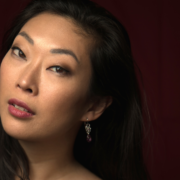
Your career moves between acting, writing, and producing, and you have worked on projects where you held all of those roles at once. Has being in front of the camera made you a different writer — perhaps more aware of what an actor needs to find within a scene — and has writing changed the way you approach someone else’s material as a performer?
I started my writing career because I was frustrated with the roles I was auditioning for as an actor – I wanted more control in my career and I wanted to exercise my creativity in a way acting wasn’t allowing me. So my writing has always informed my acting and vice versa. The first script that I starred in that I also wrote was Love on the Reef and I learned SO MUCH from that one – I now write from a perspective of “would I want to perform this stunt, gag, whatever, as an actor?” That’s made my writing more actor focused. And I am now in a place where I’m moving more into producing so I’m thinking of every script I write not only from a creative place but from a business place. Is this script able to be made for a reasonable budget? Can I cut things to make them more production-friendly to increase the likelihood of getting funding? That’s informing how I’m writing my current spec scripts.
Outside of film and television, you have used humor to speak openly about living with hyperhidrosis, with videos reaching millions of viewers. What has comedy allowed you to communicate about something so personal that might have been harder to express seriously, and has that experience changed the way you think about vulnerability as a way of connecting with an audience?
When I was growing up my hyperhidrosis was my biggest insecurity. A cheerleading coach called me a “mutant” because my hands were so sweaty when I was in 6th grade and it made me really ashamed of myself. My college boyfriend made my Instagram account and made my handle “Sweaty Hands Ans”. It took years for me to not be hurt by those things but somewhere along the way I realized that it was actually kind of hilarious all of the random ways my sweaty hands affected my life. I accidentally disintegrated our marriage license just by holding it. My now-husband was such a good sport about it and I think him loving me without it being an issue was really healing for me. He’d hold my hand, no matter how wet they were, without a second thought. I just asked him if they were ever an issue for him and he said “I never thought about it, they never bothered me.” I think that was the reason I was able to lean into the comedy of the condition now in my 30’s. Because it’s not something I see as a flaw anymore. It makes me.
Follow Ansley Gordon on Instagram