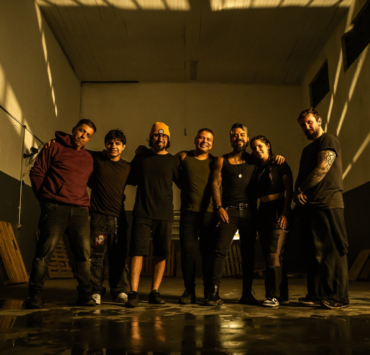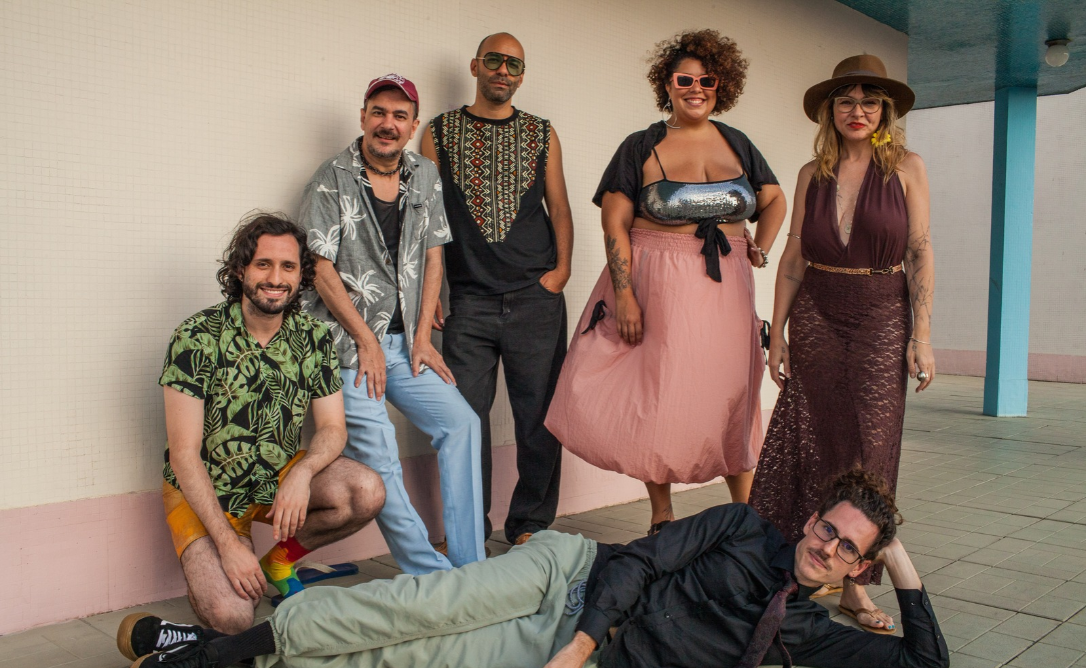
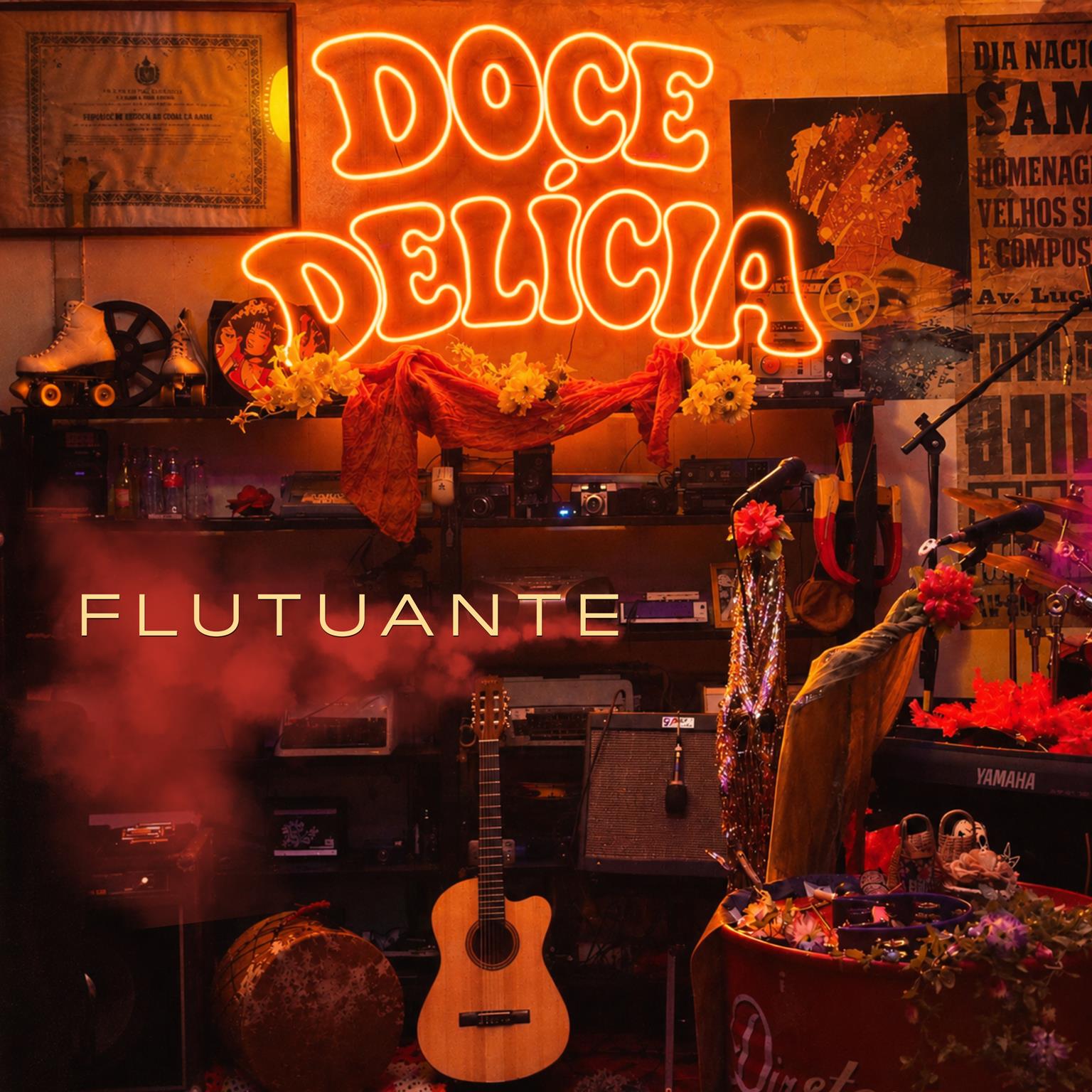
Between the fast pace of the metropolis and the search for moments of contemplation, the São Paulo-based band Doce Delícia found inspiration to build the universe of Flutuante, their first studio album. Formed by seven members from four different generations, the group transforms the diversity of experiences and musical references into a sonic identity that freely moves between samba, rock, xote, pop, and electronic music. Born from informal gatherings between friends on the balcony of an apartment in downtown São Paulo, the project matured artistically until it reached a work that questions the linearity of time and celebrates the beauty of transformations. In an interview, the members talk about the construction of this plural musical identity, the coexistence between different generations, the contrasts between urban life and nature, and the artistic freedom that guides the sensory narrative of the album.
“Flutuante” (Floating) stems from the idea that life doesn’t follow a straight line and that everything is in constant transformation. At what point did you realize that this reflection on time and impermanence could become the central concept of your first album?
Looking at the repertoire. When we started creating, we aimed for nothing more than the desire to experiment with making music. This put us in a very positive creative state where everything was possible (without right or wrong) based on experiences, references, and individual skills, without rules or goals. Very diverse and authentic songs were born. From this repertoire that presented itself to us, we did an exercise of looking at the songs without the biases that led us to create each one, but as a work placed in the world—and from there observe what they had in common, the feelings and sensations that each one generated. And what we found was not a musical category or a theme, we found portraits of moments that could have happened to anyone, at any time, anywhere. That could be happening at this moment, be a memory, or a future desire. Moments of euphoria, contemplation, sadness, joy… And how life ends up being this constant fluctuation between different states of mind.
The album begins with the solar energy of “Time do Sol” and ends with “Cai a noite,” constructing a journey that traverses different cycles of existence. How did you conceive this sequence to transform the experience of listening to the album into a kind of emotional voyage?
That was quite curious. In our performances up until then, we had used soap bubbles as a playful element at certain points in the show. We had already associated each song with an emotion, an atmosphere, and then we linked that to the idea that the compositions floated like soap bubbles; some grounding us, others calming us, and others throwing us upwards. That’s where the beauty and mystery of all things come in… “O Time do Sol” and “Cai a noite” naturally positioned themselves at the beginning and end of the album as a result of this design we created with the “ups and downs” of emotions and the bubbles. It was thought out, but not intentional. We realized it later, and it became an ‘easter egg’ that served to attest to the coherence of the reasoning we constructed.
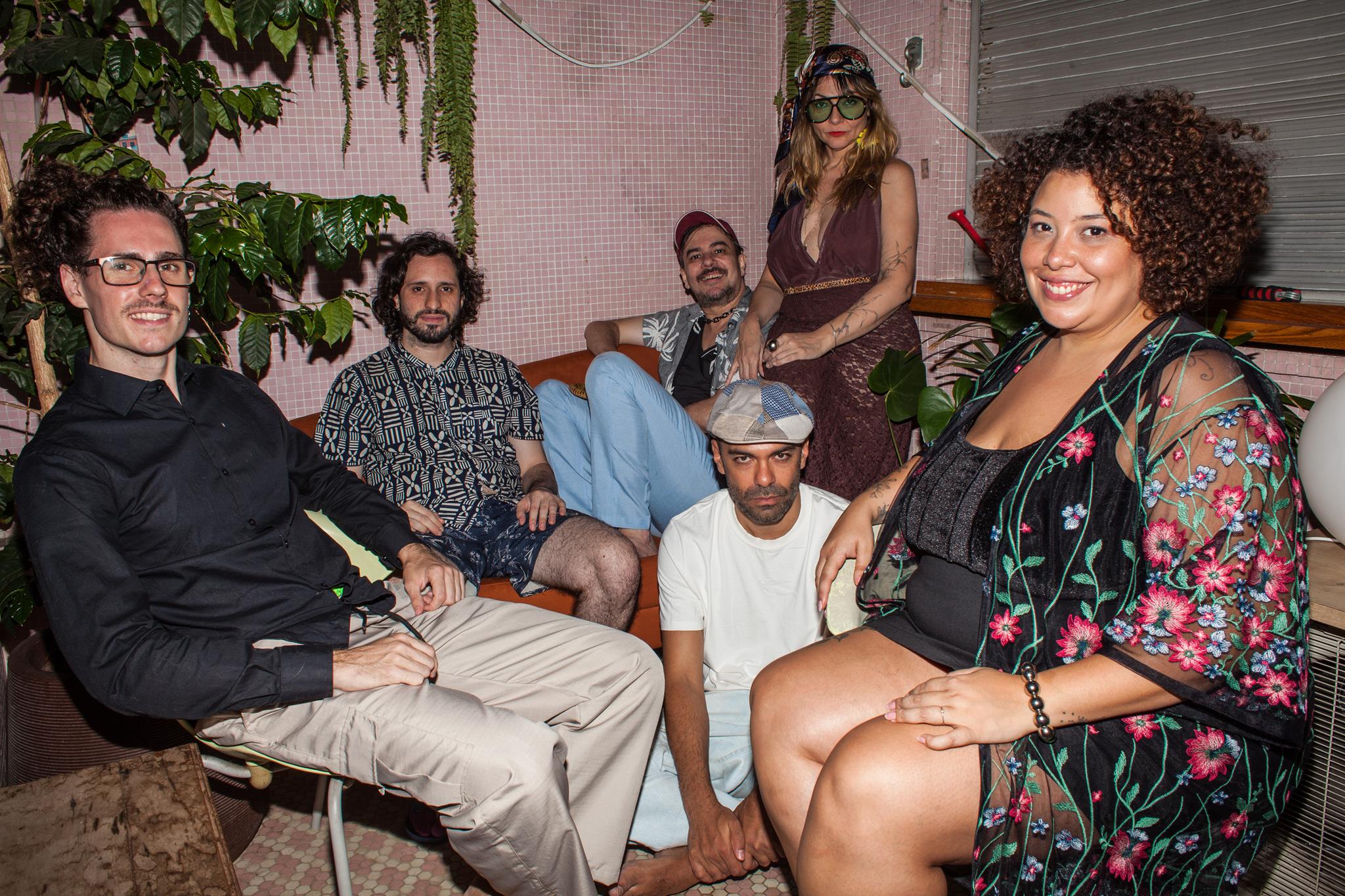
Doce Delícia brings together seven members from four different generations, each bringing their own references and experiences. How does this diversity of ages and experiences influence the creative process and the coexistence within the band?
This is the sweet delight of being who we are! Because it’s precisely this aspect that takes us out of our individual comfort zones and makes our creations an unusual sum. It’s not just that there’s space for each of us, we truly seek this complementarity in one another. This is reflected in an album that has sounds, references, and even languages that blend together.
The group’s story began unpretentiously, on a balcony in downtown São Paulo, with friends playing songs from soap operas and hits from the 80s and 90s. At what point did those informal gatherings begin to take on the dimension of an original project?
People always said we should keep playing, perform in other places, and we liked playing together… Cris (who had already been in other bands) suggested that if we were going to keep playing, it would be more interesting to play something of our own. That idea lingered, and we traveled to practice composing together. But it was when the first songs, Colosso and Burgundy, stopped being just ideas, took shape, and especially when they were recorded and produced (produced by Cris, all there in the apartment). I believe it was listening to those first songs that we understood that moving towards something new inspired us more.
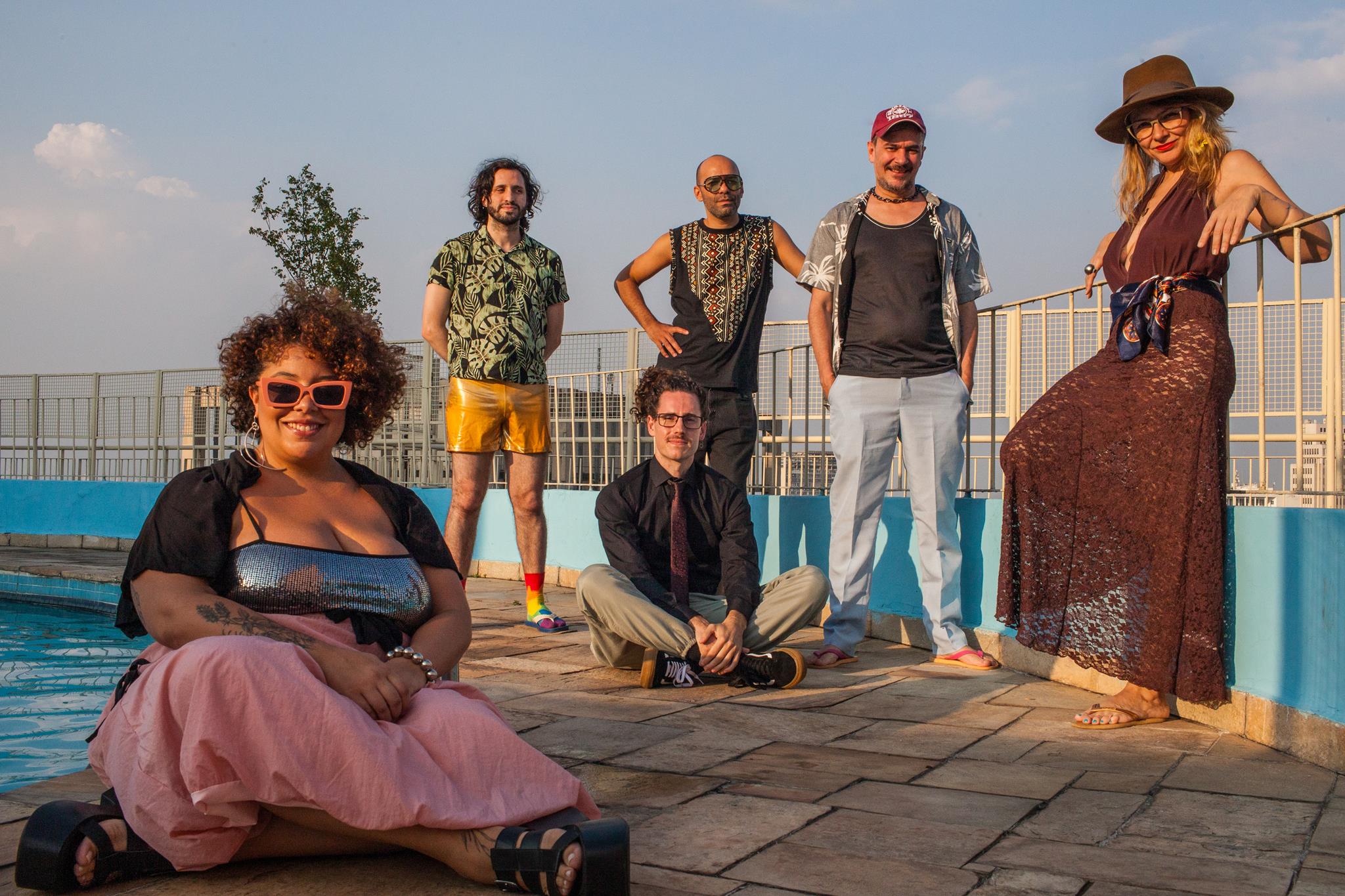
The album blends xote, rock, samba, pop, electronic beats, and tribal elements, creating a sound that seems to defy boundaries. How do you find a collective identity amidst so many musical influences and possibilities?
What unites us is far greater than anything that differentiates us. Our values, our worldview, our sense of community, our interest in life… More than respect, it’s about including diversity. That’s what makes it possible for us to connect.
The lyrics of “Flutuante” explore the contrast between the chaotic intensity of São Paulo and the search for refuge in nature. How does living in such a fast-paced city influence the way you perceive time, silence, and the need to slow down?
This question even reminded me of a song by Lulu Santos called “Certas Coisas” (Certain Things) which talks about this duality:
“There would be no sound.”
If there were no silence
There would be no light.
If it weren’t for the darkness

That’s just how life is.
Day and night, no and yes
They are complementary energies, the hustle and bustle and the quiet. And I think that living in São Paulo is about constantly being reminded of the importance of pausing. And making music is about that, finding the best time for silence and for sound.
The music video compiles footage from the band’s first live performances, documenting their evolution from their earliest steps. How does it feel to revisit these images now, as Doce Delícia officially releases their first album?
It’s beautiful and exciting. To see the path we’ve traveled, and what this story is becoming. Especially to see who has always been with us and how the interaction with these people has also been super important in building the band’s identity and our work.
The launch show at the Maria Della Costa Theater promises to integrate music, lighting, costumes, and performance into a complete experience. What sensations would you like the audience to take home after immersing themselves in the world of “Flutuante”?
I believe it’s the feeling of lightness and togetherness, even with full awareness of life’s ‘burdens’. It’s a reminder that beautiful things aren’t always perfect, because there’s no standard for happiness; it can be as exciting and fleeting as listening to music on the radio or as a soap bubble. Even so, it’s worth it.
Follow Doce Delícia Instagram