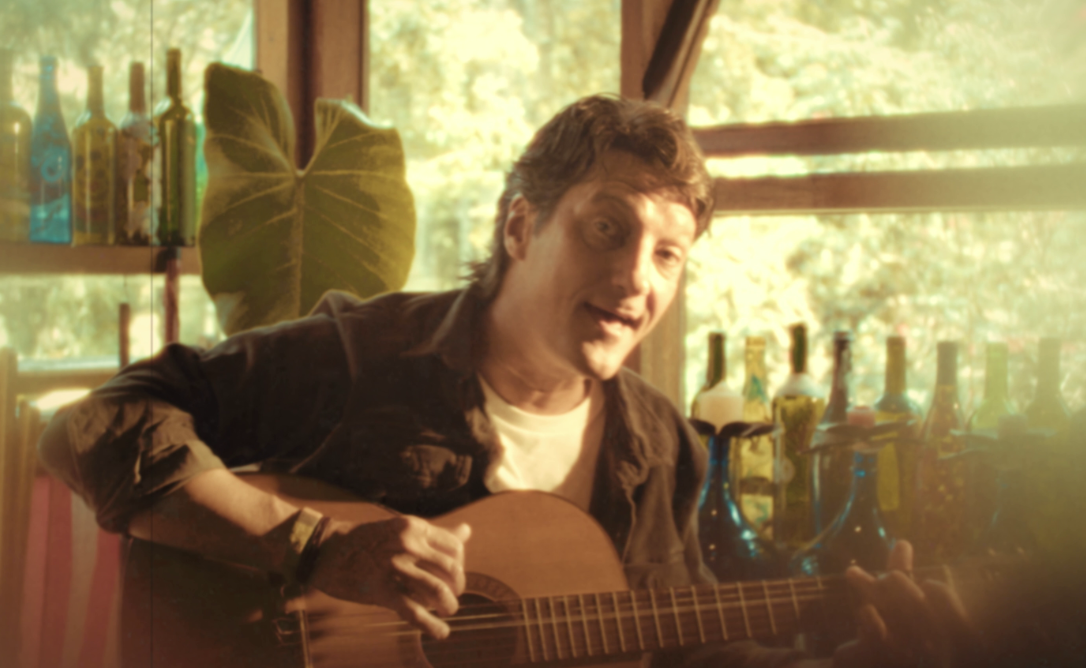
Between the cherished memories of the northeastern backlands, the landscapes of the Serra da Mantiqueira mountain range, and the intensity of urban life in Rio de Janeiro, singer-songwriter Tiago Dezordi found inspiration to inaugurate a new phase in his artistic journey. In his most recent EP, Zabumba, the musician from Rio Grande do Sul, now based in Rio de Janeiro, brings together his southern roots with his father’s Alagoas cultural heritage, building a sound he defines as “rural forrock.” With three unreleased compositions, the project also marks an aesthetic transition by adopting Portuguese as the main language of his songs, exploring themes such as emotional bonds, absences, and the relationship between human beings and nature. In an interview, the artist talks about the influence of his family origins on the creative process, the contrasts between urban daily life and the contemplation of rural life, and the musical and personal discoveries that shaped the new work.
“Zabumba” marks an important turning point in your career, especially with your choice of Portuguese as the primary language for your compositions. At what point did you realize that this change could open new avenues for your identity as a composer?
The process of composing in Portuguese isn’t exactly a turning point. I’ve been composing in both Portuguese and English simultaneously for some time now. What happens is that I end up choosing the language I’ll use for each song based on its sound. In the case of the “Zabumba” songs, the Brazilianness of the melodies naturally led me to write the lyrics in our mother tongue.
The EP carries a very particular mix of references: her origins in Rio Grande do Sul, her father’s roots in Alagoas, and experiences lived in Rio de Janeiro and Minas Gerais. How did these different territories help build the sound and emotional identity of the project?
So, these territories belong to different worlds, but not very far from each other (in me, then, they are almost one and the same). It’s difficult for me to know what the influences of each place, of each culture, were.
I think I absorbed and processed what came my way, and the songs on the EP are, for the most part, the musical result of this almost physical-chemical process.
You christened the style “rural forrock,” bringing forró and its Northeastern references closer to other musical influences. How did this definition come about, and what does it represent within the creative freedom you sought for the EP?
So, in this attempt to bring people closer to the universe of music before they even hear it, it’s a thankless task for the artist to indicate the musical style of the compositions. For me, this is particularly difficult, probably because my compositions navigate between various styles. Each song grabs me from a different angle.
Regarding the sound of the Zabumba, this neologism “rural forrock” came to me almost as a natural result of a juxtaposition of perceptions. This is because I perceive in the music an aura of forró, a touch of rock (or a CK, if you prefer) and a somewhat rural sound. So the expression “rural forrock” ended up emerging, I think, as a natural agglutination of these perceptions.
The bass drum and the triangle appear as a connection to family history, especially to his father’s origins in the Alagoas backlands. What does it mean to transform this emotional heritage into a fundamental part of his music?
Oh, that’s really cool. It’s a way to honor not only my father and his beautiful story of building and overcoming challenges, but also all the people of this more suffering Northeast region, who have such a strong connection to the land and so much to teach us.

“Um Canto de Natureza” and “A Vida Inteira” were born on the banks of the Rio Grande, in the Serra da Mantiqueira mountain range, while “Maria” emerged during motorcycle trips through Rio de Janeiro. How did these very different settings influence the emotions and stories present in each composition?
Maria is more worldly, in a good way. She’s part of the game of life, the emotions and stories of everyday life. She was born into this constant flow, which continues and continues.
A corner of nature and life itself has more of a vibe of slowing down, of being off and connecting with the most natural things… a hug, a mountain, the sky.
Despite this entire description, the listener might perceive everything as jumbled together, which in the end I think is how things really are.
The EP addresses emotional relationships, absences, attachments, and the human being’s reconnection with nature. What personal reflections did you seek to convey in these three songs, and how do they relate to each other?
I think it’s about the importance and value of the simple, the profound, the things that truly connect us. All three songs, in some way, touch on that.

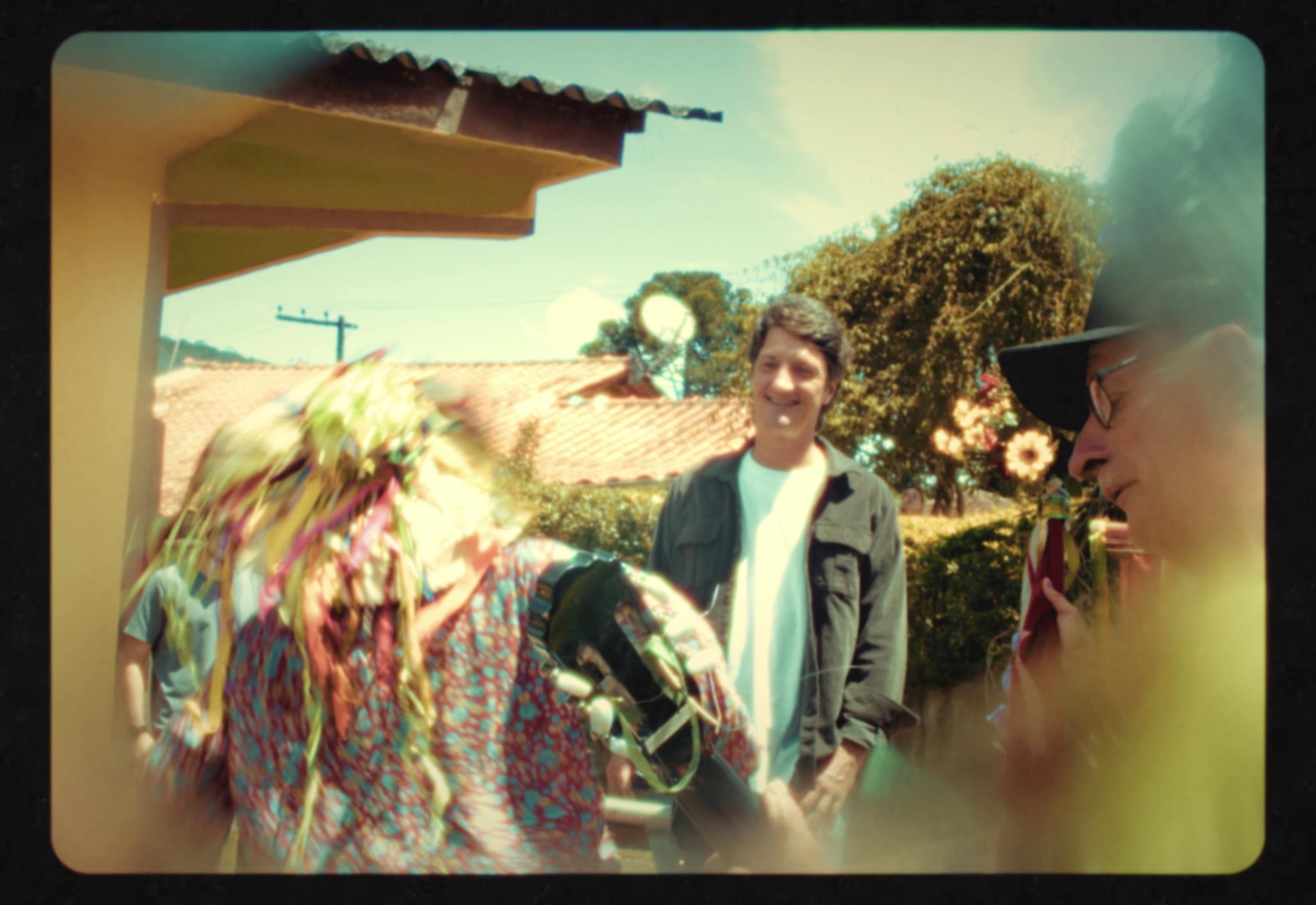
The music video for “A Vida Inteira” employs a retro aesthetic, with Super 8 footage and a narrative constructed from the perspective of another. How does this visual language help to convey the bucolic and hopeful atmosphere of the song?
As Nei Lisboa says in one of his beautiful songs, “…in memory, the accounts of history shine in the light.” That’s it, what has already been lived carries a charge of emotion that the present generally has difficulty providing. And Super 8 brings this wave of recording a special moment lived (especially because, in the past, the moments recorded on camera were generally only the special ones). And where there is emotion, there is hope. So this ends up warming the perspective of the future as well.
“Zabumba” seems to represent not only a sonic shift, but also a reconnection with his origins and with different landscapes of his trajectory. After going through this process, what do you feel you discovered about yourself as an artist?
It’s wonderful to be able to speak freely and with such vigor and freshness about what you feel. And that’s how I felt when composing, and that’s how I feel when I hear Zabumba’s finished songs. Life needs this energy, and today I feel this way, discovering something new and at the same time showing myself to the world without shame.
Follow Tiago Dezordi Instagram