
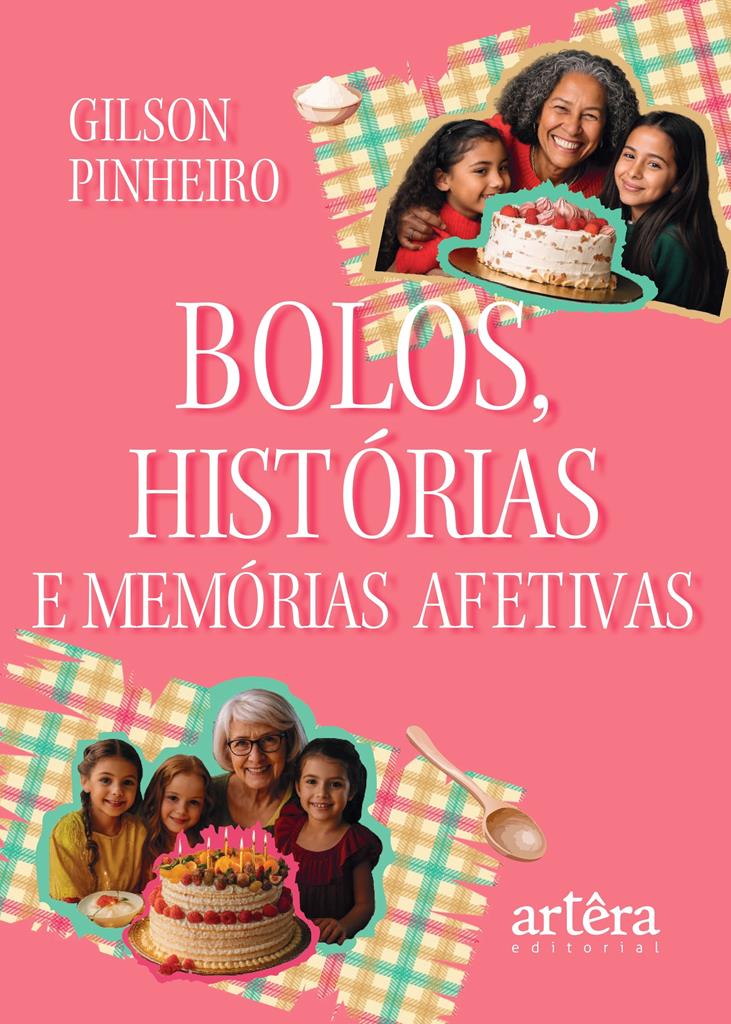
Far beyond a recipe, a cake can hold memories, strengthen bonds, and tell stories from different generations. In *Cakes, Stories, and Affective Memories*, psychologist, gastronome, and writer Gilson Pinheiro proposes a reflection on the relationship between food, emotions, and identity, showing how flavors and aromas can awaken memories and bring people closer. Blending recipes, accounts, and reflections on the role of food in building affection, the book invites the reader to rediscover food as an expression of care and belonging. In an interview, the author discusses the influence of gastronomy on emotional health, the importance of preserving family traditions, and the challenge of reclaiming the pleasure of eating in a world increasingly guided by diets, numbers, and aesthetic standards.
“Cakes, Stories, and Affectionate Memories” starts with a food present in both grand celebrations and simple moments in life. At what point did you realize that cake could be the guiding thread of a book about affection?
It all started when I realized the importance of cake in important moments of my life, for friends, for patients during celebrations, and also in everyday life. It goes beyond the recipe and is an important unifier between people. Making a cake is an act of love, it’s a hug in the form of flavor, it’s the exact element that brings people together and offers comfort.
It became the guiding thread for me when I realized that it’s much more than just mixing flour, eggs, and butter; it’s the universal way to love, be loved, and welcome someone. Serving a cake also carries stories, awakens memories, allows for a casual chat, and is capable of uniting people around the table.
The book proposes looking at food beyond calories, aesthetics, or nutritional function. As a psychologist and gastronome, why was it important to reclaim this emotional dimension of eating?
It is crucial to reclaim the socio-emotional dimension of food in a world of fragile relationships where we live rushing and always late for everything. Understanding the affective value of the emotion/food relationship helps to establish healthier, more conscious and balanced eating behavior. Often, eating is a response to anxiety, stress, or sadness. By highlighting the emotional dimension, I propose that it not be seen as an escape valve for daily pains or to compensate for absences. There is no need to be afraid of eating, but it is necessary to go beyond the purely physiological aspect.
The book works with memories such as the smell of dough baking, grandma’s table, and family gatherings. What personal memories helped inspire this emotional atmosphere in the work?
I have vivid, affectionate memories. I can’t forget the delicious smell of cornbread with anise baking in the oven. Recalling this memory brings back places (my childhood home), sensations (smells, tastes, music), affection, and people, and it’s incredibly pleasurable. I remember my mother’s joy as everyone around her tried to “help,” and she patiently welcomed and guided them. Smelling the aroma and eating the cake awakens a wonderful sense of nostalgia in me. It may seem like a simple moment, but it was always filled with affection, joy, and love.
Dona Dora appears as a character who could be a grandmother, a mother, or a caring figure in any reader’s life. How did this character come about, and what does she represent within the book?
It started with me seeing my mother in the kitchen, and then I realized the universality of the “Dona Doras.” They are the heart of the story, the safe haven that allows the discovery of the world. They appear in every chapter, bringing to the reader a voice of comfort and a gaze of sweetness. Reading each page evokes a sense of complicity, making the reader also take part in the emotional journey in each chapter and glimpse their own grandmothers, mothers… the Dona Doras.
The recipes have symbolic names, such as “Cake of Happiness,” “Mother is the One Who Waits,” and “Cake of Patience and Elegance.” How was it to transform emotions and sensations into flavors?
Offering symbolic names allows each cake to become a unique experience. The aromas, the flavors, the comforting feeling of writing each chapter came to mind. Each cake is an amalgam of feelings and memories. Each slice of cake allows me to remember achievements, joys, laughter, moments from the “mise en place” to the cake being on the table (and even then, we have to wait for it to cool) served with a friendly chat, a welcoming look, delicious coffee, and unforgettable people by my side. I am convinced that in the rush of daily life, cake allows us to stop, smile, because the taste “touches” the heart.
You suggest reflective texts to be read while the cake bakes. What is it about this waiting time that combines so well with memory, silence, and contemplation?

It all begins with a desire, a time, and a place, where the waiting period allows one to cope with anxiety and frustration. Waiting reinforces the feeling of belonging, of being together, and offers special meaning; in it, we realize how special we are and share affections. Waiting is the counterpoint to immediacy, to dealing only with results. It is a moment of active introspection. It is the transformation of emptiness into a life context where one questions the future (how will it be), always yearning for the flavor. Waiting offers presence. It is a purposeful waiting.
In a world increasingly marked by food guilt and excessive concern with calories, what kind of healthier and more humane relationship do you hope to encourage between people and food?
I propose that people eat with pleasure, not out of guilt or shame. Eating provides the necessary calories for our daily activities; it’s a source of energy and also satisfies emotional needs. I suggest we be more compassionate and eat mindfully. Many eat without noticing the triggers of hunger and satiety, without perceiving the taste of the food. I would like people to “date” their plate (feeling the aroma, texture, and flavor) and reduce their (self-)demands, learn to manage emotions without depriving, overeating, or compensating with food, and learn skills to cope with the demands of daily life.
Ultimately, the book seems to invite each reader to add their own story to this “tapestry of flavors and memories.” What memory or feeling would you like someone to rediscover when preparing one of these recipes?
I would like you to realize that cakes are portals to important memories in our lives, that each slice of cake is offered in the safety of a hug and welcoming glances. Yesterday a reader sent me a message and said he cried while reading the book, remembering the peanut brittle cake his mother used to make. He remembered the smell, the house, the family. He was transported to an unforgettable moment of comfort. I would like everyone to be transported to this moment of warmth and get out of “autopilot.”
Follow Gilson Pinheiro on Instagram