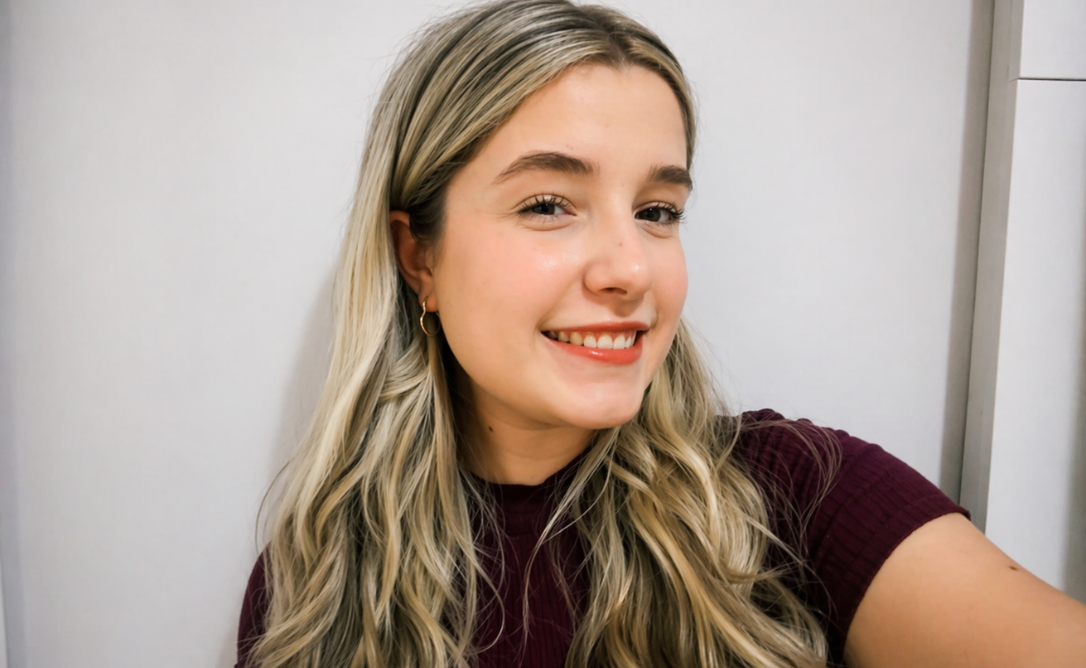
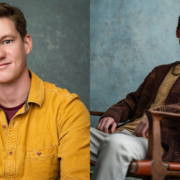
Voice actress Beatriz Pina discovered in her voice a way to act, tell stories, and put a bit of her own essence into characters from different universes. Still at the beginning of her career, she has already accumulated work in productions such as His Dark Materials, My Fault, Your Fault, Our Fault, Preschool: The Musical!, and The Testaments: Of the Daughters of Gilead, moving between live-action, animation, streaming, and singing voice acting.
In an interview, Beatriz recalls the excitement of her first dubbing class, talks about the challenge of “disappearing” so that the character stands out, and discusses her participation in the third season of His Dark Materials, an adaptation of Philip Pullman’s work. She also highlights the impact of being recognized by fans at school after the success of the My Fault trilogy and reveals her desire to one day lend her voice to a Disney princess.
For the young artist, dubbing is a constant exercise in listening, emotion, and preparation. Between children’s characters, cute animals, dramatic series, and fantasy productions, Beatriz sees dubbing as a career of daily learning, in which every detail of the voice can transform how the audience experiences a story.
Beatriz, you started your voice acting career at a very young age and have already worked on high-profile productions. When did you realize that your voice could also be a way to act, tell stories, and build characters?
I truly fell in love with voice acting after my first lesson. I remember perfectly how magical it was for me. Later, after researching a bit more, I saw that it went far beyond magic and beauty… there was much more interpretation behind it. I started dedicating myself even more to theater and voice acting studies, and to this day, I still study a lot (haha). Regarding character development, it’s wonderful to be able to put a little bit of my essence into an actress or an animated character. I always carefully observe every important detail of the character’s personality and fit my interpretation into it.
Dubbing often requires the audience to believe in the character without necessarily knowing who is behind the voice. What fascinates you most about this experience of giving life to someone in such a present and, at the same time, invisible way?
Dubbing is all about knowing how to balance the actress I am with the character I’m playing. I really enjoy understanding the character’s personality and always adding my own special touch. I love it when the audience says they understand the scene even if they close their eyes, because that means we put the right emotion into it and that we were “erased” so the character could shine. The best part is when they say my voice really sounds like the actress I’m dubbing.
His first recorded dubbing job was in His Dark Materials, a much-loved adaptation of Philip Pullman’s work. What was it like entering the dubbing industry and immediately becoming part of such a grand universe, with so many fans and a story marked by fantasy, philosophy, and emotion?
Actually, I only got to know the series after I had dubbed it. Of course, when I went to do the dubbing, I left the studio super excited, and when it was released, I rushed to find out more about the work I had done. It was incredible to learn that it was a really cool series, well directed by Flávia Fontenelle. It was a huge pleasure to be a part of this story.
In His Dark Materials, you voiced Machi in the third season. Even when a role is small within a large production, it’s part of a very rich universe. How do you prepare to get into the tone of a work that already has such a strong identity?
We don’t know what we’re going to dub before we get to the studio, so we don’t have time for specific preparation. But I always prepare in a general way, never ceasing to study and intensify my acting to be ready for any type of production.
You’ve also been involved in projects aimed at different audiences, including series, teen films, animations, and streaming productions. What changes in your performance when you voice a live-action character compared to an animated one?
In animation, I usually use a different type of voice, since most of the time I end up dubbing cute children or animals. An example of this is the twins Ellie and Kat from Preschool: The Musical!. For one, I used a higher-pitched voice, and for the other, a lower-pitched voice, clearly differentiating the girls. In live-action, I like to soften my voice or make it a little deeper, depending on the character, like Becka from The Testaments: Daughters of Gilead, where I could make my voice more “serious,” guided by the tone of the series and the voice of the actress Mattea Conforti herself.
Works like My Fault, Your Fault, and Our Fault have a very strong connection with young audiences and highly engaged fandoms. How is it for you to lend your voice to characters that can create such a direct connection with viewers of your generation?
At the time I filmed it, I had no idea how successful this trilogy would be. I was surprised when I arrived at school and had my first fans—even getting presents… haha—because of this movie. It was a very impactful project, and I will always be grateful to Jennifer Gouveia for the wonderful gift and to Bruna Laynes for continuing to direct these amazing films.
Looking back at this early stage of your career, what do you feel voice acting has taught you about listening, emotion, and artistic responsibility? And what kind of character or project do you still dream of dubbing in the future?
My hearing has certainly improved a lot. Whenever I watch a movie or a series, I already recognize the voices. Nowadays, I can identify the subtle emotions that the character conveys. We evolve day by day, learning to capture the details meticulously.
I think every voice actress dreams of being the voice of a Disney princess, right? But beyond that, it would be incredible to hear my voice in other Disney movies and series, on Netflix, and also in theaters. I love musicals, where I could also sing for my character, since I do voice acting work that involves singing. And, of course, I’d love to continue dubbing my dolls!
Follow Beatriz Pina on Instagram