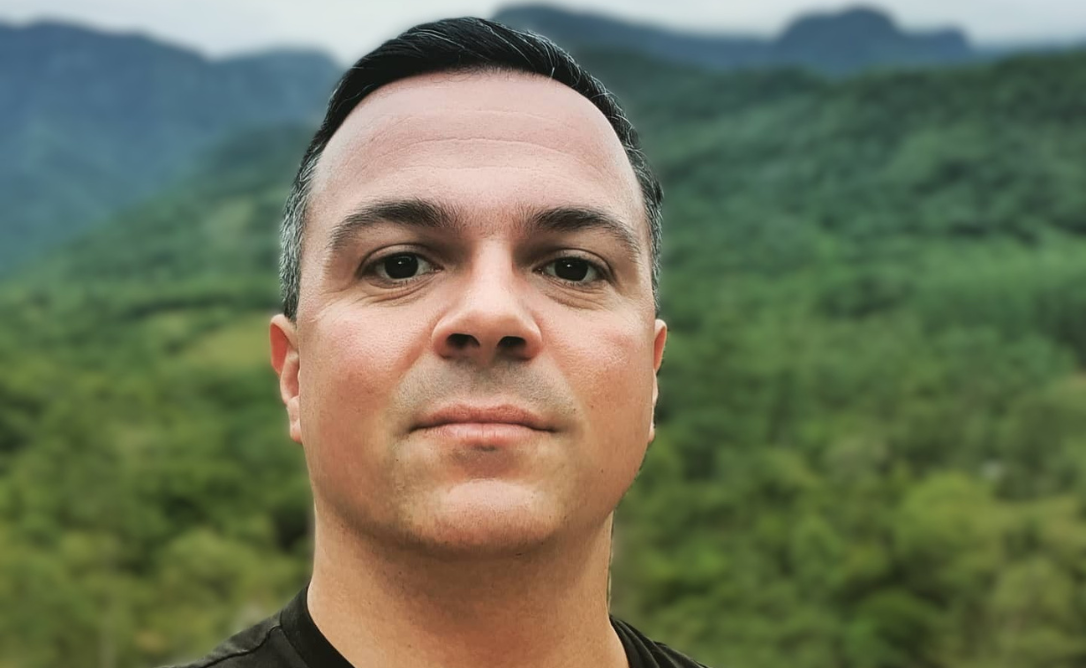
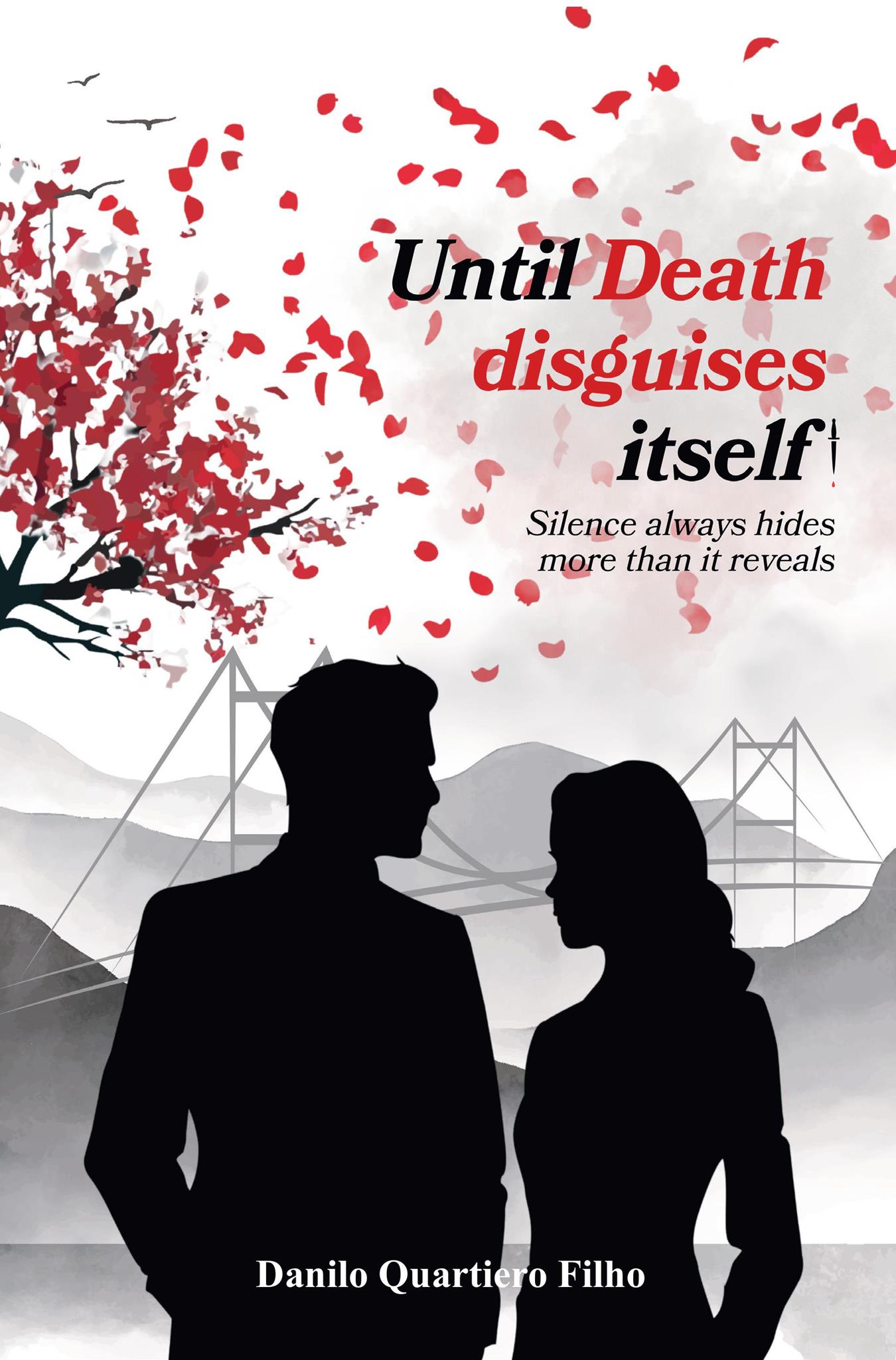
In Until Death Disguises Itself, author Danilo Quartiero Filho proposes a disturbing reflection on crimes hidden within the most intimate relationships. In his debut novel, the writer constructs a psychological thriller that explores dynamics of power, control, and silence within married life, questioning how many deaths can go unnoticed because they seem natural. In an interview, Quartiero discusses the construction of a narrative marked by moral ambiguity and discomfort, where the danger lies not in the extraordinary, but in the everyday.
Until Death Disguises Itself stems from a very unsettling idea: crimes that go unnoticed precisely because they seem natural. At what point did this provocation become the starting point of the novel?
This provocation took shape when I came across a statistic that caught my attention: in 2023, approximately 40,000 deaths were officially registered worldwide without a defined cause, according to global health estimates. No weapons, no obvious injuries, no solid evidence, just motionless bodies, incomplete certificates, and often, silence. This ceased to be just a curiosity and became a deeper concern. As an avid reader and film buff, I had already encountered several stories that explore the idea of the perfect crime, especially those set in a personal context. But there was something different here. It wasn’t about hiding a well-executed crime, but about something that might not even be perceived as a crime. It was at this point that the idea for the book solidified: not to investigate who killed, but to raise the question of how many deaths are never even questioned.
You chose to situate the tension within the intimate space of marriage, where affection, control, and silence coexist in an almost invisible way. What most interested you in exploring this delicate and ambiguous territory?
Since the dawn of literature, intimate space has always been a central territory for exploring human conflict, albeit in different ways throughout history. Affectionate relationships, especially within marriage, naturally carry layers of expectation, power, dependence, and perception. What interested me was precisely this overlap. The environment that should be one of trust is also often the most vulnerable. And it is there that certain behaviors manage to establish themselves subtly, almost imperceptibly. By bringing tension into the relationship, the story begins to operate less in the realm of the event and more in the realm of perception: of how much of what seems like care can, in fact, be control.
Naomi is a character who lives imprisoned in a kind of sophisticated cage, made not of explicit violence, but of manipulation and containment. How was it to construct this silent oppression within the narrative?
The challenge was to construct this oppression without resorting to obvious elements. There is no clear breaking point, but a sum of small interferences that, in isolation, might seem irrelevant. The idea was to work with progression: to show how decisions, doubts, and perceptions are gradually directed. This creates a feeling of confinement that is not physical, but perceptual. For the reader, this is important because there is no single moment of revelation. The tension accumulates gradually, almost imperceptibly, until it becomes impossible to ignore. And there is also an important aspect to the creative process: at a certain point, the work begins to take on a life of its own. The characters cease to be merely guided and begin to reveal the story’s own internal logic, as if there were a path already there, waiting to be discovered.
The bonsai metaphor is one of the strongest images in the book because it speaks of pruning, beauty, and control all at once. How did this image come about, and what does it symbolize for you regarding certain human relationships?
The bonsai emerged as a visual synthesis of what I wanted to represent. It is, at the same time, beautiful and limited. There is constant care involved, but this care aims to maintain the form and not allow free growth. This idea of something cultivated to appear harmonious, but which depends on continuous restraint, seemed to me a very accurate representation of certain dynamics. In the context of history, the bonsai symbolizes exactly that: the maintenance of an appearance of balance at the cost of restriction.
The book seems to question not only what constitutes a crime, but also what society chooses not to see. To what extent does this story also address subtle forms of violence that are often normalized?
The book doesn’t attempt to answer this directly, but inevitably touches upon the issue. There are situations that, because they aren’t explicit, end up being absorbed as part of everyday life. In recent years, in different parts of the world, there has been a broadening of perspective on more subtle dynamics within relationships, almost like a magnifying glass on what previously went unnoticed. The narrative engages with this movement, not to affirm or categorize, but to provoke a question: to what extent has what is seen as normal actually been accepted without question? This question, in itself, is a central element of the story.
By transforming mundane elements of domestic routine into threats, you create a highly psychological, almost invisible, suspense. What attracts you to this type of horror that arises from the everyday, rather than the extraordinary?

Extraordinary horror, especially supernatural horror, often offers a kind of relief at the end. There’s a sense of detachment, because we know, to some extent, that it doesn’t belong to our world. Suspense that arises from everyday life operates differently. It doesn’t offer that comfort because it stems from something plausible, recognizable. These are situations that could happen, that have already happened, and that are, in some way, all around us. This type of tension seems more lasting to me. It’s similar to the feeling we have when we know a story is based on real events; it doesn’t end with the narrative because it remains possible.
You come from a corporate background, and that comes through in the construction of characters and quite sophisticated power dynamics. How did your professional experience influence the writing of this novel?
The corporate environment provided me with direct contact with complex structures of decision-making, influence, and power. In certain contexts, especially where competition is more intense, relationships cease to be merely functional and begin to operate in a highly strategic way, often on the edge of what is considered acceptable. There’s a well-known saying that “in love and war, everything is permitted.” In some environments, this logic manifests itself not explicitly, but through guidance, context, and positioning. This perception ended up influencing the construction of the characters. The dynamics are not direct, but structured. And, at many moments, what is at stake is not what is said openly, but what is subtly directed.
Instead of easy answers, obvious heroes, or caricatured villains, your book focuses on the gray areas of the human mind. What do you hope to provoke in the reader by presenting them with such morally complex characters?
The idea was precisely to avoid the obvious and the caricatured. Reality rarely organizes itself into such clear extremes. The characters were constructed within this logic: nobody is absolutely right or wrong all the time. In many cases, what is justifiable from one perspective may be unacceptable from another. If the book manages to provoke this shift, that is, to make the reader question their own certainties and realize that the limits are not as defined as they seem, then it has already fulfilled its purpose.
Follow Danilo Quartiero Filho on Instagram