
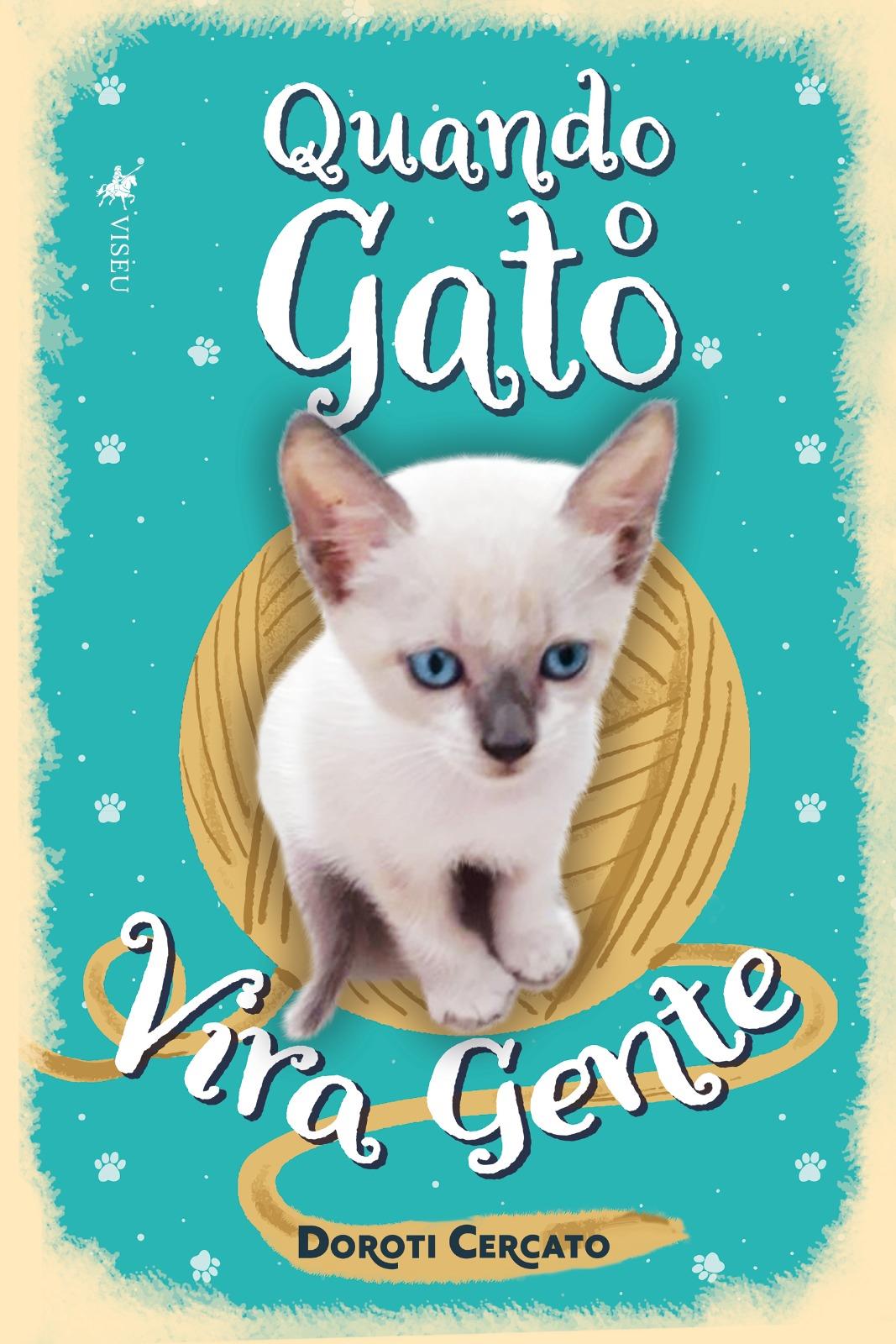
In *When a Cat Becomes Human*, writer Doroti Cercato constructs a sensitive narrative based on her experience living with a rescued cat, transforming everyday life into a space for reflection on bonds, care, and self-knowledge. By following Fritz’s growth, the author observes behaviors that mirror human emotions and revisits her own perceptions of responsibility and affection. In an interview, she discusses how this unexpected relationship became a profound learning experience about herself and the nature of connections.
When the cat becomes human is born from a seemingly simple encounter, but one that transforms into something very profound. At what point did you realize that Fritz’s story was also telling something about you?
I realized this gradually, through daily interaction. At first, I only saw the story of a rescued kitten in need of care, but over time I understood that this experience also revealed a lot about me. I noticed how little I knew about cats and how many misconceptions I carried, built from negative comments we’ve heard throughout our lives. Fritz taught me to reconsider prejudices, to observe more attentively, and to open myself to new experiences. In telling his story, I realized I was also narrating a personal process of transformation.
Having followed Fritz’s growth from such a young age, what were the first discoveries that most changed your way of seeing animals?
What impressed me most from the beginning was his intelligence and sensitivity. Fritz demonstrated preferences, routines, memory, and even a certain sense of belonging. For example, he liked to hide, sleep with a toy, choose his chair, and get angry when someone sat in his chair. These behaviors made me realize that animals have personalities, desires, and their own ways of communicating.
The book shows that, in daily interaction, you came to recognize very human traits in Fritz. What surprised you most about this similarity between his behavior and ours?
The cleverness. For example, waiting for me to get distracted to open my bedroom door, close the door, lie down on my bed, open its arms and stand there as if to say “this is my place,” the waiting posture, with all four paws together, motionless, as if to say “I’m waiting.”
Often, caring for someone also forces us to reevaluate our habits, routines, and even our own sensitivity. How has Fritz’s arrival transformed your daily life?
Fritz’s arrival profoundly and positively changed my routine. First, I had to learn about a world I was unfamiliar with, abandoning misconceptions I had about cats. I imagined, for example, that I would need to bathe them frequently and that their fur would aggravate my allergies, and I discovered I was wrong. Furthermore, the house gained movement, surprise, and joy. I started paying more attention to the details of daily life, organizing schedules, and developing even more patience and care. Fritz brought lightness to ordinary days and awakened in me a constant curiosity to learn.
There is something very beautiful in the way the work transforms everyday scenes into reflection. How was it to find, in the antics, gestures, and silences of a cat, material for such a sensitive testimony?
It was something natural, because living with Fritz taught me to see meaning in small things. Often, a silent gesture of his said more than words: an attentive look, the way he waited, the way he sought company or showed displeasure. His mischievousness also revealed intelligence and personality. At a certain point, I felt the urge to defend him from so many unfair judgments made about cats.
The book speaks not only of affection, but also of observation and self-knowledge. Do you feel that Fritz, in some way, functioned as an emotional mirror for you?

Without a doubt. Fritz acted as an emotional mirror because, by observing him, I also began to observe myself more closely. I realized that animals and human beings share feelings such as fear, joy, attachment, and the need for security. I also recognized in ourselves very similar instinctive impulses and behaviors.
In a time when so many relationships seem rushed or superficial, the bond between you and Fritz reveals another form of connection. What has this time together taught you about presence and care?
It was a wonderful experience, he became irreplaceable, necessary, he understands many things and we exchange attention and affection.
After turning this experience into a book, what do you hope to awaken in readers: a more sensitive perspective towards animals, towards themselves, or towards both?
I hope that human beings understand how similar we are to animals and how much we can learn from them, and that this understanding makes us more sensitive, kinder to pets and to other human beings. There is so much cruelty and selfishness today. We need to reflect more on our attitudes, teach our children to care for others and for nature. What we want is a world in harmony.
Follow Doroti Cercato on Instagram