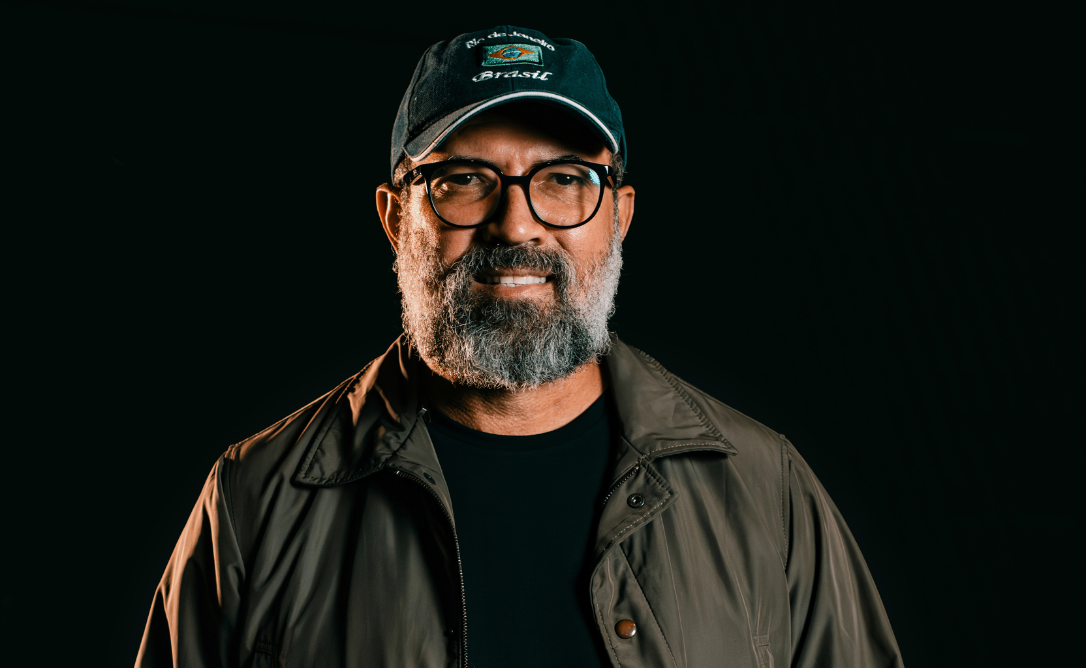
With a composition that addresses themes such as war, inequality, intolerance, and the loss of humanity, singer-songwriter Emanuel Neri presents “Geração Perdida” (Lost Generation), a track that unites social reflection and hope in a profoundly human narrative. Originally written in the late 1990s, the song gains new life by engaging with issues that remain relevant today, inviting the audience to look at the challenges of the present without abandoning faith in a better future. In an interview, Emanuel discusses the inspiration behind the song, his journey marked by Brazilian rock, and the power of art as an instrument of awareness, acceptance, and transformation.
“Lost Generation” was born in 1998, on a quiet night, by candlelight, in Manaus. When you look at that 19-year-old today writing that song, what do you feel he already perceived about the world?
He saw the real world, without the filters and makeup of ideologies. He saw a world going awry in the field of physical and moral degradation, lacking the sensitivity to have eyes open to see and help. He also saw that although many things were going badly, the future would hold better days, and I still believe that.
The song speaks of wars, hunger, misery, drugs, hatred, and indifference, yet it still carries a message of hope. How did you balance indignation and faith without letting the music fall into pessimism?
This is how I learned to understand life and the world. From an early age, I learned to differentiate between indignation and rebellion. I think that’s why I sought to have the courage to look at and confront bad things while maintaining confidence in an evolutionary process, because I believe that people will become better and that will make the world a better place.
You describe the track almost as if you were showing the state of the world to someone who has just arrived—or even to Jesus returning. How did this symbolic and spiritual imagery emerge within the composition?
I come from a background studying spirituality since childhood. I couldn’t separate my social self from my spiritual self. Imagining those scenarios of misery brought me closer to the idea of walking with Christ, seeing that our world was, and still is, sick. I imagined, in a way, that it was he who transmitted to me the certainty that everything must have a solution, as well as an explanation, regardless of who is to blame.
Even though it was written almost three decades ago, “Lost Generation” remains relevant. Does that scare you, sadden you, or reinforce the importance of finally releasing this song now?
This only makes me believe that the language of art is capable of breaking through the barriers of time. It was relevant then, and it’s relevant now. This was crucial, even in deciding which song to release now, because there are others and the choice was very difficult.
Musically, the track has a light structure, without a traditional repetitive chorus, but with an emotional build-up. How did this choice help to give more space to the narrative and the message of the lyrics?
To be honest, this ends up happening very naturally in my songwriting. For me, it’s like I’m telling a story, and I think that’s why there’s no repetition. I don’t think too much about how it’s going to be; the lyrics simply happen.
I owe much of this melodic construction, exploring the potential offered by the lyrics, to the team led by my producer, Denis Carvalho, who managed to find the right timing to explore indignation and hope within a pleasing musicality.


You’ve experienced music in different phases: singing Roberto Carlos in school, playing in youth groups, going through rock with the band TNT, and returning to that path during the pandemic. What did each of these phases leave in you as an artist?
That’s a tough question. I think every experience helps build who we are. It’s an evolutionary process. All of that has become an influence that shows in the lyrics I write, the emotion in the songs I sing; each phase has contributed in some way to me being here now, releasing “Lost Generation” and preparing for more.
After the positive reception of “Fábrica,” which reached other states and countries, how do you deal with this feeling of seeing a song emerge from so intimately and reach people so far away?
I’m very happy about this. Before, I sang with friends at gatherings, now I sing for the whole world, breaking new ground every day. But I’m keeping my feet firmly on the ground, so that the future can find its own way.
You say that, as a career, you feel you are just beginning. That Emanuel Neri is being born at this moment: the young composer from Manaus who wrote by candlelight, the artist matured by life, or a mixture of all of them?
I can’t say I’m what I used to be, but that young artist lives on in me, and time, nothing like it, can make us better. So, today, Emanuel Neri is that best version of myself.
Follow Emanuel Neri on Instagram