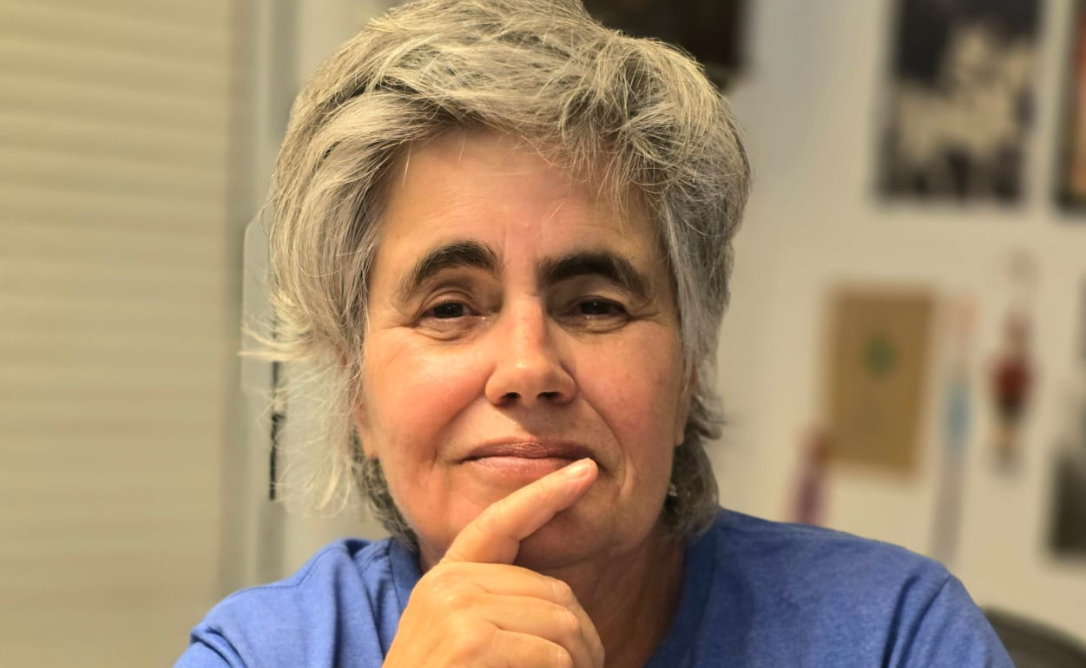
In *When I Was Old*, writer, screenwriter, and journalist Fernanda Pompeu offers a sincere and humorous look at aging, far removed from the idealizations and clichés often associated with old age. Through the journey of Olivia, a retired journalist who begins to reflect on the transformations of time, the work addresses themes such as social invisibility, memory, identity, and the changes brought about by new communication dynamics. In an interview, Fernanda discusses the challenges of aging in a society obsessed with youth, the freedom gained with maturity, and the importance of constructing more human and realistic narratives about this stage of life.
“When I Was Old” begins with a seemingly simple, yet highly symbolic scene: a young woman offering Olivia her seat on the subway. At what point did you realize that this kind gesture could carry a sort of social “verdict” about aging?
The kind gesture bothered me because I wasn’t yet 60 years old. I was offended. Later, I understood that the “fault” lay with my undyed hair. Gray-haired people are “perceived” as elderly. There isn’t just one point of “social verdict on aging.” It’s a combination of perspectives and behaviors.
Olivia decides to write about aging by avoiding abstractions and focusing on concrete situations, such as the waiter who doesn’t see her or the wrinkles that arrive uninvited. Why was it important to address old age through these small, everyday shocks?
Because life is made and remade with everyday shocks and pleasures. In the book, I wanted to talk about tangible aspects of old age, based on experience. There’s no theory involved.
The work presents old age neither as a tragedy nor as an idealized image of serenity. How was it to find this balance between harshness, humor, freedom, and lucidity?
I used my own experience of aging to find the tone of the narrative. I started writing “When I Was Old” when I turned 69. On the day the book was released, I was already 70. I feel there is neither tragedy nor romanticism in my “going back to old age.”
You coined the term “new old” to refer to a generation that grew up in the analog world, transitioned to the digital age, and continues to try to find its place in this era. What unique—and perhaps poorly understood—does this generation possess?
The transition from the analog to the digital world is a unique experience for my generation. It brought surprise and pain as well. When the internet arrived, sweeping everything away, I was already 40 years old. In other words, I lived a good part of my life as a writer with paper, mail, and typewriters. Working with digital was a “second birth.”

The protagonist is a veteran journalist, someone who has seen the newsroom change, reporting methods change, and the very idea of professional authority challenged by social media. How much of her own career path resonates with this tension between experience and instant visibility?
Yes. In the case of the protagonist Olivia, I worked with many things I’ve experienced myself: the end of large newsrooms, the decline of print media. In a world where everyone can report news on social media, even without fact-checking, the professional authority of journalists is devalued.

There is a sensitive critique of how society, especially the digital environment, seems to value unblemished faces and wrinkle-free stories. What does aging reveal about the standards of presence, beauty, and relevance that we still uphold?
There is no world without aging. Everyone would have to die young to avoid wrinkles, cellulite, and forgetfulness. No one chooses to grow old. It usually happens to those who live a long time. I would say to a young woman: “Look, if everything goes well with your survival, you will reach my age.”
The book also speaks of the freedom of those who no longer need to prove themselves so much, of those who have already overcome many “no’s” and learned to choose their battles better. What kind of power exists in this phase of life that is so often misrepresented?
Many of the strengths of older people are not utilized. Examples include their repertoire of solved problems and their testimony of historical events that resonate even today. But it’s also true: this stage of life is one of great freedom! We no longer need to prove anything to anyone. In fact, nobody expects us to prove anything.
The phrase “everything is possible for those who are not yet dead” carries humor, provocation, and resistance. After the reader accompanies Olivia on this journey, what idea about aging would you like them to unlearn?
I wish the reader would have more attentive eyes and ears to the aging process. Old people are not all the same, old people are not furniture, old people carry within them the youth they once were. That’s it.