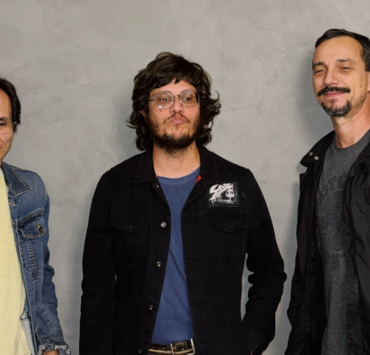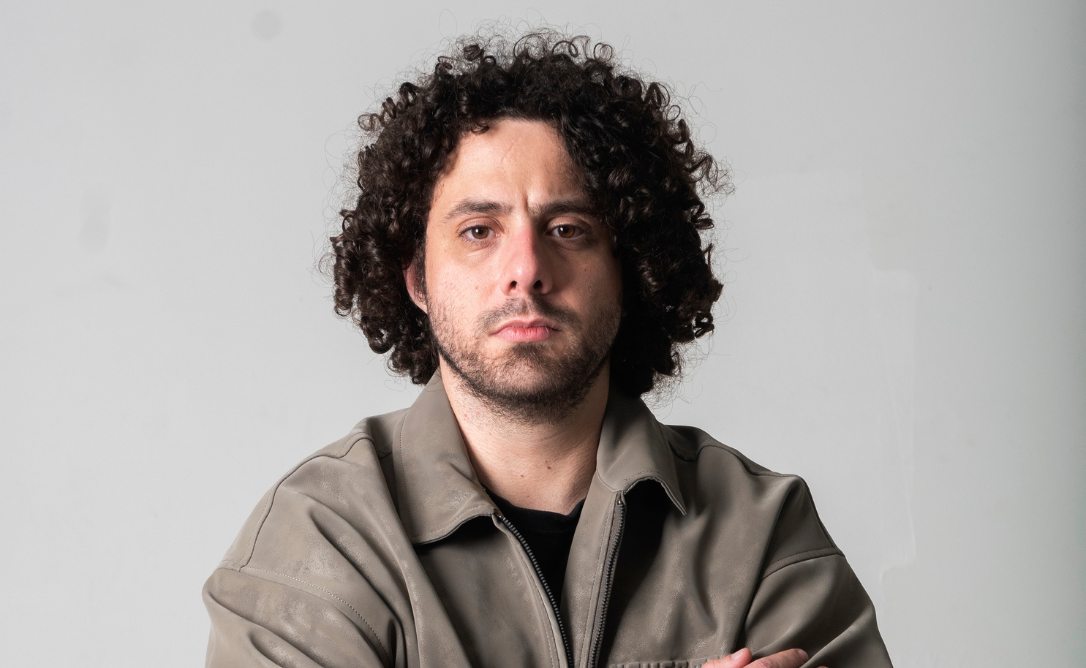
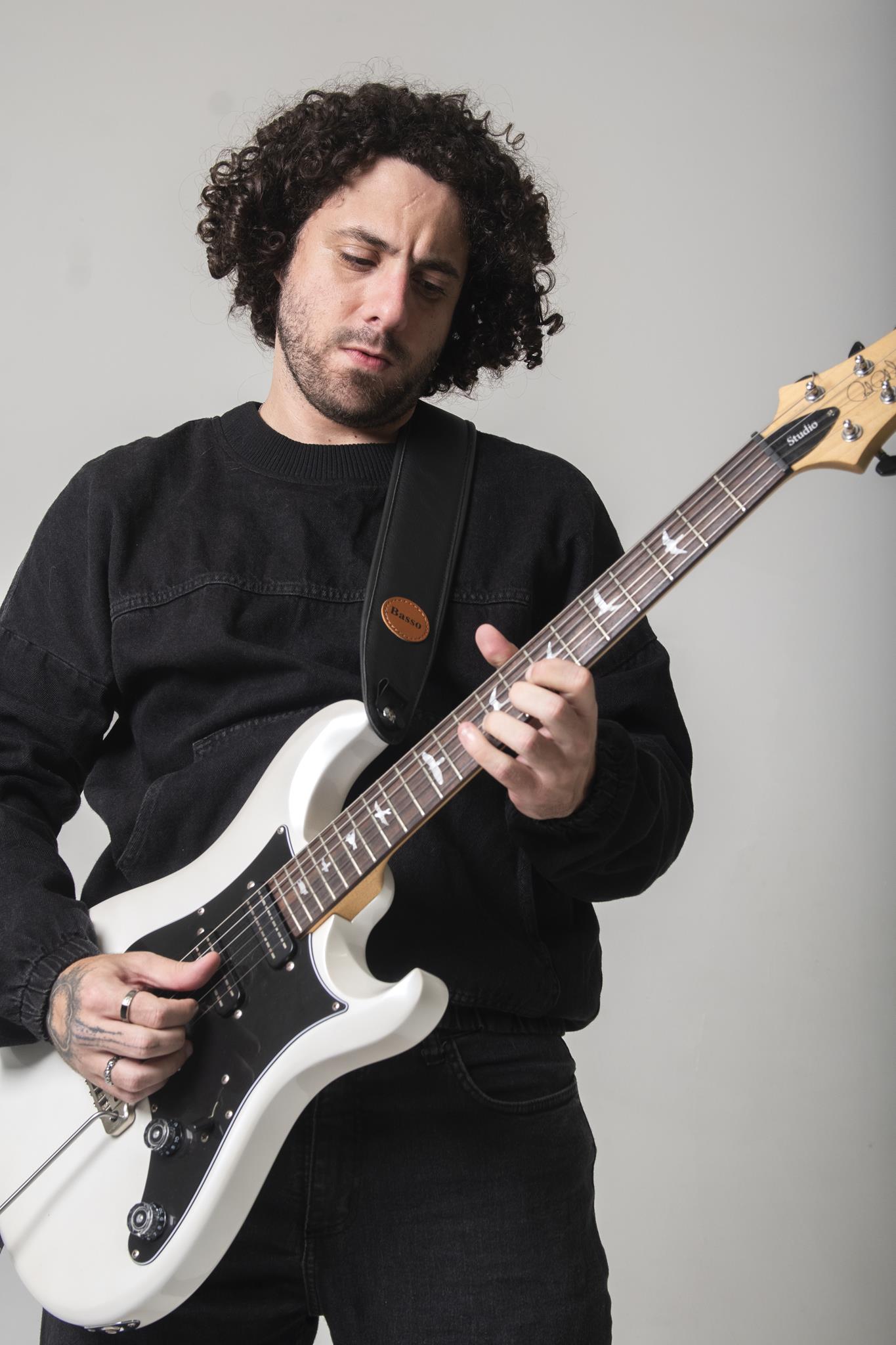
With the release of the single “O Mundo Inteiro” (The Whole World), the original project KIAROSCURO presents the first chapter of an artistic universe that combines progressive rock, influences from Brazilian music, and a strong cinematic approach. Conceived by musician and guitarist Tiago Almeida, the work proposes a reflection on growth, belonging, vulnerability, and transformation through a conceptual narrative that will unfold in future releases. In an interview, Tiago discusses the construction of this ambitious project, the references that inspired its sonic identity, and the challenge of transforming music, image, and story into a unique and immersive experience.
“The Whole World” marks the official debut of KIAROSCURO, but it also seems to carry years of artistic maturation. At what point did you feel that this universe was finally ready to be presented?
I believe that, as with many people, it all started with my ears. I’ve always listened to music of many different styles: from classic rock to modern rock, including metal, classical music, old blues with very poor recordings, jazz, folk, music from other countries and lesser-known scenes. Little by little, I tried to understand how all of this could fit within my own language.
I’ve also never been able to see myself 100% within a single musical genre. I love hard rock, for example, but I don’t see myself as a “hard rocker”; I feel out of place in that group. I really like folk music from various places, but I’ve never seen myself belonging to that universe either. I don’t think I can contribute to those niches; great musicians are already doing that in a much more genuine way than I could. At some point, I decided to allow myself to make the music that was in my head, without worrying so much about labels. I developed this over many years, sometimes more exaggeratedly, sometimes more timidly, until I found a blend that I could transform into something cohesive.
I think the moment I felt KIAROSCURO was ready came when I realized it was no longer just a collection of ideas, but a universe with its own identity. I’ve always really liked concept albums and works that create a bigger atmosphere than the isolated track. For a long time, I had loose ideas: themes, images, sound references, personal stories, visual elements. But it was when everything started to connect—narrative, aesthetics, lyrics, arrangements, and sound—that I felt the project could finally be presented.
“The Whole World” carries much of this maturation because it stems from something intimate, but points towards a larger work. It opens the door to the character’s story and also to the kind of experience I want to build with KIAROSCURO: something emotional, conceptual, visually and sonically intense.
The track follows the childhood and adolescence of the central character, from the perspective of his parents. What interested you in exploring this perspective of protection, vulnerability, and fear in the face of such a vast world?
I was very interested in looking at this moment in life from the perspective of someone who loves and, at the same time, feels fear. There is something very powerful in the figure of parents, or caregivers: they want to protect, prepare, give everything, but often they also carry their own limitations, insecurities, and pain.
The song speaks of this desire to give “the whole world” to someone, even when you yourself may not have had access to almost anything. There is a great vulnerability in that. It’s not perfect or idealized protection, it’s human protection. It’s the perspective of someone who knows that the world can be harsh, unequal, and chaotic, but still tries to preserve in the other person the capacity to dream.
I’ve always been interested in somewhat bittersweet stories. I don’t really believe in completely catastrophic or completely beautiful narratives. The middle ground has always seemed more real and more interesting to me. “The Whole World” occupies that space: it’s a song about love and hope, but without ignoring fear, inequality, and the harshness of the world.
Furthermore, within the album’s narrative, this was the most natural beginning. The story starts when this character is born, grows up, observes the world for the first time, and is still very attached to his roots and the protection of his family. It is literally the beginning of the journey.
You talk about preserving something pure amidst an intense, unequal, and chaotic landscape. What kind of innocence or hope does this song try to protect?
I think music tries to protect that hope that exists before life hardens us too much. Not in the sense of naiveté, but of a very beautiful strength that appears in childhood: the ability to imagine possibilities, to believe that there is a way, to look at the world with curiosity and not just with fear.
“The Whole World” speaks volumes about growing up in an environment where the game is already unequal from the start, but still maintaining some kind of light. There is an innocence that is not weakness. On the contrary, it can be a form of resistance. The song tries to preserve this inner place where it is still possible to dream, love, and believe that life can be greater than the conditions we have been given.
I also see this phase of life as a time when we absorb everything with great intensity. We are still a kind of flexible mold. Then, unfortunately, some things become rigid, and we need to deal with that. Much of the world—propaganda, politics, technology, the market, ready-made speeches—takes advantage of this hardening to kill our roots, our curiosity, and our ability to imagine other ways of life. This begins to appear more strongly in the next songs.
Sonically, the song begins almost like a film opening and builds to a denser, more cinematic ending. How was the process of structuring the song as a narrative in motion?
From the beginning, I wanted the music to have a sense of journey. It wasn’t conceived simply as a traditional song, with predictably repeating parts, although it still has verse, bridge, and chorus—structures I really like. The idea was for it to unfold like a moving scene, almost as if the listener were accompanying the character from a more intimate and protected place to something increasingly larger, more intense, and more complex.
Therefore, the beginning has a more epic atmosphere, like an opening. Gradually, the elements come in, the dynamic grows, the band gains more weight, and the music becomes more cinematic. This growth accompanies the narrative itself: childhood, the discovery of the world, fear, hope, and the intensity of realizing that there is something much bigger out there.
We also purposefully chose not to overdo the more digital and electric elements in this first track, precisely because the character is still close to his roots. As the following songs progress and other influences enter his life, these elements begin to appear more strongly. The sound also reflects the character’s transformation.
The project engages with progressive rock, conceptual rock, and also with very strong Brazilian influences. How did you find a way to combine heaviness, Brazilianness, experimentation, and your own identity?
This was one of the biggest challenges and also one of the things that interested me most about KIAROSCURO. I come from a background very connected to rock, metal, progressive rock, and conceptual bands like Pink Floyd, Porcupine Tree, Genesis, and so many others. But, at the same time, there’s a very strong Latin influence in my listening, especially from artists who sought to maintain their roots while experimenting with them.
I think of names like Clube da Esquina, Secos & Molhados, Os Mutantes, Almir Sater, Raul Seixas, Angra themselves, Sepultura and, more recently, Papangu. They are very different artists and bands from each other, but who, in some way, show that it is possible to engage with international musical languages without abandoning one’s origins.
The approach was to try not to treat these references as obvious collages, but as natural parts of the project’s language. The heaviness is there, the progressive atmosphere too, but there’s a concern with melodies, acoustic textures, rhythms, harmonies, and images that have a lot to do with our land. The unique identity came precisely from this attempt not to choose between one thing and another. KIAROSCURO is born from this contrast.
The composition began simply, with voice and guitar, before gaining layers, arrangements, and atmosphere. What changed in the music as it ceased to be an intimate idea and became part of a larger work?
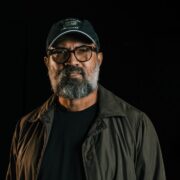
When the song was born on the guitar, it already had a very clear central emotion. It was something more direct, almost like a conversation. But, as it entered the KIAROSCURO universe, it began to gain context. It ceased to be just a song about a specific feeling and became the first chapter of a larger story.
With the arrangements, the music gained scale. The layers of guitar, drums, vocals, textures, and atmospheres helped to expand what was already in the original composition. The intimate feeling remained, but now surrounded by a larger world.
I think that’s one of the most important ideas of the project: starting from something personal and transforming it into narrative, image, sound, and experience. The music hasn’t lost its simple origins, but it has also taken on the weight of opening a door to the entire universe that comes after.
The visualizer in collage format promises to bring beauty, strangeness, and a certain discomfort, without simply illustrating the track literally. What does the image reveal about KIAROSCURO that the music alone might not say?
The image allows you to show the contrast very immediately. The name KIAROSCURO itself conveys this idea of light and shadow, beauty and discomfort coexisting. The visualizer in collages helps to translate this visually, without needing to explain everything literally.
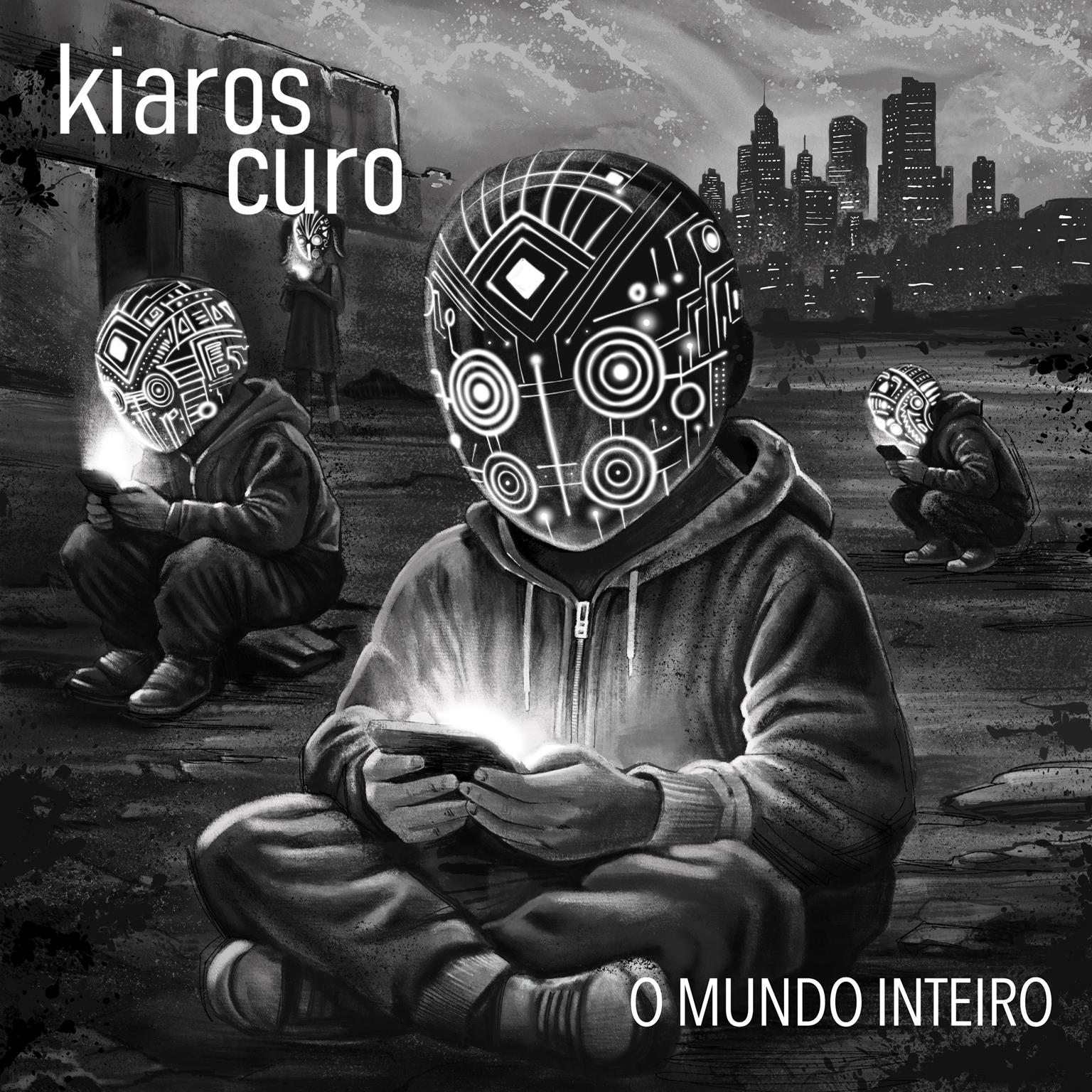
I didn’t want a video that simply “told” the lyrics. The idea was to create a parallel layer, almost like a fragmented memory or a strange dream. The collage language, which came from the direction of Molho Crocante and also dialogues with the cover art by Leo Serezuela, has this power: it brings together elements that don’t always belong in the same place, creating tension, displacement, beauty, and noise.
This reveals a lot about the project, because KIAROSCURO isn’t just about telling a story, but about building an atmosphere. Sometimes, the image manages to access sensations that words and music suggest, but don’t fully explain. It expands the universe and leaves some questions unanswered, which interests me a lot.
“The Whole World” is presented as the first chapter of a conceptual narrative that will continue in future releases. What kind of journey do you hope the audience will accept to go through along with KIAROSCURO?
I hope the audience will embrace an emotional and symbolic journey. “The Whole World” is the beginning, a starting point more connected to childhood, upbringing, roots, and the desire to protect something essential. But, throughout the upcoming releases, this story will expand to themes such as displacement, identity, the big city, alienation, technology, loss of connection, and the attempt to rediscover some meaning.
I don’t want it to be a closed or overly explained experience. I like the idea that each person can recognize themselves in different parts of the narrative. The character can be someone specific, but it can also be any one of us.
Ultimately, KIAROSCURO’s journey is about going out into the world, getting a little lost in it, and trying to discover what is still worth preserving along the way.
Follow KIAROSCURO on Instagram