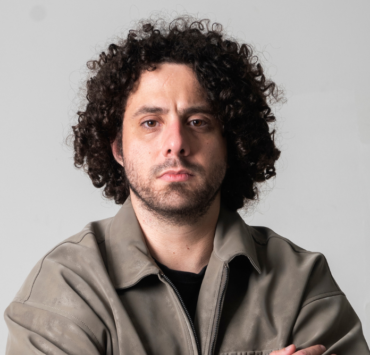
Singer-songwriter THIH presents Fugacidade, a work that marks a moment of personal and musical maturity in his career. Bringing together influences from 2000s indie rock, elements of 80s aesthetics, and compositions inspired by intimate experiences, the EP reflects a more confident, versatile artist, connected to his own creative identity. In an interview, THIH talks about the project’s creation process, the stories behind the songs, and the challenges of transforming memories, feelings, and reflections into music that resonates with different audiences and moments in life.
“Fugacidade” marks a new phase in your career, with more mature lyrics and an identity more aligned with your current moment. At what point did you realize you were ready to show this new THIH?
Since I began my journey in original music, I’ve always wanted to follow a more alternative path, similar to what I present in the tracks of the EP Fugacidade. However, I felt it didn’t make sense to start that way without first fulfilling my dream of releasing some songs that I’d been carrying with me for a long time and that ended up making up the EP Outros Tempos.
After that release, I dove headfirst into new compositions, exploring melodies and lyrics inspired by the sound of 2000s Indie. Gradually, the first songs began to take shape, and everything happened very naturally. That’s how each track on the EP Fugacidade was born: as a sincere translation of everything I consume, admire, and experience musically. This work represents not only an artistic evolution but also a more faithful portrait of who THIH is today.
You grew up in a family very connected to music and rock music was an important foundation from an early age. How do those early musical memories still appear, even subtly, in the artist you are today?
The musical memories from that first phase of my life continue to be updated. In essence, nothing has changed: whenever I have the opportunity, I continue to sing karaoke with my family, reliving moments that have marked my relationship with music since childhood.
The difference is that, today, in addition to the songs that have always been part of our history, my own music has also become part of these gatherings. It’s a very special feeling to hear my compositions playing at barbecues and family celebrations, as if this entire journey has reconnected me with my origins.
His time with the band Esquina 13 and playing in bars around the Baixada Santista region helped strengthen his relationship with the stage and the audience. What did these experiences teach him that no studio could?
My time with the band Esquina 13 was extremely important for my musical development. It was through them that I had my first experiences in a studio, both for rehearsals and recordings, as well as playing my first shows and experiencing firsthand what it was like to perform in front of an audience. There, I was able to understand a little about what life was like for someone who has a band and shares the stage with friends who share the same passion. At that time, the goal was never to make money. We played for free, and yet each performance felt like the best day of our lives. It was all driven by the desire to make music and the emotion of being on stage.
The phase when I played acoustic sets in small bars happened in a different context. I was unemployed and, for the first time, I saw music as a possibility for financial return. Although I didn’t perform with the same carefree spirit as during my time in the band, it was a period of enormous learning. It was when I began to understand music more deeply as a profession, in addition to improving my experience as a musician and performer.
Looking back, I’m sure my solo project wouldn’t exist without those two stages. Both my experience with Esquina 13 and the years playing in bars were fundamental in giving me the confidence, experience, and courage to believe that I could turn this dream into something professional.
Your solo career arose from the need for greater creative autonomy. What changed in your songwriting process when you gained more freedom to follow your own intuition?
When I wrote songs with a band in mind, I always tried to consider the collective. I attempted to create something that would please all the members and make sense within the identity the band wanted to convey. Naturally, this meant that some creative decisions required a more thorough review.
In a solo project, the dynamic is completely different. I have the freedom to write about any subject that inspires me at that moment, without needing to follow a pre-established script or meet expectations beyond my own. This autonomy allows me to be more truthful about what I’m feeling and transform my experiences, thoughts, and references into music in a much more direct way.
The EP touches on 2000s indie music, but the track “Fugacidade” has a more 80s aesthetic, with saxophone, keyboards, and a sophisticated atmosphere. How was it to create this mix without losing your own identity?
The composition of Fugacidade began very naturally, with the melody emerging alongside the guitar chords. As the song took shape, I realized it wouldn’t work as well within the more alternative aesthetic present in other tracks on the EP. From there, I decided to follow a different path and built the song from beginning to end with a more accessible and commercial approach.
After recording the first demo track, I spent days listening to the song repeatedly. Although I liked the result, I felt it still lacked some element to make it special. I considered various instruments and arrangement possibilities until, upon hearing a live version of “Menina Veneno,” I was struck by the powerful way the saxophone drives the song’s introduction. At that moment, I knew for sure that this was exactly what “Fugacidade” needed.
It was a point of no return. I sought out a saxophonist and we went to the studio to create lines over the already recorded demo. The result exceeded all expectations. The sax brought personality, emotion, and a very special charm to the music, becoming one of the most striking elements of the recording.
Although the EP has strong influences from 2000s alternative rock, my musical references go far beyond that universe. Much of what I listen to comes from national and international music of the 1970s and 1980s. Among all the artists who influence me, Lulu Santos holds a special place. His way of constructing sophisticated pop melodies was, without a doubt, one of the greatest inspirations for the melodic composition of “Fugacidade”.
“Amaro” pays homage to his grandfather and transforms cherished memories into music. What was it like to revisit those memories and transform them into something that now also belongs to the public?
Writing Amaro was, without a doubt, one of the most difficult and emotional experiences I’ve ever had as a composer. The song was born from the very special relationship I had with my grandfather and all the memories we built together throughout our lives. To compose the song, I needed to revisit memories that I cherish very much. It was a beautiful process because it reconnected me to moments of extreme joy, love, and happiness that I lived alongside him. At the same time, it was also painful to realize that these moments can no longer be relived in the same way and today exist only in memory.
It was the only song on the EP that deeply moved me during its composition. At various points, I found myself overwhelmed by the feelings those memories evoked. Perhaps that’s why “Amaro” is one of the most personal and sincere songs I’ve ever written. My grandfather will always have a huge place in my heart, and I know his presence will continue to accompany me throughout my life. Being able to immortalize his story and the importance he had for me through music is something I carry with great pride. More than a song, “Amaro” is a tribute, a permanent memory, and a way to keep alive the connection we’ve always had.
The title track speaks of an intense relationship that, over time, begins to be questioned. What interested you in exploring this transition between passion, doubt, and emotional maturity?
“Fugacidade” is a song inspired by an experience I lived through, so its composition came about very naturally, almost like a cathartic outpouring. The lyrics portray a relationship that begins intensely and overwhelmingly, one of those that seem to happen too fast to be explained. As time passes, however, all that intensity gives way to questions and uncertainties. The feelings continue to exist, but doubts begin to arise about what each person really feels and about what the fate of that relationship will be.
The song speaks precisely about this contrast between the strength of the beginning and the fragility of the certainties that come later. It’s a reflection on how some stories can seem enormous at a certain moment and, at the same time, carry a constant feeling of impermanence. That’s why Fugacidade ended up becoming one of the most personal compositions on the EP, translating emotions and questions that were part of my own experience.
You say you want to show more versatility as a composer and take these songs to new audiences and places. When you think about “Fugacidade” coming to life outside the studio, what kind of encounter do you hope to create with those who listen to this EP?
My biggest hope is that this EP will reach people regardless of the musical style they usually listen to. More than numbers or reach, I hope the songs find a place in the lives of those who listen to them, whether through identification with a story, the emotion awakened by a lyric, or simply the energy transmitted in the more upbeat tracks.
I believe that Fugacidade represents a very clear evolution compared to my first work. The compositions bring a more mature approach, both in the lyrics and the melodies, reflecting not only my most recent experiences, but also my evolution as a composer and artist.
While in the EP Outros Tempos I presented a younger and more spontaneous perspective on life, in Fugacidade I sought to explore feelings, reflections, and sounds in a deeper and more authentic way. I hope this new work allows me to win over new listeners, strengthen the connection with those who already follow my journey, and attract people who identify with my way of making music. Ultimately, the greatest desire of any composer is to see their music come to life through people, and that’s exactly what I hope will happen with Fugacidade.
Follow THIH on Instagram